
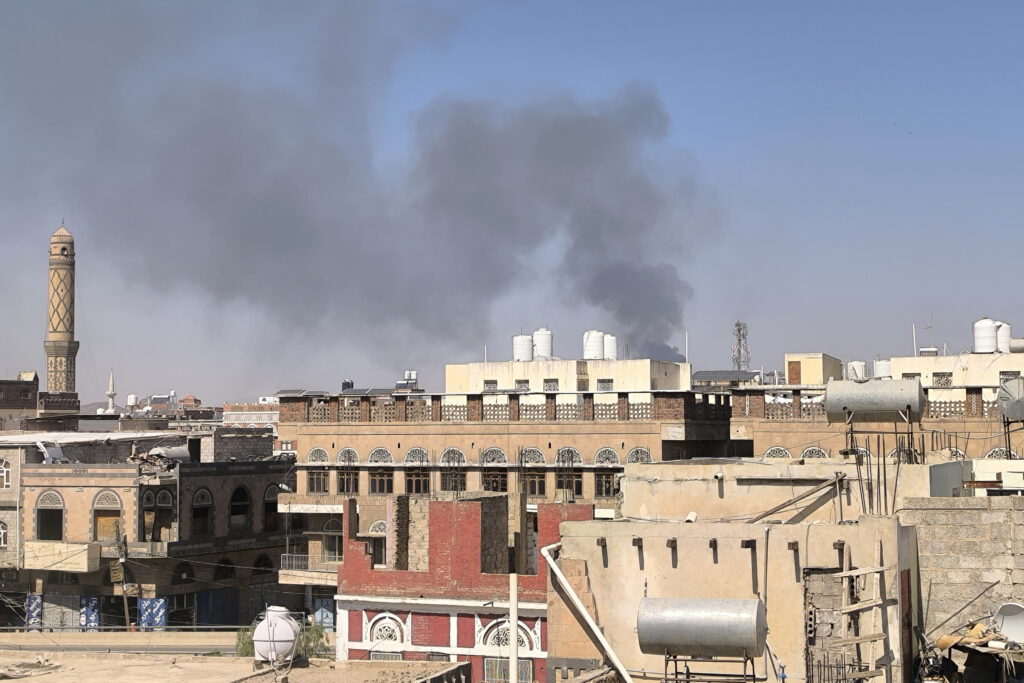
The military conflict between Saudi Arabia and the Houthi forces from Yemen has escalated once again. Recently, the Saudi-led coalition in Yemen announced that its air defense systems intercepted and destroyed three ballistic missiles launched by the Houthis. In addition, they reported the destruction of a missile launch platform located in northern Yemen.
On Sunday, the coalition spokesperson, Turki Al-Maliki, made a series of statements on social media platform X, declaring that their air defense systems successfully intercepted two ballistic missiles aimed at the eastern region of Saudi Arabia. Although debris from the interception fell to the ground, fortunately, there were no civilian casualties reported.
Al-Maliki further stated that the coalition’s air defense system also intercepted and destroyed another ballistic missile that was targeting the Saudi capital, Riyadh.
Subsequently, the coalition announced the destruction of a ballistic missile launch platform in Saada province, located in northern Yemen. The coalition claimed that the Houthis used this platform to launch attacks on the southwestern region of Jizan in Saudi Arabia on the same day.
Al-Maliki issued a warning, emphasizing that any attack targeting civilians and civilian infrastructure would face retaliation. He reiterated that the coalition would continue to respond to Houthi actions directed at innocent civilians and civilian objectives.
Earlier, on the evening of November 28, the coalition reported the execution of a military strike that destroyed key resources used by the Houthi forces to support their military operations. The coalition indicated that these resources were employed in attacks against civilians and civilian facilities in both Yemen and Saudi Arabia, posing a threat to the safety of navigation in the southern Red Sea and the Bab-el-Mandeb Strait. However, specific details regarding the locations and targets of the strikes were not disclosed.
On November 28, Houthi military spokesperson Yahya Saree released a statement via the official social media platform X, claiming that the organization had conducted five military operations against targets within Saudi Arabia over the previous 48 hours. These operations reportedly targeted King Khalid International Airport in Riyadh, radar facilities in Abha and Khamees Mushait, a refinery in Jizan, a gas processing facility in Hawiya, as well as power plants in Shuqaiq and Jizan.
Saree asserted that the relevant attacks successfully hit their intended targets, claiming that two radar facilities were rendered inoperative, several energy facilities caught fire, and power plants sustained damage. However, these claims have yet to be independently verified.
The Saudi Aramco refinery in Jizan is situated along the Red Sea coast, near the Yemen border, with a daily crude oil processing capacity of approximately 400,000 barrels. The Saudi Ministry of Energy stated on November 26 that the refinery had come under attack from aerial objects on that day, resulting in the death of a Nepali worker, several injuries, and a fire outbreak. The fire was subsequently controlled, although some production activities were temporarily halted.
The Shuqaiq region in Jizan Province is home to vital seawater desalination and power generation facilities, which supply fresh water and electricity to the southern regions of Saudi Arabia.
According to reports from the Anadolu Agency, on November 28, Saudi civil defense authorities issued eight emergency alerts via the national emergency warning platform across various locations in the country. This included three alerts in Jizan Province, two in Khamees Mushait, and one each in Abha, Al-Kharj, and the Eastern Province. The civil defense authorities later announced that the danger in those areas had been lifted.
The Yemeni civil war first began in 2014 when the Houthi forces seized control of the capital, Sana’a, and parts of northern Yemen. In 2015, a Saudi-led multi-national coalition was formed to support the internationally recognized Yemeni government and launched military operations against the Houthis.
In April 2022, under the mediation of the United Nations, a ceasefire arrangement was reached between the warring parties, leading to a significant reduction in cross-border attacks between Saudi Arabia and the Houthis. Despite the truce, a formal peace agreement has yet to be established between the two sides.
In July of this year, Yemeni government forces conducted airstrikes on Sana’a International Airport, claiming the action was aimed at preventing an Iranian passenger plane carrying Houthi representatives from landing. In response, the Houthis launched missiles targeting southern Saudi Arabia, leading to a renewed escalation of conflict. Since then, the Houthis have continuously attacked Saudi airports and energy facilities, prompting Saudi Arabia to bolster its air defense operations and conduct strikes against Houthi-controlled regions.