
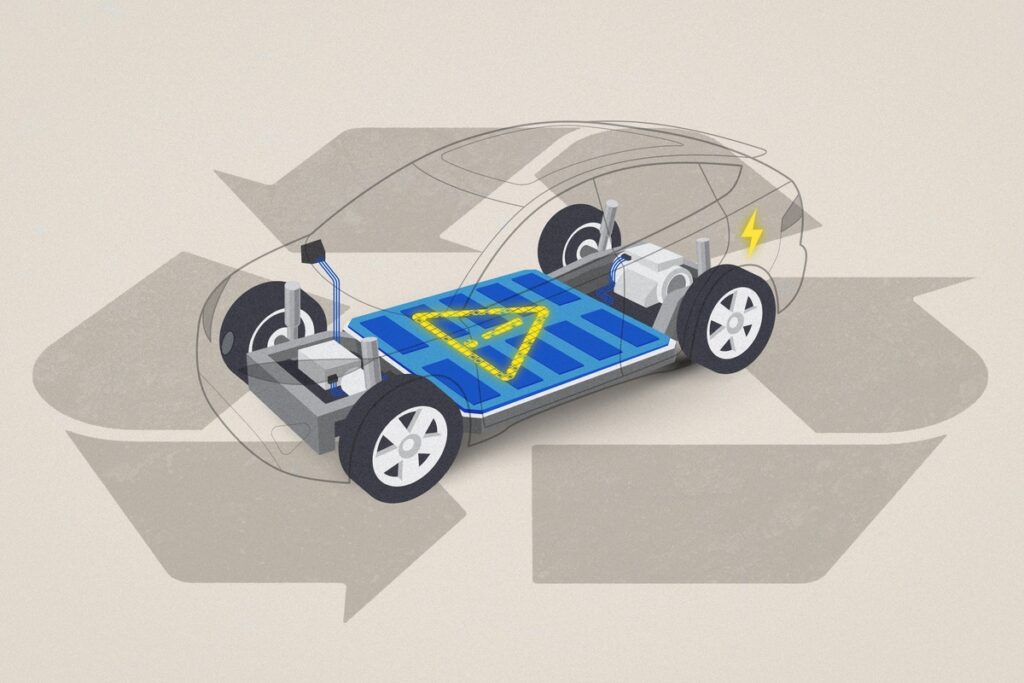
The European Union (EU) is currently deliberating on further tightening its export controls on battery waste, aimed at preventing the outflow of recycling materials containing critical metals like lithium and cobalt to China. This move is intended to safeguard Europe’s strategic resources and decrease its dependence on overseas processing.
According to reports from the Financial Times, starting December 9, the EU will classify crushed old batteries, known as “Black Mass,” as hazardous waste. This classification will restrict their export to countries that are not members of the Organisation for Economic Co-operation and Development (OECD).
Two EU officials have revealed that the bloc is set to launch the Circular Economy Act, along with the establishment of a related framework, to ensure that Europe’s recycled materials remain within the EU internal market. Regulatory measures may include a comprehensive export ban.
The European Commission is expected to unveil the legislative proposal for this Act on December 15, although the details are still under internal consultation. The Commission will first observe the effects of the export restrictions coming into effect on December 9, before deciding whether to implement stricter measures.
The “Black Mass” that the EU plans to restrict is an intermediate material that results from the deep processing of old lithium-ion batteries or manufacturing waste through discharging, mechanical crushing, and physical separation. This dark powder is rich in strategic metals like lithium and cobalt, which can be reclaimed for further use. These essential metals are crucial for the production of electric vehicles, defense systems, and renewable energy technologies.
At present, Europe significantly exports such materials to various countries, many of which ultimately find their way to China, where they are processed and then returned to Europe as finished key metals.
South Korea also serves as an important export destination for Europe’s Black Mass. Being an OECD member, South Korea is not directly affected by the upcoming restrictions aimed at non-member countries.
Environmental NGO Transport & Environment has conducted analyses indicating that currently, over 60% of Europe’s Black Mass is exported outside the EU, with an associated material value of approximately €150 million annually. The organization estimates that by 2040, recycling old batteries could satisfy up to a quarter of Europe’s lithium demand and over half of its cobalt requirements.
As electric vehicles and other new technological equipment reach the end of their life cycle, the significance of the battery materials recycling industry will continue to grow.
Jessika Roswall, the EU’s Commissioner for Environment Affairs, recently stated that Europe possesses a substantial amount of recyclable raw materials. Although recycling alone may not resolve all issues related to critical raw materials, it will play a vital role in enhancing supply security.
In addition to export controls, the Circular Economy Act aims to eliminate transportation barriers for waste materials within the EU internal market, increase demand for recycled materials, and simplify waste management regulations.
Currently, the 27 EU member states have developed varying standards regarding the classification of waste materials and pollution pay schemes, which has led to increased operational costs for businesses in this sector.
Moreover, the recycling industry faces additional challenges. Recycled materials often cost more than newly mined raw materials. If there is an oversupply, it could drive prices down and negatively impact the operations of existing recycling businesses in Europe.
In summary, the EU’s proposed regulatory measures reflect a strategic shift towards fostering a more sustainable and self-reliant recycling ecosystem within Europe, significantly impacting the future landscape of battery waste management and critical metal resources.