
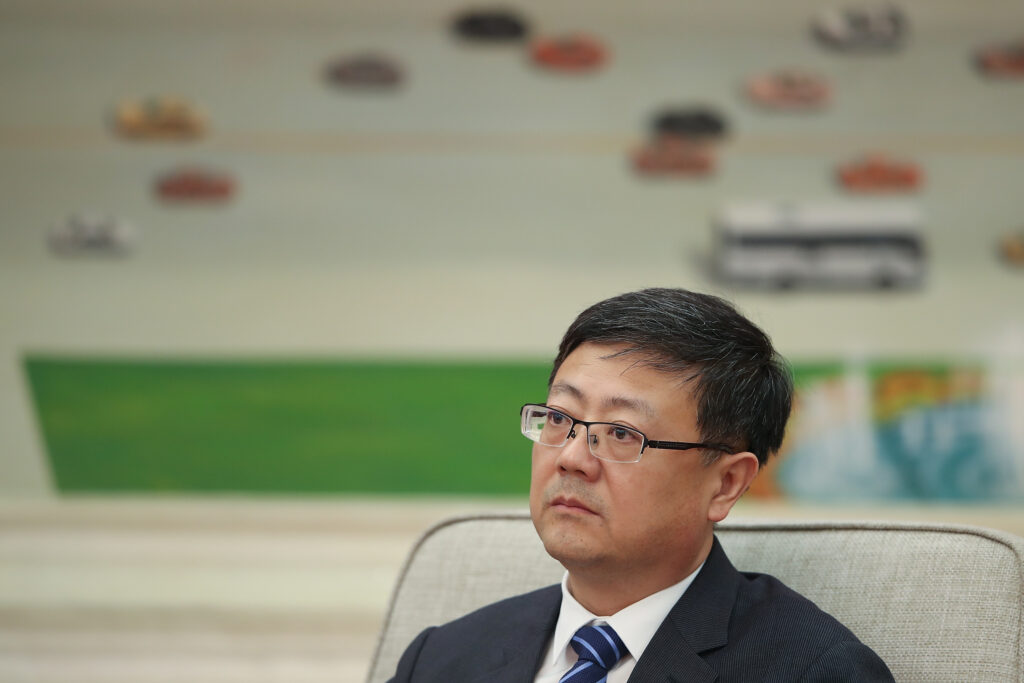
On November 24, Chinese state media announced that Chen Jining, the Secretary of the Shanghai Municipal Party Committee, is under investigation for “suspected serious violations of discipline and law.” This revelation has garnered widespread attention from the international community and foreign media, highlighting the opaque nature of the Chinese Communist Party’s (CCP) internal operations. Many overseas scholars consider this to be one of the most significant political events in China in recent years.
Chen Jining is a member of the Central Political Bureau of the CCP and is the fourth high-ranking member of the leadership to be investigated since 2025.
An article in The Economist noted that while purges of high-ranking officials are not uncommon within the party, the circumstances surrounding Chen’s case are particularly notable for their suddenness and visibility. Typically, high-level officials who are about to face investigation tend to vanish from the public eye for months; however, Chen was still holding official meetings with businesses as recently as last week (with related records starting to disappear from Chinese social media platforms). Earlier in November, he convened a meeting with Shanghai officials, the theme of which ironically focused on anti-corruption efforts.
Taisu Zhang, a professor at Yale Law School who specializes in contemporary Chinese law and politics, remarked on social media platform X that this event can be regarded as “the most significant political news from China (CCP) in recent years.”
Zhang also noted that Chen was widely seen as having a high likelihood of entering the Standing Committee of the Politburo.
Known for his favorable relations with foreign enterprises, Chen Jining comes from an engineering background and holds a Ph.D. in Environmental Systems Analysis from Imperial College London. After serving as the president of Tsinghua University, he joined the CCP government in 2015 as the Minister of Environmental Protection, later becoming the Mayor of Beijing. In 2022, he took up the post of Secretary of the Shanghai Municipal Party Committee, reinforcing his status as a “technocrat.” Generally, the position of Shanghai Party Secretary provides a pathway to enter the Politburo and often serves as a stepping-stone to even higher positions. His predecessor in this role was the current Premier, Li Qiang.
Bloomberg reported that the investigation into Chen Jining marks a significant escalation of Xi Jinping’s anti-corruption campaign. This ongoing crackdown has led to a reduction in the ranks of senior leaders within the party and has weakened the high-level command structure of the military. Xi has urged the entire party to “turn inwards” and undertake a “self-revolution.” The CCP views this campaign as vital for ensuring its long-term survival.
According to Jean Christopher Mittelstaedt, a China expert at the University of Zurich, the unexpected investigation into Chen Jining sends a clear signal that the anti-corruption efforts and the party’s “self-revolution” show no signs of slowing down. “In fact, the intensity is still increasing,” he stated.
The Economist article highlighted that early in Xi Jinping’s purges, the primary targets were individuals associated with his past political rivals, but those have now largely been cleared out. Similar to many officials who have fallen from grace in recent years, Chen Jining’s rise to power has been supported by Xi himself.
Speculation had circulated that Chen was poised for promotion by Xi into the Standing Committee of the Politburo. His downfall serves as a reminder that the internal politics of the CCP remain a “black box,” and it is prudent for other Politburo members to exercise constant caution.
Additionally, Chen Jining’s ousting has shocked foreign enterprises operating in Shanghai. After the pandemic-induced lockdowns, he had relied on his English skills to rebuild relationships with international companies. A diplomat expressed surprise at the news, noting that their national businesses had worked closely with Chen’s team.
Neil Thomas, a senior geopolitical analyst with Bloomberg Economics, pointed out, “Given Chen Jining’s previously high-profile status and his deep involvement in key policy areas like artificial intelligence, climate, and education, his downfall has unusual implications. For businesses and investors, this ‘purge’ exposes the vulnerabilities associated with strategies that rely on alliances with specific leaders. Companies might lose influential backers overnight; networks once seen as ‘assets’ could become triggers for scrutiny.”
Mao Shoulong, a professor at the School of Public Administration at Renmin University, commented on WeChat, stating, “Chen Jining is not an ordinary fallen official… He is a typical representative who climbed the political ladder from the field of environmental protection.”
Mao elaborated that Chen’s downfall signifies more than just a personal failure; it represents the end of a certain type of official and marks the collapse of a particular mode of political advancement. It also shakes foundational assumptions about the relationships between technology and politics, professional expertise and power, as well as competence and loyalty.