
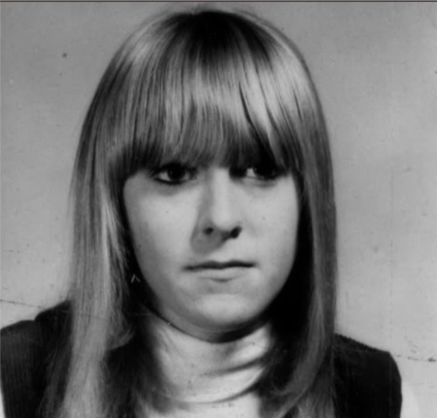
On November 23, the police in London, Ontario, announced a significant breakthrough in a long-unsolved murder case that has remained open for 58 years. Utilizing advanced DNA testing and genealogical techniques, investigators identified a suspect who once served as the city’s fire chief. Unfortunately, the suspect passed away in 2018, preventing any criminal charges from being filed against him.
The suspect has been identified as Michael Joseph Moore, who was just 25 years old at the time of the crime in 1968. Prior to this DNA investigation, Moore had never been a suspect in the eyes of law enforcement.
The case dates back to January 9, 1968, when 16-year-old Jacqueline Dunleavy, known affectionately as Jackie, disappeared after finishing her shift at a convenience store on Stanley Street. Her body was discovered that evening by three youths on a school campus. An autopsy revealed that Dunleavy had suffered head injuries, and her death was determined to be a result of strangulation.
At the time of her death, Dunleavy was a tenth-grade student at Westminster Secondary School, and her father served as a police officer in London.
From 1997 to 2001, the London police, in conjunction with the Ontario Provincial Police, established a cold case squad to re-investigate several unsolved homicides, including the case of Dunleavy. During this review, Moore’s name surfaced, but he was never designated a suspect at that time, and relevant records subsequently went missing.
The key to cracking this case was biological evidence collected and preserved by police in 1968.
In recent years, the London police’s major crimes unit revisited the case and enlisted the expertise of the Othram forensic laboratory in Texas, USA, to conduct DNA testing. This process identified distant relatives of the suspect, which allowed the investigation to focus gradually on Moore through genealogical research.
Building on this promising lead, detectives initiated a new round of interviews to gather additional evidence and submitted the DNA samples to the Centre of Forensic Sciences in Ontario for comparative analysis.
Detective Mike Budzyn, who is overseeing the case, stated that the evidence now meets the standard necessary for filing criminal charges. Had Moore been alive, he would have been arrested and charged with the murder of Dunleavy.
Born in Ireland in 1942, Moore emigrated to Canada in January 1967 and moved into an apartment in London that same year. At the time of Dunleavy’s murder, he had been living in London for less than a year and had not yet joined the local fire department.
Moore went on to become a firefighter in London and eventually rose to the rank of fire chief, retiring in 2002. His obituary indicates that he served a total of 28 years in fire service in both Ireland and Canada. Moore passed away on March 3, 2018, after a long illness, leaving behind his wife and three children.
According to Global News, Moore’s family was shocked to learn of the police investigation’s findings and has requested that their privacy be respected. Lori Hamer, the chief of the London fire department, issued a statement offering condolences to Dunleavy’s family, and noted that this news has profoundly unsettled many employees within the fire department.
Currently, police have no evidence suggesting that Moore and Dunleavy had any prior acquaintance, leaving the motive for the crime unclear.
On November 23, Dunleavy’s brother and his wife attended the police press conference but declined to speak with the media. The police continue to urge anyone who may have known Moore or possess any relevant information regarding the case to come forward and assist with the ongoing investigation.