
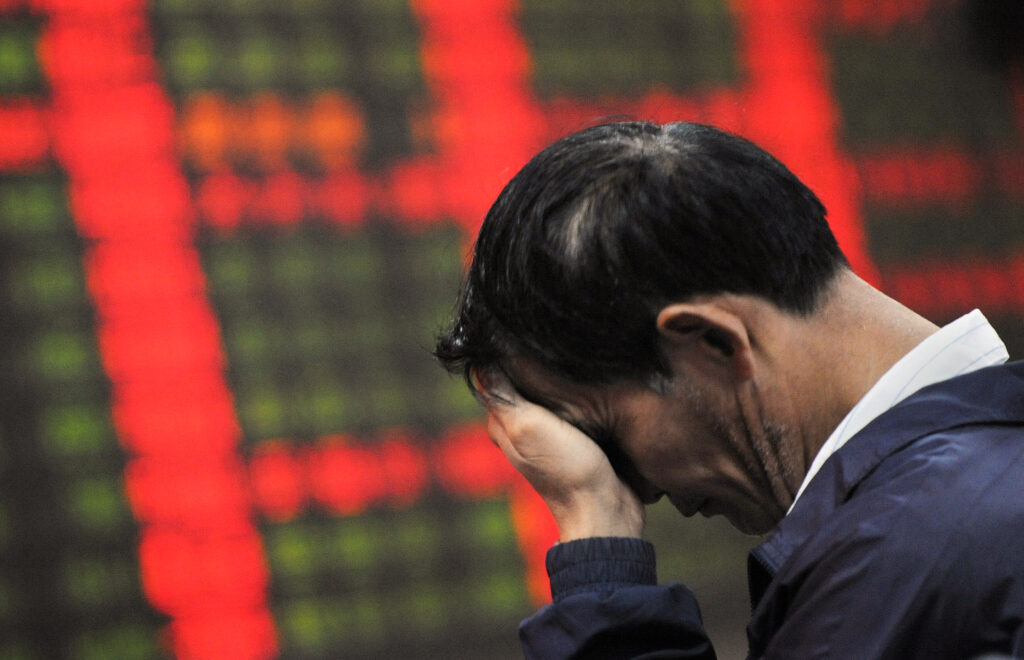
In recent weeks, China’s stock market has faced significant challenges, particularly highlighted by the Shanghai-Shenzhen 300 index, which has recorded declines in 13 of the last 14 weeks. As a result, the financing balance has plummeted by over 20% from its mid-year peak, dropping to approximately 2.2 trillion RMB from around 3 trillion RMB.
In response to the ongoing downward trend in the market, the Chinese government implemented further stabilization measures on November 22. They announced a reduction of the minimum margin requirement for financing in A-shares from 100% to 80%, purportedly increasing the available financing capacity by nearly 400 billion RMB.
It is noteworthy that this policy shift comes less than a year after the government had tightened leverage regulations in January. The ability of this new measure to successfully convert into actual buying power in the stock market remains to be seen.
As highlighted by data from the U.S. financial data platform Barchart, the Shanghai-Shenzhen 300 index has faced an unprecedented level of consecutive declines, marking a significant historical low.
To stabilize the stock market, the three major exchanges in Shanghai and Shenzhen announced that starting from November 30, the minimum margin requirement for investors financing stock purchases will be lowered from 100% to 80%. This adjustment means that an investor with 1 million RMB could previously borrow a maximum of the same amount for purchasing stocks, but after the adjustment, theoretically, they could borrow up to 1.25 million RMB—thereby lowering the threshold for borrowing to invest in stocks.
This policy adjustment will also apply to certain financing contracts that have yet to be settled, allowing brokerages to recalculate the available margin for investors based on the new percentage. According to estimates from industry insiders, this change could theoretically provide an additional financing capacity of around 400 billion RMB. However, it is essential to understand that this does not equate to an immediate injection of cash into the stock market; the actual scale will depend on whether investors are willing to take on loans.
The backdrop to this policy shift is a considerable retreat of financing capital. Reports from Reuters indicate that the balance of financing in the Chinese market has fallen from a high of around 3 trillion RMB in late June to about 2.2 trillion RMB, reflecting a decline of more than 20%. Last week, the Shanghai Composite Index dropped nearly 3%, reaching a 16-month low, while both the Shanghai Star Market and Shenzhen ChiNext indices have fallen by more than 40% from their highs in June.
This is not the first time the Chinese government has adjusted financing thresholds. In August 2023, the three major exchanges had previously lowered the minimum margin requirement from 100% to 80%, but an increase back to 100% was enacted in January due to concerns over leverage risk. Less than a year later, the policy has reverted to an 80% requirement, indicating a significant shift in policy direction. This latest adjustment by the government highlights the realities of a declining financing activity as a key factor for the loosening measures.
In addition to encouraging investors to take out loans to buy stocks, the Shanghai and Shenzhen exchanges have announced the reduction and exemptions of certain trading and settlement fees, aiming to lower transaction costs for market participants. Furthermore, the Shenzhen exchange has proposed a market-making system for its ChiNext board, whereby qualified institutions will continuously provide buy and sell quotes, ensuring that trading counterparties remain available during times of insufficient market participants, thus reducing volatility in stock prices. However, this new system is still in the consultation phase and has not yet been fully implemented.
Recent reports from Bloomberg have noted that these measures target financing capability, trading costs, and market liquidity, indicating that the Chinese government is actively expanding its tools for stabilizing the market.
Moreover, the Chinese government has not solely relied on lowering financing thresholds to support the markets. The central bank previously expanded swap facilities for securities, funds, and insurance institutions, allowing financial entities to use their bonds and other assets as collateral to obtain more liquid capital, enhancing their ability to buy stocks. Additionally, the interest rate for stock repurchase loans was lowered to 1%, encouraging listed companies and shareholders to borrow funds to buy back or increase their stock holdings.
However, the efficacy of these measures is being questioned. An analysis from Reuters’ Breakingviews noted that of the 800 billion RMB allocated for repurchase and additional lending, only about 440 billion RMB had been approved by banks by September, with actual disbursement around 280 billion RMB. This reflects a limited willingness on the part of enterprises and banks to utilize such loans. Analysts have warned that an excessive push for buybacks might focus banks and companies’ attention on stock prices rather than improving corporate profit margins.
As of November 23, the Shanghai Composite Index hit yet another 16-month low, particularly influenced by declines in technology stocks. Fund manager Wang Yapei cited multiple factors such as a global stock sell-off, new U.S. chip restrictions, and a sluggish Chinese economy, suggesting that the recent market stabilization measures announced over the weekend are insufficient.