
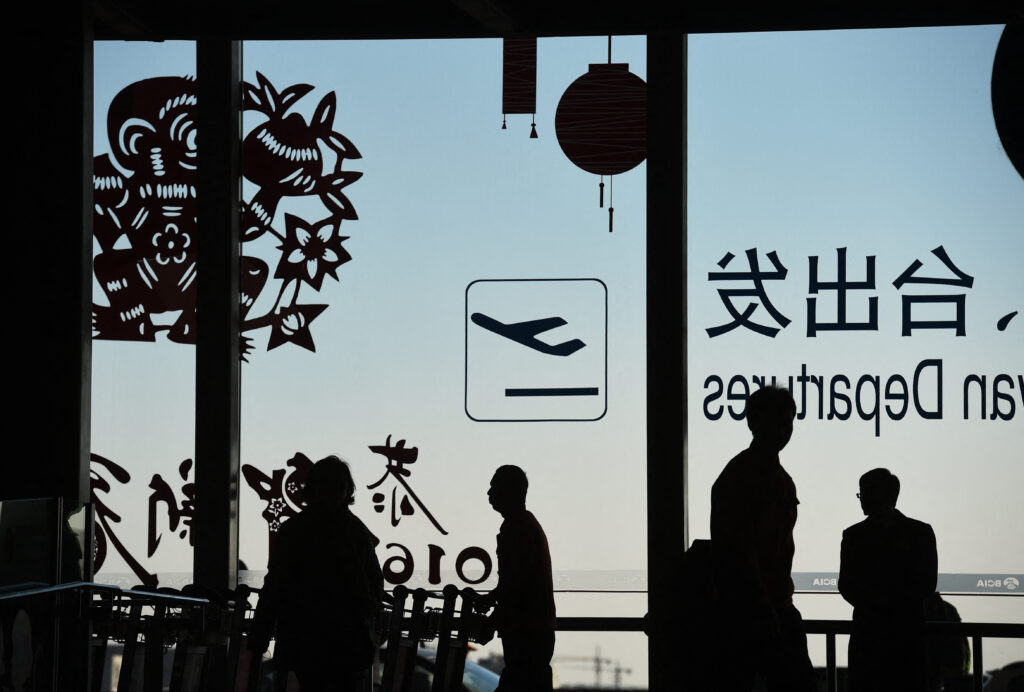
At the recent APEC summit, the leader of the Chinese Communist Party made a pledge to facilitate the movement of individuals for business, travel, and other purposes. However, in stark contrast, the reality on the ground indicates a tightening grip on both Chinese citizens and foreign travelers attempting to exit China. While entering mainland China has seemingly become easier, various measures implemented by the Chinese authorities, including arbitrary detention and strict exit controls, have led to heightened scrutiny on those wishing to leave. Ordinary Chinese travelers now face scenarios such as surrendering their passports and having their smartphones searched at airports.
The Chinese government is evidently intensifying border control measures, which include strict exit regulations. These measures institutionalize existing powers, mandating that individuals provide detailed personal information and declare their travel destinations. Officials are empowered to deny exit for numerous reasons, including associations with technologies deemed sensitive.
For years, the U.S. State Department has expressed concerns regarding the Chinese government’s restrictions on exiting the country. Last month, the department issued travel advisories for China, advising travelers to be cautious of the risks associated with exit bans being imposed without fair and transparent legal processes.
In the meantime, Beijing is attempting to stimulate economic recovery by making it easier for foreign visitors to enter China. This includes the implementation of visa waiver agreements for citizens from approximately 50 countries, extending visa-free transit periods, and streamlining entry procedures.
A recent report from The Washington Post sheds light on a growing concern among travelers. Though these exit regulations are not entirely new, significant changes in border enforcement are evidently felt by many, including ordinary travelers, who have noted an increased level of enforcement activity.
A 20-year-old university student, Elsa (a pseudonym), shared her perspective on the situation. “Most people say these regulations won’t affect the general public,” she explained. “However, from my personal experience, I can attest that border control has certainly tightened recently.”
Like many others interviewed, Elsa requested that only her first name be used for fear of potential government repercussions.
She recounted an incident from early September when she was traveling through Nanjing Lukou International Airport shortly before the formal announcement of the new border control measures. During this time, enforcement appeared to intensify, as an immigration officer took her phone to check her text messages with her parents to confirm her reason for traveling to South Korea for a concert. This level of scrutiny was something she found deeply unsettling.
Numerous individuals have taken to social media to share their experiences, describing instances of being “interrogated” or “dissuaded” by border control officials while preparing to travel abroad. Such occurrences have been particularly prevalent among travelers heading to Southeast Asia and Japan.
Public employees are among those facing the brunt of heightened travel restrictions. In recent years, an increasing number of government workers have been required to surrender their passports; even personal trips abroad now necessitate prior approval.
Joy Li, a 26-year-old working for a state-owned securities company in China, explained that her company requested her passport in August without providing any rationale. She and other civil servants speculate that these new regulations aim to encourage domestic consumption by limiting overseas travel amidst a slowing economy.
“These new regulations might not be inherently problematic,” she noted, “but as the policies are implemented, local authorities may continue to impose various restrictions, ultimately curtailing the travel freedoms of ordinary citizens.”
Legal experts provide insights into these developments. Dai Menghao, a partner at King & Wood Mallesons specializing in export controls and sanctions, pointed out that while these regulations do not fundamentally expand the core immigration control powers of the involved authorities, they do provide clearer guidelines, procedures, and accountability for the practical exercise of these powers, particularly concerning proprietary technological controls.
In March of this year, two Chinese co-founders of the AI startup Manus were informed they could not leave the country while regulatory bodies were reviewing Meta’s acquisition plans for their company. This incident foreshadowed the stricture of subsequent restrictions, culminating in Beijing ultimately blocking the deal.
Reports indicate that the scope of travel restrictions has also expanded to include executives in the AI and semiconductor sectors as well as their immediate family members. Even short trips now require prior permission.
Christopher Nye, a non-resident researcher at the Jamestown Foundation in Washington, stated that these new regulations send a clear signal to foreign businesses and governments: the Chinese authorities are intent on controlling the flow of talent and technology out of the country. Additionally, for domestic citizens, these regulations provide a formal basis for the government to restrict ordinary people’s ability to travel abroad.
According to new regulations that took effect in September, if Chinese citizens are deemed to be engaged in illegal activities abroad that threaten national security or interests, authorities can prevent them from leaving the country for up to three years. Moreover, officials are instructed to deter citizens from traveling to “high-risk” countries, with the authority to demand relevant documentation and electronic data to verify the purposes of their travel.
These regulations, however, lack specific definitions for “sensitive technologies” and do not clearly outline which countries are classified as “high-risk.”
Henry Gao, a law professor at Singapore Management University, emphasized the crux of the matter: By making the exit process exceedingly cumbersome and exhausting, the government effectively seeks to dissuade citizens from contemplating travel abroad.