
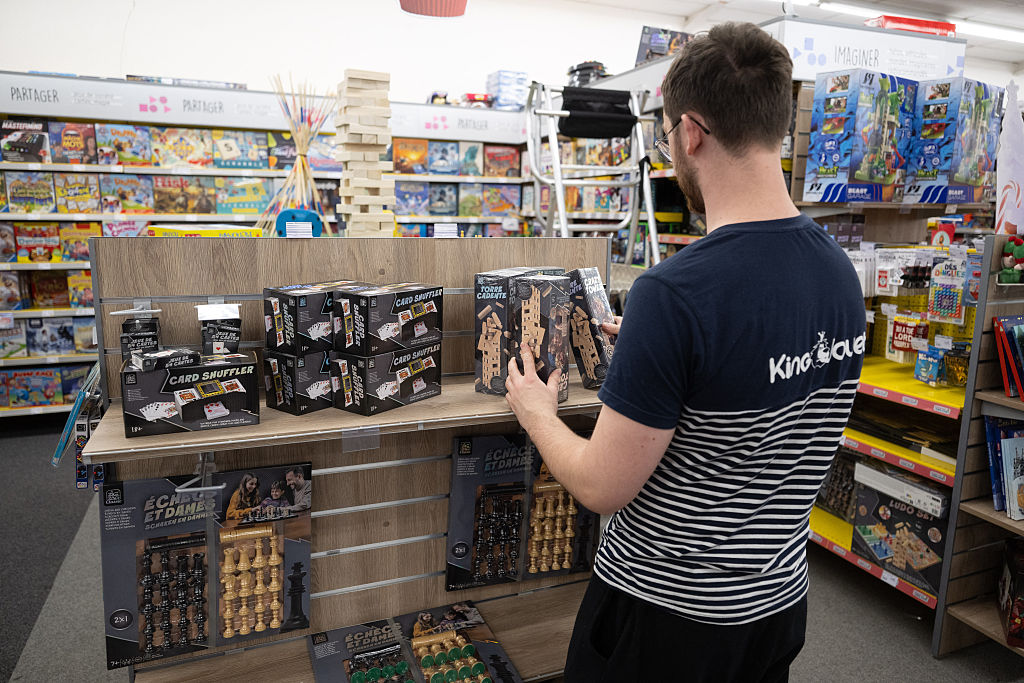
A noticeable trend has emerged in the United States: more and more adults are buying toys. As of this summer, households without children have outpaced those with children in their purchases of toys and games. This trend, termed “Kidult”—a blend of the words “kid” and “adult”—is reshaping the demographics of the toy market.
Recent reports from American media outlet Vox highlight this trend in their podcast and website on November 22. They noted that many consumers in toy stores are no longer primarily children. Instead, numerous adults are displaying a keen interest in products like Labubu figures, Funko Pop collectibles, Jellycat plush toys, and Hello Kitty merchandise.
Mia Sundstrom, the Executive Director of the National Institute for Play, explained during her interview with Vox’s “Explain It to Me” podcast, “When we engage with toys, we often find ourselves exploring uncharted territory; playing is fundamentally a space that allows for experimentation, adventure, and mistakes.”
According to market forecasts cited by Vox, the global toy industry is projected to surpass a staggering $130 billion this year. By the summer of this year, households without children in the United States had purchased more toys and games than those with kids.
For adults who enjoy playing with toys, the industry has even coined the term “Kidult” to define this demographic.
Sundstrom elaborated that the impulse to engage in play is biologically entrenched within our subcortex. She explained that this subcortical mechanism ensures the urge to play accompanies us throughout our lives. In other words, no matter how old one gets, the capacity and right to play remain intact.
She pointed out that toys and games also provide people with opportunities to try new things. Engaging in play allows individuals to experiment, take risks, and even make mistakes without facing significant pressure.
Sundstrom further suggested that the fine motor skills involved in playing with toys stimulate brain areas associated with cognition, emotions, and focus. Moreover, the state of play helps to relax the amygdala, the brain’s stress response center, thereby alleviating stress and anxiety.
As the market for adult toy consumption continues to expand, the target demographic of the toy industry is evolving as well. For many adults, buying toys is not merely an act of collecting; it serves as a means to maintain curiosity, relieve stress, and find joy in their lives.
This transformation in the perception of toys reflects a broader cultural shift where play is increasingly appreciated as essential for well-being, regardless of age. The evolving landscape of the toy industry illustrates that the joy found in play is a timeless pursuit that transcends generational boundaries.