
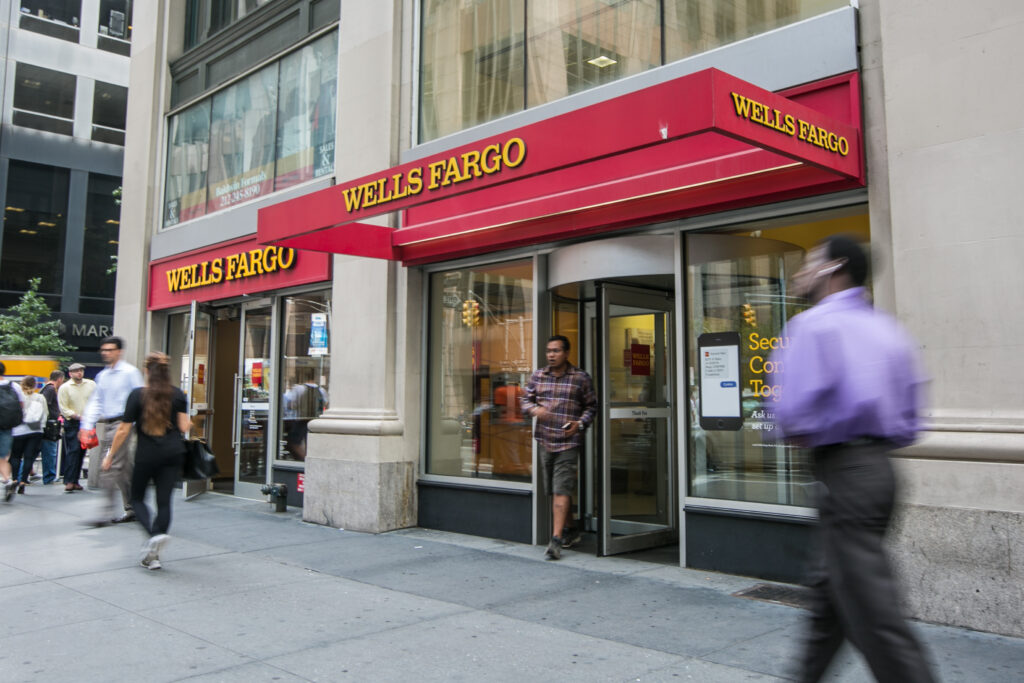
As AI agents are increasingly used to manage personal finances, several major banks in the United States have recently revised their service agreements. These revisions explicitly state that if customers authorize third-party AI tools to access their bank accounts, they must bear the corresponding responsibility for actions taken by those tools.
Wells Fargo’s updated Online Access Agreement will come into effect on November 24. The new terms indicate that even if an AI agent misunderstands a customer’s instructions or makes unauthorized transactions, the bank may still consider these actions as having been authorized by the customer under certain conditions.
Similarly, banks such as Citi, JPMorgan Chase, PNC, and Citizens have also implemented comparable measures in response to the accountability and security challenges posed by AI agents in the financial sector.
Wells Fargo’s updated agreement specifically addresses third-party AI agents in its article 15. It stipulates that unless dictated otherwise by law or regulation, customers who allow AI agents access to their accounts via login credentials or other forms of authorization will find that all commands and transactions initiated by the AI agents are seen as directly authorized by the customer, with no further validation required by the bank.
The agreement also makes clear that the bank will not monitor, filter, audit, or investigate the activities of AI agents, including transactions initiated by them. Customers employing third-party AI tools must bear the risk and take responsibility for ensuring the AI’s operations align with the scope of their authorization.
Notably, if customers decide to revoke an AI agent’s access, they must take timely action to terminate its activities, retain evidence of the revocation, and inform the bank as per the agreement. Until the bank receives that notification and has reasonable time to process it, customers might still be held liable for actions taken by the AI agent, albeit within the limits allowed by applicable law.
Wells Fargo also reserves the right to restrict, suspend, or deny access to specific third-party AI tools accessing customer accounts at any time.
The bank has stated that customers who continue to use online and mobile banking services after November 24 will be understood to have accepted the new terms without needing to sign anything additional.
On November 18, the tech media outlet TechCrunch reported that Citi had also updated its Citi Online User Agreement earlier this month, adding provisions related to third-party AI agents.
According to the updated terms from Citi, if a customer provides login credentials to a third-party AI agent or allows it to access their account, the bank will regard all actions taken by the AI agent as authorized by the customer. Even if the AI tool inadvertently leaks login information, or that information gets accessed by others, any account activities stemming from those breaches could still be seen as permitted by the customer.
Moreover, Citi emphasized that it has no obligation to investigate the validity or scope of the authorizations concerning transactions that contradict the customer’s provided prompts or instructions—such as misinterpretations or unauthorized transactions. Customers are responsible for supervising the activities of their AI agents.
A Citi spokesperson stated that as third-party AI tools become more prevalent, the bank wants customers to understand the risks associated with sharing online banking login information or authorizing these tools to access their accounts. The modifications to the agreement aim to clarify these responsibilities.
Citi also reminded customers that allowing a third-party AI access to their accounts implies consent for the bank to disclose relevant financial and personal data to that tool, including sensitive personal information. The bank’s privacy policy does not apply to these third-party AI tools, and banks cannot control how such tools collect, use, store, or share customer data.
According to TechCrunch’s report, PNC, the eighth-largest bank in the United States, updated its service terms on November 18. Citizens Bank also notified its customers in the same week that they are responsible for the operations of their AI assistants.
However, current public reports have yet to reveal the full content of the relevant terms from these two banks.
Previously, both JPMorgan Chase and Bank of America had issued warnings regarding the use of AI agents and bank accounts. JPMorgan Chase’s Chief Financial Officer, Jeremy Barnum, stated during a conference call on October 13 that customers must recognize that if they provide login credentials to an AI agent and that agent performs an action the customer did not intend, the responsibility may fall on the customer.
While JPMorgan Chase does not allow third parties to use customer login credentials directly on their banking platform, it does permit authorized third-party applications to access account information through the bank’s approved application programming interfaces (APIs).
This method differs from giving away online banking passwords. For instance, customers can use a data integration service like Plaid to authorize external applications to access specific bank information without having to share their account number and password with the AI tool. The actual data accessible and the operational permissions depend on agreements between the bank and service providers.
Bank of America sent an email to customers on October 27 titled “Protecting Your Finances in the AI World,” reminding them not to share their online banking usernames and passwords with any external parties or services, including AI tools claiming to perform transactions on their behalf.
The bank warned that customers who share their login information might be held responsible for any ensuing account activities.
PNC’s Chairman and CEO, Bill Demchak, spoke at the Money20/20 financial technology conference in Las Vegas on October 19, asserting that responsibility must be clarified before allowing AI agents to execute financial transactions on a large scale. He believes technology companies should be held accountable for customer losses caused by AI agents, stating that banks do not want to assume these risks.
The American Bankers Association (ABA) released findings on October 27 from a national survey conducted by Morning Consult during their annual meeting in Salt Lake City. The survey revealed widespread public skepticism in the United States regarding AI agents managing personal finances.
Conducted between October 9 and 12, the survey included responses from 4,402 American adults. It showed that 19% of respondents had received requests from AI agents for their financial account login information, or for debit or credit card numbers. Furthermore, 77% expressed concerns about authorizing AI tools for transfers, payments, or other financial actions.
An additional 79% of respondents indicated that consumers should not be compelled to provide their online banking usernames and passwords to receive financial management assistance from AI tools.
The survey further suggested that only 27% of respondents were likely to use AI agents to manage their bank account funds over the next twelve months. This data illustrates that while AI agents can help organize accounts, analyze spending, pay bills, and even manage funds, consumers remain wary of granting AI direct control over their bank accounts.
In conversations with Chinese residents across various parts of the U.S., many interviewees mentioned that they typically use AI tools for organizing emails, writing articles, and drafting English correspondence, but decisions on sending emails still rest with them. None of the respondents reported having given their online banking passwords to AI.
Mr. Liu, a resident of Los Angeles, California, who is over 70 years old and enjoys trying out new technologies, has learned to use AI to create short videos and write articles. Recently, he began employing Muse to sort through emails for the homeowners association (HOA) he serves on and has sought AI assistance in drafting various English communication letters, yet he has never shared his banking password.
“AI has indeed brought me much convenience, but with something as sensitive as bank passwords, I’m not comfortable handing that over to AI; I prefer to handle it myself,” he stated.
Before the interview, he was unaware that major U.S. banks had revised their relevant service terms.
Following the banks’ changes to the agreements, a critical question arises: If an AI agent makes unauthorized transfers or if an account’s funds are stolen due to a hacking incident, must customers really bear the entire loss?
The Electronic Fund Transfer Act (EFTA) and its implementing regulations provide certain protections to consumers who encounter unauthorized electronic fund transfers.
According to Regulation E, unauthorized electronic fund transfers usually refer to transfers initiated by someone other than the consumer, without actual authorization, and from which the consumer does not benefit.
However, the regulation also states that if a consumer provides access to their account tools to someone else, any transfers initiated by that person will typically not be considered unauthorized transactions until the consumer notifies the bank that that person is no longer authorized.
This stipulation complicates the legal standing of AI agents. When a consumer actively shares their login information with an AI tool, does that equate to giving access to another person? If an AI agent is hacked and a third party uses stolen data to withdraw funds, how should liability be divided between the bank and the consumer?
As it stands, how relevant laws apply to AI agents remains to be clearly defined.
Nonetheless, Regulation E does stipulate that for qualifying unauthorized electronic transfers, consumer liability is limited by statutory caps; agreements between banks and customers cannot unilaterally raise those legal limits on liability. Whether a consumer has authorized a third-party, when they notified the bank, and whether the transactions meet the definition of unauthorized transfers may all affect the outcome of particular cases.
With AI agents evolving from merely providing advice to directly executing financial transactions, defining the responsibilities and accountabilities among consumers, banks, and AI service providers has become a new challenge for the U.S. financial industry and regulators.