
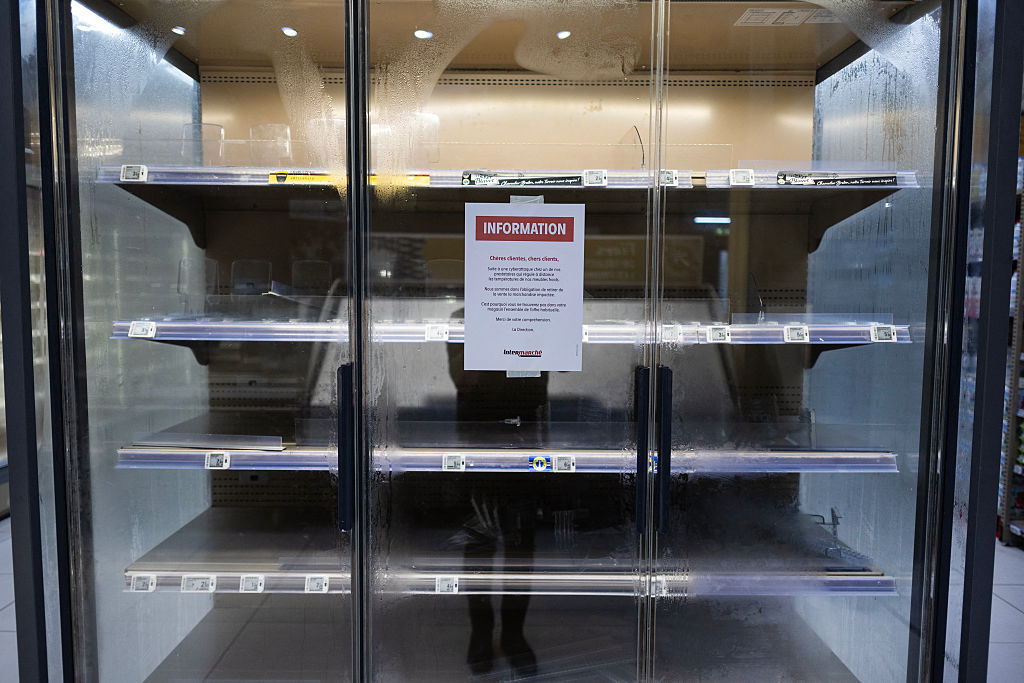
In recent developments, the UK government, together with cybersecurity experts and retail stakeholders, has initiated an urgent, cross-departmental cybersecurity operation aimed at disconnecting tens of thousands of business refrigeration and freezing equipment controllers from the public internet. This proactive measure seeks to thwart potential hacker attacks and ensure the integrity of the food supply chain.
Reports from the British Broadcasting Corporation (BBC) indicate that this covert operation affects refrigeration and freezing equipment located in large supermarkets, warehouses, restaurants, gas stations, and sports venues throughout the UK. Thousands of controllers, which are used for remotely monitoring the temperatures of cooling and freezing appliances, have been severed from internet connectivity. In some cases, personnel are manually checking temperatures instead of relying on remote access.
This year, Europe has experienced three distinct waves of cyberattacks targeting refrigeration control systems. In August, several military bases in the United States were affected. A subsequent attack in France on October 11-12 impacted hundreds of supermarkets and food processing facilities due to a breach in the Danfoss temperature control system, leading to food spoilage. Further incidents occurred on November 1-2, affecting supermarkets across seven European nations, with Belgium and Luxembourg experiencing the most significant disruptions, and some blood bank facilities in France also being compromised. The monetary losses from these attacks are reported to amount to millions of euros.
In response to these incidents, French officials have accused Iran of orchestrating one wave of attacks, a claim that Tehran has firmly denied.
Initially, there was a general perception that the UK was relatively insulated from these attacks. One of the reasons cited was that the retail and cold chain sectors in the UK predominantly utilize controllers from the domestic manufacturer Resource Data Management (RDM) rather than the Danfoss systems that had been targeted in France.
However, cybersecurity researcher Neil McCourt from the British engineering company Omega Solutions discovered critical remote access vulnerabilities in the RDM controllers in late October. Following this finding, the cybersecurity firm Pen Test Partners (PTP) assisted in verifying the vulnerabilities and identified several additional security flaws.
Experts have warned that each RDM controller manages dozens of refrigeration and freezing units, and if these vulnerabilities are exploited, the UK could face consequences more severe than those observed in the rest of Europe.
Ken Munro, a cybersecurity expert from PTP, commented, “These widely used controllers share similar weak password issues, akin to those previously exploited in the Danfoss systems and others. Therefore, it is imperative that we inform the relevant stakeholders as soon as possible while maintaining strict confidentiality.” He added that given the ubiquity of such devices, criminals or state-sponsored hackers could potentially exploit the vulnerabilities within days.
To mitigate the risk of hackers launching attacks before patches can be applied, the UK’s National Cyber Security Centre (NCSC), the Department for Environment, Food and Rural Affairs (DEFRA), and the Food Standards Agency (FSA) collaborated with cybersecurity teams, the British Retail Consortium, and retail operators to execute a covert rescue operation.
The BBC reported that major supermarket chains dispatched IT teams within weeks to conduct a thorough investigation and disconnect thousands of controllers linked to the public internet. Some personnel were instructed to manually unplug network connections and instead monitor temperatures manually, while others implemented access through private networks or virtual private networks (VPNs).
An IT employee from a major supermarket chain remarked in an interview, “This is indeed a race against time, as we anticipate further attacks on refrigeration equipment.”
In response to the vulnerability claims, Ged Evans, the CEO of RDM, stated, “This vulnerability was identified in a testing environment… the tests were beyond standard protocols, including disassembling our hardware.”
He believes that compromising their equipment would require physical access to the hardware, arguing that this situation cannot be compared to the devices attacked in other parts of Europe. However, cybersecurity researchers countered that such hardware could easily be acquired at low prices on auction websites.
Evans emphasized, “Regardless, we have taken swift action to address this issue; we have not only released the first batch of patches but also proactively contacted customers to alert them to the issues and recommend mitigation measures.”
RDM confirmed that, as of now, there are no indications that its controllers have been affected by malicious activities, and the company continues to collaborate with institutions like the NCSC to closely monitor the situation.
Following this emergency operation, the risk to large supermarkets and major cold storage operators in the UK has been substantially mitigated. Nevertheless, PTP cautioned that due to the vast and complex nature of the food cold chain supply network, some small-to-medium-sized convenience stores, restaurants, fast-food chains, and small cold storage operators may still have unprotected equipment exposed to the public internet.
Cybersecurity experts have urged all operators using RDM or other refrigeration controllers to ensure their devices are not accessible from the public internet, switch to private networks or VPNs, and promptly install the latest software updates released by manufacturers. This proactive approach is essential to reducing the risks posed by potential cyberattacks on the food supply chain.