
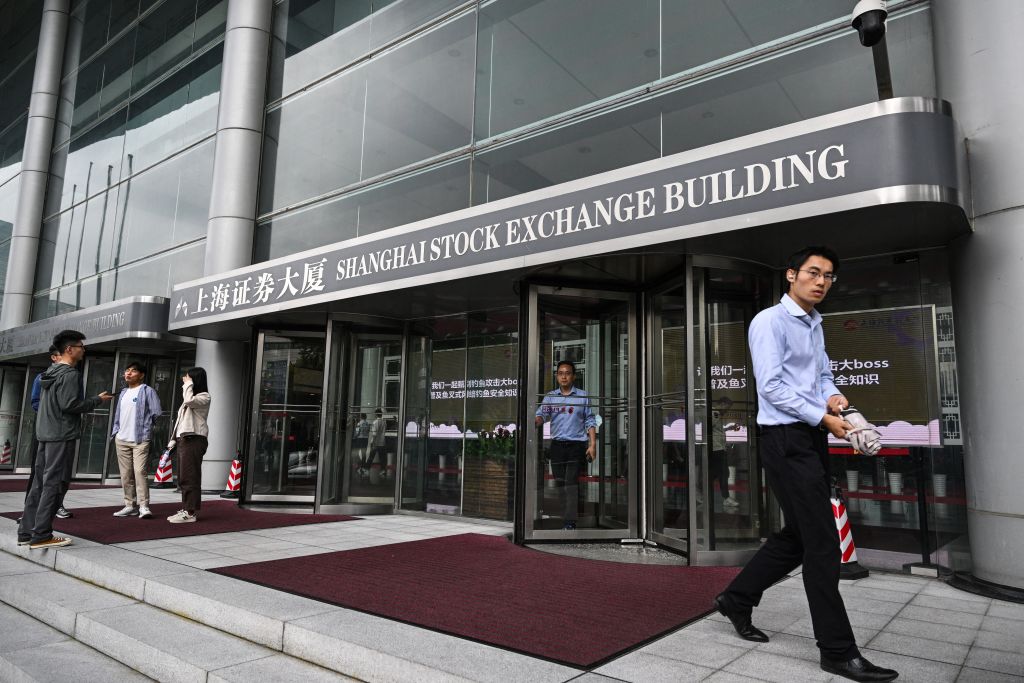
The continuous decline in China’s A-shares has inflicted significant losses on investors. However, with the advent of the traditional Year of the Sheep approaching in 2027, a surge in speculation surrounding zodiac-themed stocks has emerged within the market. Goldman Sachs has recently released its global equity market outlook for 2027, cautioning that A-shares related to artificial intelligence (AI) are experiencing considerable pressure.
On November 18, the mainland stock market opened high but later retreated, with the ChiNext Index dropping over 1% at one point. Nevertheless, the market rebounded in the afternoon as all three major indices closed with gains. Data indicated that the main funds from the ‘National Team’ have flowed into sectors related to chip technology, data centers, and the “east data, west computation” initiative. By the end of trading, the Shanghai Composite Index rose by 0.09%, the Shenzhen Component increased by 0.2%, and the ChiNext Index climbed by 0.85%.
Trading volumes across the Shanghai and Shenzhen exchanges totaled 1.37 trillion yuan, marking the lowest level of the year and a reduction of 88 billion yuan compared to the previous trading day, with over 4,100 stocks declining.
Since July, the A-share market has been on a downward trajectory, resulting in an increase in the number of low-priced stocks. As of November 17, 107 listed companies had share prices below 2 yuan, more than double the figure recorded in early June.
Recently, alongside the support from the ‘National Team,’ the market has seen a wave of speculation in zodiac-themed stocks, resulting in significant price rises for these equities. The common thread among these stocks is that their names phonetically resemble the word “sheep” in Mandarin.
According to a report from The Wall Street Journal on November 16, this wave of speculation is rooted in the phonetic culture of the Chinese language. Words such as “羊” (yang, sheep), “洋” (yang, foreign), and “阳” (yang, sun) sound the same in Mandarin, even though their meanings differ significantly. Even a men’s clothing brand known as “Qipilang” experienced consecutive trading halts, surging 10% in a day not due to an improvement in company performance but rather because speculators found a reason to buy, claiming “wolves will eat sheep.”
Financial data provider Wind has reported that there are currently 70 stocks in A-shares with names containing the characters “羊,” “洋,” or “阳,” spanning industries from steel and solar energy to circuit boards and seafood processing.
For instance, the industrial lighting manufacturer Ocean King saw its share price skyrocket by 111% in October, benefiting from the phonetic similarity of “洋” to “羊.” Meanwhile, seafood processing company Baiyang also positioned itself among the month’s top-performing stocks. Kitchen appliance manufacturer Jiuyang also surged by 77%. In contrast, during the same period, the Shanghai Composite Index fell by 6.3%.
In reality, some of these companies are not reporting positive earnings. Baiyang’s third-quarter financial report revealed a loss of 131 million yuan during the first nine months of 2026. Nevertheless, its stock price hit the ceiling of the trading limit 10 times within 18 trading days. Eastern Ocean, which has experienced annual losses since 2018 after excluding one-time items, also recorded six trading halts within 10 days.
Tian Lihui, a finance professor at Nankai University, noted that when the market lacks a clear investment theme, investors often gravitate toward simplistic concepts, with company names representing the most straightforward choice. The influence of social media and quantitative trading has further accelerated this speculative cycle.
In an interview with Economic Observer, veteran investment banker Wang Jiyue cautioned that zodiac-themed stocks lack fundamental support and are primarily short-term speculations. He advised ordinary investors to remain cautious, as they are ultimately the ones bearing the risk.
On November 16, Goldman Sachs published its global equity market outlook report, stating that numerous negative factors have already been factored into stock prices for the Chinese market.
The report downgraded the rating for A-shares, indicating that the profit growth rate for AI hard tech stocks is expected to slow dramatically from 85% in 2026 to 46% in 2027, with this sector currently accounting for 40% of the earnings weight of the Shanghai Shenzhen 300 Index. The actual profit growth rate for A-shares has been below expectations for the past seven years. Currently, the 12-month forward price-to-earnings ratio of the MSCI China Index stands at just 9.8 times, below the ten-year average by approximately one standard deviation.
The report suggested a structural shift in the core trading logic for 2027, transitioning from betting on AI trends to seeking profit growth, cash returns, and diversified allocations. The high concentration of positions built up during previous AI rally periods now poses a significant barrier to any upward movement of the index.
It is also predicted that internet, banking, and traditional consumer sectors will maintain a relatively optimistic outlook, while the energy sector is expected to see a year-on-year profit decline, and forecasts for the automotive and tech hardware segments remain conservative.
Furthermore, regarding international markets, the report anticipates a total return rate of 16% for the S&P 500 index over the next 12 months. The total return rate for the Stoxx Europe 600 index, when priced in US dollars, is estimated at 13% during the same period, while the Japanese TOPIX index is projected to reach 24%. For emerging markets, the MSCI Emerging Markets Index is expected to achieve a total return rate of 21%.