
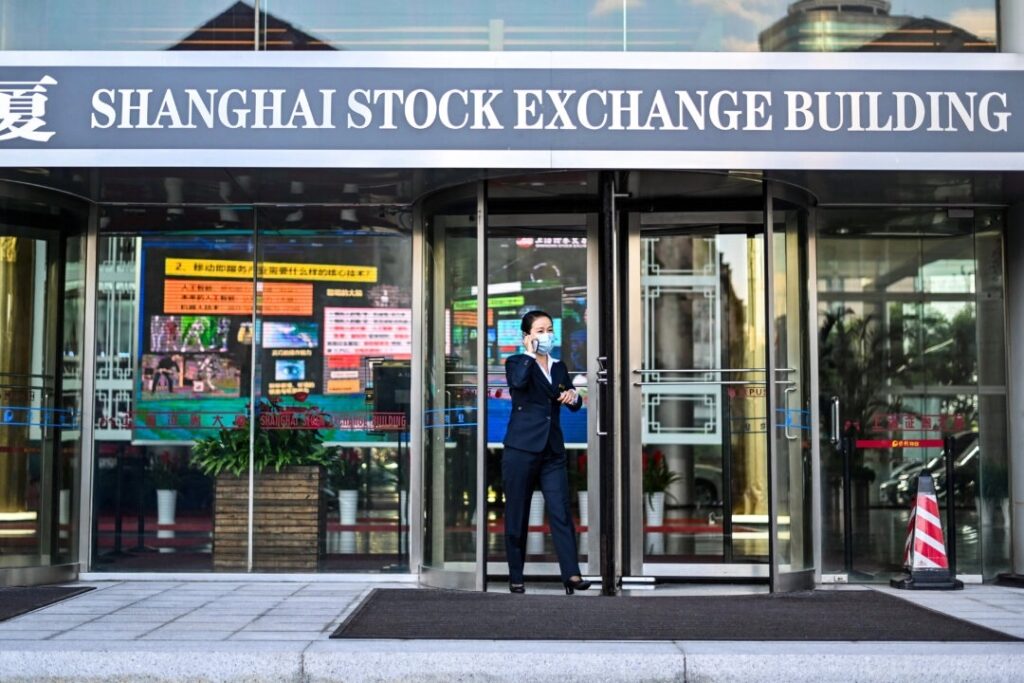
The A-share market continues to face significant pressure, with all three main indices experiencing declines on November 17. The Shanghai Composite Index fell to a low of 3565.59 points during the trading session, hitting a one-year low, and ultimately closed below the critical psychological level of 3600 points. The Shenzhen Component Index and the ChiNext Index similarly dropped, with over 4,100 individual stocks in the market reporting declines.
At the start of trading, the A-share indices opened lower and experienced some fluctuations. There was a brief recovery in the middle of the session; however, the market fell again in the afternoon. Although there was a slight rebound towards the end of the session, it was insufficient to reverse the downward trend. By the close of trading, the Shanghai Composite Index stood at 3584.58 points, down 0.50%. The Shenzhen Component Index closed at 10638.52 points with a decrease of 0.49%, while the ChiNext Index finished at 2292.20 points, reflecting a decline of 1.20%.
In terms of trading volume, the combined turnover in the Shanghai and Shenzhen exchanges reached approximately 1.46 trillion yuan (Chinese currency), which represented a reduction of about 26.8 billion yuan compared to the previous trading day. This indicates a further contraction in market activity. Overall, there were 4,119 stocks that declined, while 1,326 reported gains, and 135 remained flat, with around 80 stocks hitting their daily limit down. The market’s overall landscape was characterized by a pattern of more declines than gains.
Sector performance showed a clear divergence within the market. Certain sectors, such as semiconductor materials, photoresists, photolithography machines, precious metals, and small household appliances, displayed resilience and even gained ground amidst the overall market downturn. In contrast, sectors including film and television production, digital media, advertising and marketing, and gaming experienced substantial declines.
It is noteworthy that the Shanghai Composite Index had already seen a decline of 0.87% on the previous trading day (November 16), closing at 3602.57 points, while the Shenzhen Component Index and ChiNext Index fell by 2.53% and 4.37%, respectively. Following two consecutive trading days of declines, the Shanghai Composite Index ultimately lost the 3600 points threshold, with the ChiNext Index showing more pronounced cumulative losses.
The ongoing decline in A-shares on November 17 sparked heated discussions online. Numerous financial bloggers and investors took to social media to express their thoughts on the recent market trends and their personal investment losses.
One financial blogger, known as “Short-term 72 Changes,” shared a post stating, “The reality should be even more severe; I know several people who have lost hundreds of thousands this year.”
A professional investor, who goes by “Old Child Investment Notes,” lamented, “In early 2007, we first saw 3600 points; we met again in 2015, encountered it once more in 2021, returned in 2025, and now in 2026, we have lost it. The index has gone in circles, and it’s yet another cycle. Each such market condition tends to eliminate a group of retail investors. Many have not experienced a full cycle like this and cannot withstand the persistent downward trends and repeated pressures.”
Another financial blogger, “Tianjin Stock Hero,” remarked, “On May 11, the total market value of A-shares reached a historic high of 132.93 trillion yuan, nearly equivalent to 25 years’ worth of GDP. As of yesterday’s close, the total market value was approximately 100.15 trillion yuan, representing a reduction of about 32.78 trillion yuan, and a market cap contraction of around 24.7%. Considering there are 250 million retail investors, this translates to an average decline of 130,000 yuan per individual from the peak.”