
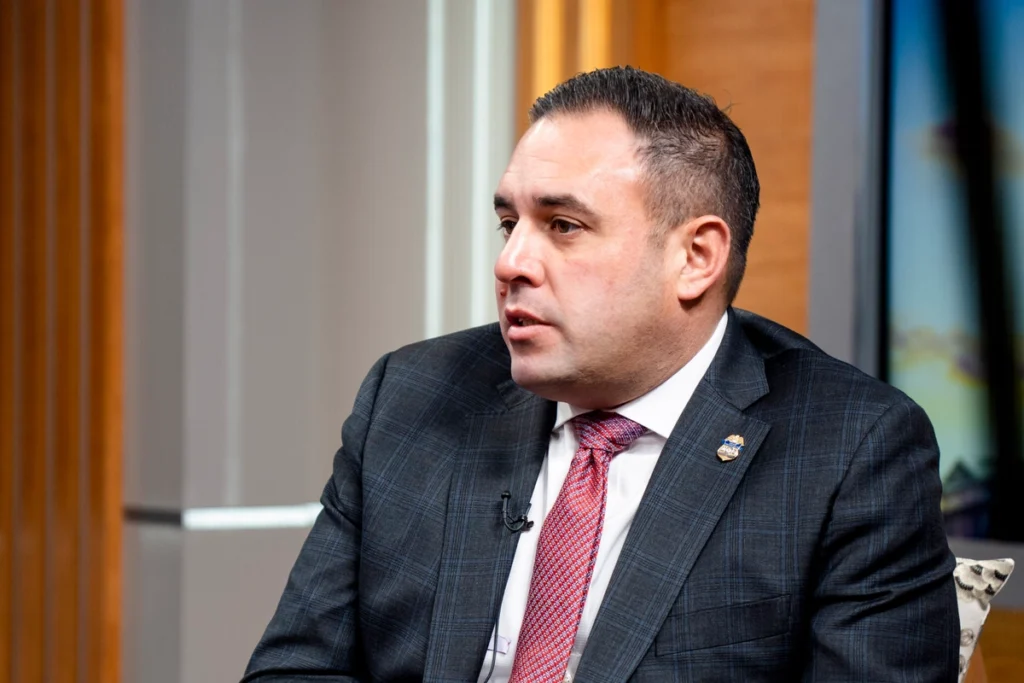
The U.S. Department of Labor’s Inspector General, Anthony D’Esposito, has revealed the pressing need for additional time to address the staggering fraud cases that emerged during the pandemic. This extension aims to prevent statutes of limitations from expiring and ensure that those responsible for these fraudulent activities can still be held accountable.
In a recent interview with New Tang Dynasty Television (NTD), D’Esposito discussed the collaborative efforts between himself and Labor Secretary Keith Sonderling to seek congressional support for extending the statute of limitations for unemployment insurance fraud cases.
“We need to extend the statute of limitations to ensure that those who exploit the most vulnerable populations in America do not escape justice,” D’Esposito emphasized.
According to reports from NTD, the office of the Inspector General recently published its first list of top fugitives, identifying 16 suspects linked to approximately $60 million in suspected fraudulent claims. D’Esposito noted that three individuals on this list are connected to a South American criminal gang that has utilized stolen U.S. unemployment funds to finance gang-related violence.
He also recounted a specific case involving a shell company operating similarly to an online shopping platform, which funneled the embezzled funds to the Chinese Communist Party.
Furthermore, D’Esposito mentioned that his office has joined a special task force led by the Nassau County Police in Long Island, investigating fraudulent activities associated with “phantom pharmacies.” These pharmacies may appear legitimate on paper, but they file claims with programs like Medicare or Medicaid for non-existent prescriptions.
The Department of Labor’s latest annual financial report, released on November 13, showed that as of September 30, 2026, states have recovered approximately $2.4 billion in misappropriated unemployment benefits. Previously, the Inspector General estimated that fraudulently obtained unemployment benefits during the pandemic could total as much as $76 billion.
The report indicated that between April 1, 2020, and September 30, 2026, states collectively recovered around $11.5 billion in improperly issued unemployment benefits, including the $2.4 billion related to fraud. Additionally, the Inspector General has estimated that during the pandemic, states might have misallocated up to $191 billion, which includes an estimated $76 billion tied to fraudulent claims.
As of July 2023, the Department of Labor reported allocating around $1.4 billion to states for fraud prevention, investigation, and fund recovery activities.
The Government Accountability Office (GAO) has posited that the total amount defrauded from the government could be even higher. In September 2023, the GAO estimated that between April 2020 and May 2023, between $100 billion and $135 billion in unemployment benefits was fraudulently claimed, accounting for approximately 11% to 15% of the total benefits disbursed.
However, the Department of Labor believes this figure may be overestimated, while the GAO stands firm on its assessment methodology. The GAO further stated that the true extent and scale of unemployment insurance fraud during the pandemic might never be fully understood.
On May 19, U.S. Representatives Beth Van Duyne (Republican, Texas) and Tom Suozzi (Democrat, New York) introduced legislation aimed at extending the statute of limitations for pandemic-related unemployment fraud cases from five years to ten years, thereby providing federal law enforcement with more time to prosecute these cases.
Van Duyne’s office indicated that prosecution deadlines for certain cases have already begun to expire since March 2025. Additionally, Suozzi highlighted in a May press release that Congress must thoroughly eliminate waste, fraud, and abuse at all levels of government to ensure that these malefactors do not evade justice and to protect victims from further harm.
The U.S. House of Representatives passed related legislation on June 29, granting the federal government up to ten years to file lawsuits against those involved in pandemic unemployment fraud. The prior statute of limitations allowed five years for criminal cases and six years for civil cases.
This bill, numbered H.R. 8873, was referred to the Senate Finance Committee for consideration on July 13, marking the latest development in the congressional record regarding this issue.
In conclusion, as the U.S. continues to grapple with the fallout from COVID-19-related fraud, the call for extended legal provisions highlights the critical importance of accountability in safeguarding public funds and protecting vulnerable communities.