
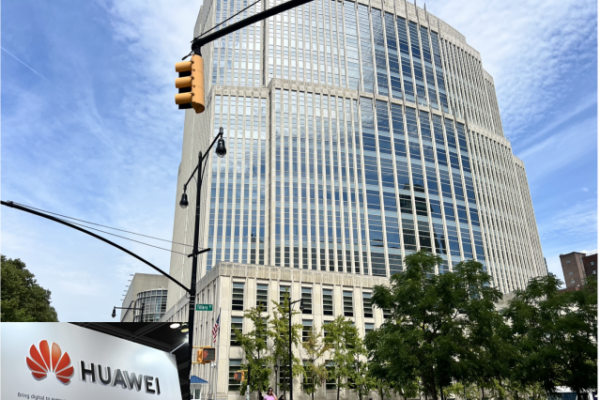
In a significant legal development, Huawei, the Chinese telecommunication giant, has reached the closing arguments phase of its criminal trial at the Federal Court in the Eastern District of New York as of November 16. After an extensive 11-week trial, the prosecution has portrayed Huawei as a “criminal enterprise operating through theft, lies, and cover-ups,” focusing on four primary allegations.
Huawei faces a total of 14 felony charges, including racketeering conspiracy (RICO), which categorizes the company as a criminal organization; theft of trade secrets, involving the unauthorized acquisition of proprietary technology and source code from at least six American companies; bank fraud and wire fraud, wherein the company allegedly concealed its business activities in Iran through a shell company, Skycom, misleading multinational banks such as HSBC in executing transactions amounting to approximately $100 million and evading U.S. sanctions; and obstruction of justice, which involved the destruction and transfer of evidence related to operations in sanctioned countries like Iran and North Korea.
Assistant Prosecutor Meridith Arfa highlighted to the jury that Huawei’s illegal activities were not merely isolated actions by individual employees, but a systematically orchestrated effort that pervaded from the highest levels of the organization down to the employee level. This operational framework allowed Huawei to illicitly obtain technology from American firms, hide its dealings in sanctioned regions, and defraud financial institutions, all in a bid to expand its global business reach.
The prosecution presented multiple cases demonstrating Huawei’s deceitful practices of “theft, lying, and cover-up.”
One striking example cited was the T-Mobile “Tappy” robot incident, where Huawei employees were photographed covertly placing parts of T-Mobile’s testing robot, used for assessing touchscreen durability, into their bags. This act was not an impulsive decision by that employee, but rather a directive from the company’s headquarters in China. Alongside pressuring the American team for core specifications, Huawei’s headquarters implemented a reward system based on the “value of intelligence,” incentivizing employees to steal confidential data.
Another case involved a breach of a confidentiality agreement concerning chip technology with CNEX Labs, a Silicon Valley startup. A former professor from Xiamen University, under the guise of academic research, attempted to acquire a prototype solid-state drive (SSD) circuit board and signed an agreement to refrain from reverse engineering. However, he deliberately concealed his association with Huawei. Subsequent examination of the board, after it was returned to China for testing, showed that the damage was not accidental, further suggesting that the true intent was to steal core secrets under Huawei’s guidance.
Notably, there was a 2004 incident at a trade show in Chicago, where a senior R&D engineer from Huawei, utilizing a tourist visa, trespassed into Fujitsu’s booth after hours. He disassembled a networking device and recorded its internal circuitry, causing operational failures. Upon entry, he altered his name badge to falsely indicate that he worked for a different entity. Prosecutors emphasized that this act was part of a theft initiative supporting Huawei’s “Metro Device” project.
In a meeting with the FBI in Manhattan in 2007, Huawei’s founder Ren Zhengfei admitted that one of his employees had been caught “taking unauthorized images of technology” but attempted to rationalize the theft.
According to Arfa, Huawei’s violations extend beyond simple theft and financial fraud. The corporation systematically provided sensitive communication and surveillance technologies to sanctioned regimes such as Iran and North Korea while deliberately hiding those operations.
For instance, Huawei worked with Iranian defense contractor “Zaeim Electronic Industries,” known for its services to the Iranian Intelligence Ministry, Defense Ministry, and Islamic Revolutionary Guard Corps, to deploy telecommunications and security monitoring systems. Huawei also installed “interception gateways” and deep packet inspection devices for Iran’s state-owned operator, MobinNet, contributing to an expanding surveillance network capable of capturing live street footage and conducting independent monitoring.
In 2011, Huawei was the first to launch video surveillance products and became Zaeim’s sole supplier, undermining its claims to U.S. Congress, banks, and the media about limiting operations within Iran.
With regard to evading sanctions, internal documents revealed that since 2008, Huawei participated in various telecommunication infrastructure projects in North Korea under the codename “A9.”
Huawei’s internal files even explicitly prohibited contract signing or execution with specific category A countries to avoid being blacklisted by the U.S. government, indicating a clear awareness of wrongful conduct masked by indirect methods. Despite this, Huawei’s executives and official representatives consistently denied involvement in North Korean projects and falsely asserted that their operations in Iran were restricted.
As the prosecution summarized, from founder Ren Zhengfei and CFO Meng Wanzhou to North America President Charles Ding, Huawei’s leadership adopted a pattern of “lies, deception, and cover-up” when confronted by law enforcement, Congress, multinational banks, and the media, which exemplifies the core culture of corporate crime within Huawei.
In the wake of learning about the U.S. government’s criminal investigation around 2017, Huawei’s legal and human resources departments expedited the return of employees who had worked in sanctioned countries back to China, erasing information from their phones and computers before their departure, intentionally destroying and concealing evidence, which led to charges of “obstruction of justice.”
The trial officially commenced on September 9 of this year, with the prosecution presenting 61 witnesses by October 28. The defense began introducing counter-evidence at the end of October and concluded its presentations on November 16. On that Monday afternoon, the prosecution delivered its closing arguments, with the defense scheduled to present its stance before the jury on Tuesday morning.
Following that, presiding Judge Ann Donnelly will instruct the jury on relevant legal guidelines, after which jurors will privately deliberate to determine the verdict on each charge.
This intense legal battle, which has spanned eight years, began with the arrest of Meng Wanzhou in Canada in 2018 and has escalated to Huawei’s current federal criminal trial in New York, marking a critical case in the United States’ pursuit of accountability regarding Huawei’s business practices and its responsibilities related to operations in Iran. The ultimate resolution will hinge on how the jury assesses the evidence presented by the prosecution, as well as interpretations by both sides of the evidence related to the case.