
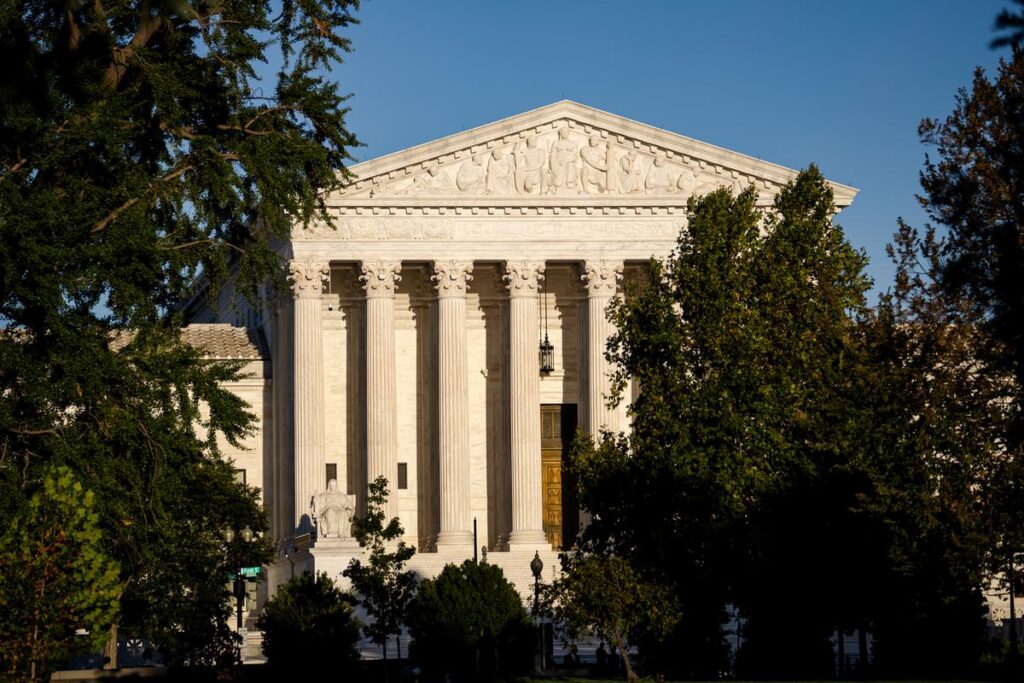
On Monday, November 16, the Supreme Court of the United States declined to hear a challenge brought by a private physician in California against a state policy, falling short of the four votes required for acceptance. The decision was supported by three justices, opposed by one, while five justices did not publicly express their stance on the matter.
The state of California mandates that licensed physicians must complete a minimum of 50 hours of Continuing Medical Education (CME) every two years in order to renew their medical licenses. An additional regulation passed in California in 2019 requires that CME courses offered by private professionals must incorporate the concept of “implicit bias.”
Ophthalmologist Azadeh Khatibi, who teaches CME courses, alongside an organization known as “Do No Harm,” filed a lawsuit challenging this requirement. They argue that the government is compelling educators to convey controversial ideological messages, which infringes upon their First Amendment rights to free speech as protected by the United States Constitution.
A lower court had ruled that while the First Amendment restricts the government from mandating that private individuals convey its messages, it does not inhibit the government’s own speech. The requirements imposed on medical courses were deemed to fall under this latter category, allowing them to proceed as planned.
Khatibi and the “Do No Harm” organization urged the justices to intervene, asserting that California’s enforcement of mandatory teachings on “controversial ideological messages” violated their constitutionally protected rights.
Three conservative justices—Clarence Thomas, Samuel Alito, and Neil Gorsuch—expressed their interest in taking up the case. Thomas criticized the lower court’s logic, stating, “This reasoning fundamentally misapprehends the Court’s precedents and the Constitution; the protections afforded by the First Amendment do not yield simply because a state imposes strict regulations on speech.” Alito echoed this sentiment. Gorsuch specifically opposed the lower court’s ruling but did not elaborate on his reasoning.
Khatibi emphasized that she regularly teaches several CME courses that comply with California’s requirements but finds the mandate regarding “implicit bias” inapplicable. She pleaded with the justices to reexamine the lower court’s ruling.
In a letter to the justices, Khatibi’s attorney stated, “This far-reaching ruling erases the constitutional boundary between government speech and private speech, threatening the free speech rights of countless professionals, and is in direct conflict with your court’s principles of limiting government speech and protecting citizens from compelled speech.”
In response, the California government urged the Supreme Court to dismiss Khatibi’s appeal. The state contended that the lower court’s ruling was consistent with the precedent established by the Supreme Court, arguing that the intervention of the highest court might “endanger” medical regulations intended to protect patient health. Additionally, California officials noted in court documents that if the Supreme Court were to accept the case and agree with the petitioner’s constitutional theories, it could potentially disrupt the regulatory framework governing the medical industry.
Although the Supreme Court chose not to hear the case, this decision does not silence the ongoing debate within American society regarding the issue at hand. A pivotal question remains unanswered by the Supreme Court: Does the government have the authority to require private professionals to communicate government-mandated views in their teaching in order to promote public policy?
This question extends beyond medical education, impacting educators, professors, lawyers, and other professionals across various fields when it comes to free speech rights. The core controversy involving the First Amendment of the United States Constitution is still very much alive and relevant.