
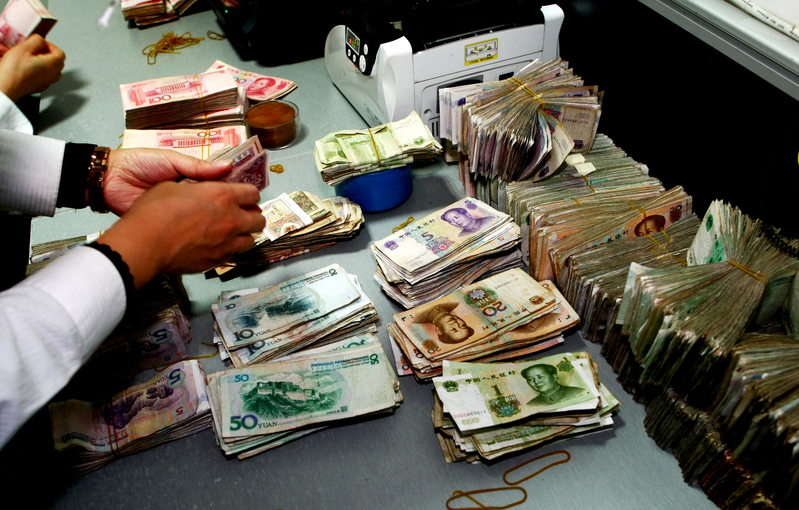
The Chinese real estate market continues to face significant challenges, prompting the government to introduce various measures aimed at stimulating housing demand. Among these initiatives is a long-term mortgage policy that allows residents to access 40-year home loans along with interest subsidies for housing loans. However, these efforts have not yielded the expected results, and financial data indicates a concerning trend: Chinese citizens are increasingly focused on reducing their borrowing and paying off debts.
Recently, the Ministry of Finance, the People’s Bank of China, and the Financial Regulatory Authority jointly released a notice announcing the implementation of a subsidy policy for residential home loans. This policy officially took effect on October 1, 2026, and is initially set to last for one year.
Reports indicate that this marks the first time the central government has directly targeted individual commercial housing loans with an interest subsidy. Under this initiative, the finance department is providing a one percentage point annual subsidy, which effectively reduces the loan interest rates by one-third based on the current market rates for first-time homebuyers. Borrowers with a long-term commercial housing loan of 1 million RMB could potentially save nearly 50,000 RMB in interest over a maximum subsidy period of five years.
Despite these measures, the anticipated impact of the mortgage interest subsidies has yet to be realized, as overall household credit continues to decline. Recent data from the central bank reveals that in October, new loans in RMB dropped by 100 billion, representing a year-over-year decrease of 320 billion. Among these, household loans decreased by 430 billion, which is 69.6 billion more than the previous year’s figures for the same month.
Delving into the specifics, short-term loans for households fell by 270 billion, showing a decline of 16.6 billion year-over-year, while medium- and long-term loans decreased by 156.3 billion, which is a more pronounced reduction of 86.3 billion compared to last year.
According to reports from various media outlets, including First Financial, chief economist at Minsheng Bank, Wen Bin, notes that the effects of the mortgage interest subsidy policy are relatively weak. There is a prevailing sense of caution among residents, who are reluctant to leverage their financial resources for home purchases, resulting in continued pressure on mortgage lending.
Similarly, Wang Yifeng, the chief analyst in the financial industry at Everbright Securities, shares the sentiment regarding weak expectations, indicating that the mood of caution among potential homeowners has not shifted. The willingness and capacity to take on debt for home purchases remains subdued, further compounding the pressure on mortgage issuance.
Household loans can be classified into three categories: business loans, housing loans, and non-housing consumer loans. Financial data indicates that by the end of the third quarter of 2026, the outstanding balance of personal housing loans stood at 35.91 trillion RMB, reflecting a 4.1% year-over-year decline, equating to a reduction of 1.1 trillion in the first three quarters. In contrast, the outstanding balance of business loans reached 25.64 trillion RMB, marking a year-over-year increase of 1.7 percent, with an addition of 538.3 billion in the first three quarters. Non-housing consumer loan balances, excluding personal housing loans, amouned to 20.69 trillion RMB, exhibiting a 2.8% year-over-year decline and a total decrease of 473.6 billion in the same timeframe.
Since the second quarter of 2025, housing loans have consistently recorded negative net increases for six consecutive quarters, surpassing the previous record of three quarters of contraction; non-housing consumer loans have also seen negative net increases for four consecutive quarters.
Additionally, the National Financial and Development Laboratory has released a report indicating that by the third quarter of 2026, the household leverage ratio fell from 62.3% in the first quarter of 2024 to 56.4% in the third quarter of 2026. This represents a cumulative reduction of nearly six percentage points. Since the beginning of 2026, the growth rate of household debt has entered negative territory, with quarterly rates recorded as -0.4%, -1.3%, and -2.0%, indicating a continuing trend of contraction.
Political observer Xia Yan notes that for several decades, the debt levels among the Chinese populace have consistently risen. However, the current negative growth rate in debt signifies a decrease in the total debt burden carried by society compared to the same period last year. This essentially means that the total amount of repayments being made exceeds the total amount of loans disbursed by banks. The expanding negative data throughout the year illustrates that the trend of debt repayment and loan reduction among residents not only persists but is accelerating with each passing quarter.