
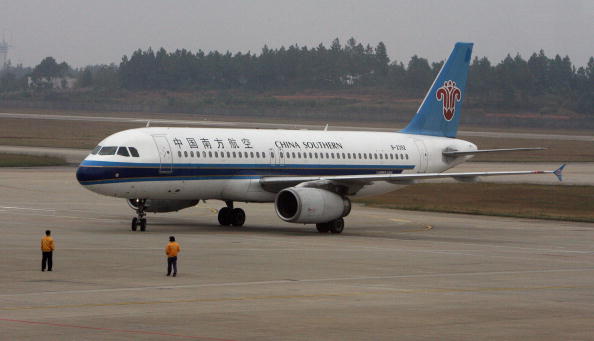
In the first three quarters of this year, China Southern Airlines Co., Ltd. reported a staggering net loss of approximately 4.296 billion yuan (RMB) attributable to shareholders of the listed company. Despite this significant financial setback, the airline has made the bold decision to invest substantially in the purchase of over 200 aircraft. Analysts believe that this strategic move is primarily driven by the airline’s need to renew its fleet in the medium to long term, as well as to achieve fuel efficiency and reduce operational costs.
Recent reports from “Ruiyan Finance,” a subsidiary of Beijing Ruiyan Economic Media Co., indicate that China Southern Airlines, along with its subsidiary Xiamen Airlines, has recently ordered a total of 137 Airbus A320NEO aircraft and signed contracts for seven Boeing freighters. Moreover, the airline is also preparing to buy 100 units of the domestically produced C919 aircraft.
In analyzing the reasons behind China Southern’s decision to purchase aircraft despite its enormous losses, several factors have emerged. Firstly, there is an expectation that supply in the aviation industry will continue to rise. With the current fleet growth rate at only 0.6%, this suggests a rigid capacity in the next two years. Any signs of improved demand could lead to an increase in both passenger load factors and airfares.
Secondly, the forecast predicts a decline in oil prices. Industry experts suggest that international oil prices are unlikely to remain elevated for an extended period, and a drop in oil prices would represent a significant advantage for China Southern Airlines.
Furthermore, there is an anticipated growth in demand. Statistics from “Air Travel Alliance,” a brand under the China Civil Aviation Information Network Co., indicate that the fourth quarter of this year is not seeing the usual seasonal decline. In November alone, domestic route bookings exceeded 18.64 million, and inbound and outbound travel bookings surpassed 5.91 million, marking a year-on-year increase of 7%. Additionally, international routes have shown stronger performance compared to domestic ones.
Many older aircraft in China Southern’s large existing fleet have reached the end of their service life. New-generation narrow-body aircraft, such as the A320NEO, are reported to save an average of 15% to 20% in fuel consumption. Given the high oil prices, incorporating new aircraft is seen as a method to lower operational costs in the medium to long term.
However, “Ruiyan Finance” cautions that the 4.3 billion yuan loss incurred by China Southern is not merely a reflection of an economic cycle’s bottom. Rather, it highlights how costs are now being scrutinized more closely than ever before. This cost will likely narrow as oil prices decrease but is not expected to disappear entirely. As long as flights deemed “essential” continue and air freight services remain unable to secure independent financing, the airline’s profitability will continue to lag behind its operational scale.
According to China Southern’s Third Quarter Report for 2026, the airline achieved an operating revenue of approximately 147.2 billion yuan in the first three quarters, reflecting a year-on-year growth of about 7%. However, its net loss attributable to shareholders was reported at roughly 4.296 billion yuan.
In a broader context, the analysis from “China Business News” indicates that China Southern Airlines has the highest proportion of domestic routes and also boasts the largest fleet. Under the pressures of high oil prices, the airline’s operating network has amplified its losses. Additionally, data reveals that passenger volume for China Southern fell by 0.19% year-on-year in the first half of the year, with domestic travel dropping by 1.92% and international travel rising by 11.7%. The overall domestic market has contracted, with international travel being crucial for revenue generation. However, since international flights typically utilize wide-body aircraft with inherently higher fuel consumption, the more service is restored, the faster fuel costs accrue. Overall, the cost situation for China Southern is precarious, with minimal room for further reductions. The true financial shortfall lies on the revenue side, where the challenge is not a lack of sales but rather a reluctance to charge higher prices.
Other state-owned airlines in China, such as China National Airlines and China Eastern Airlines, have also reported similar losses in the first three quarters of the year.
Financial reports indicate that China National Airlines achieved an operating revenue of 140.96 billion yuan in the first three quarters, marking an increase of 8.58% year-on-year. However, the airline reported a net loss attributable to shareholders of 2.015 billion yuan, a stark contrast to the profit of 1.87 billion yuan in the same period the previous year. Likewise, China Eastern Airlines recorded an operating revenue of 117.07 billion yuan, with a 10.01% yearly increase, but faced a loss of 2.115 billion yuan compared to its past profitability.
In summary, all three major state-owned airlines—China Southern Airlines, China National Airlines, and China Eastern Airlines—have transitioned from profit to loss, showcasing a clear trend of “increasing revenue without increasing profit.” Collectively, they reported a net loss exceeding 8.4 billion yuan, averaging a loss of approximately 23 yuan for every passenger transported.
All three companies have cited the rising cost of aviation fuel as a significant factor in the deterioration of their financial performance. China Eastern Airlines indicated that strained geopolitical situations in the Middle East have led to volatile international oil prices, significantly impacting fuel costs.
Analysts in Mainland China note that aviation fuel is one of the most critical operating costs for airlines. Rising oil prices directly increase flight operating costs. However, in a context of fierce market competition—exemplified by a high-speed rail network continuously diverting short-haul passengers—and travelers’ sensitivity to ticket prices, airlines face significant challenges in transferring these rising costs onto consumers.