
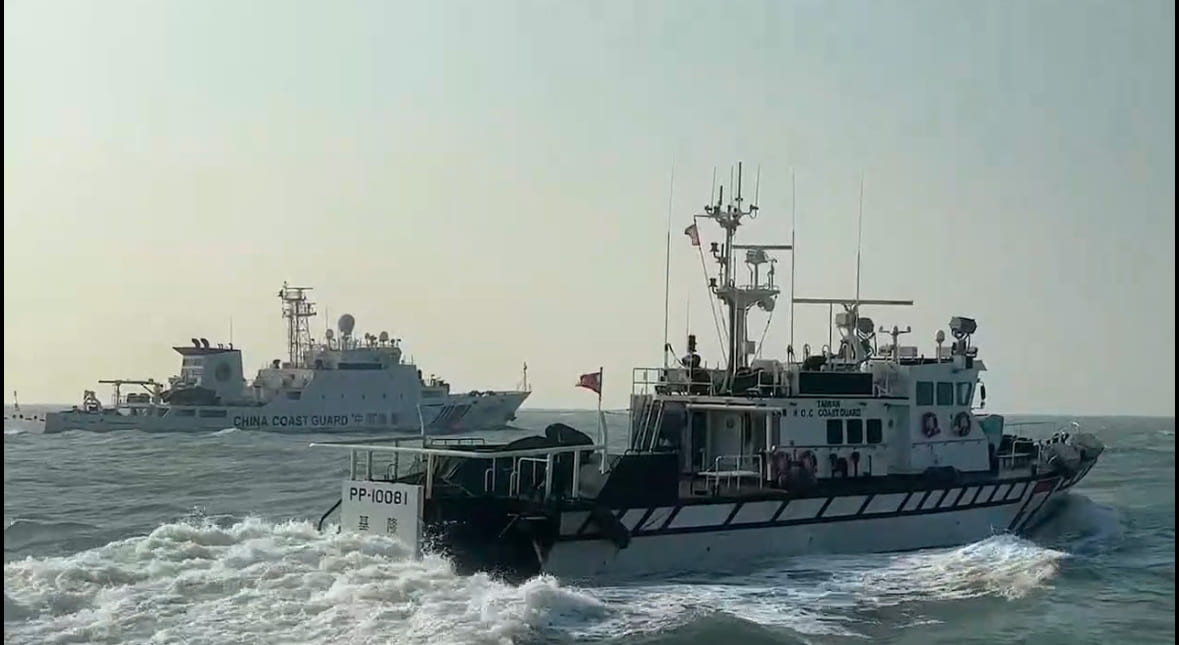
On November 11, during a meeting in Paris, the foreign ministers of the Group of Seven (G7) released a joint statement concerning the increasingly assertive actions of the Chinese Communist Party (CCP) in waters East of Taiwan. They emphasized that these activities pose a “threat to regional stability, freedom of navigation, and the safety of international shipping.” The G7 reiterated its firm opposition to any attempts to alter the status quo through force or coercion.
While prior concerns regarding the CCP’s operations in the eastern Taiwan Strait were voiced by the United States, the United Kingdom, France, and Germany, this declaration marks the most robust collective statement from the G7 to date.
Since June of this year, the Chinese coast guard has maintained a persistent patrol presence in the area, raising suspicions among Taiwanese officials. They believe that Beijing is practicing potential maritime blockades through a combination of military, paramilitary, and civilian force exercises.
The G7 statement highlighted the crucial importance of maintaining peace and stability across the Taiwan Strait. It reaffirmed, “We oppose any unilateral attempts to change the status quo, especially through the use of force or coercion.”
Moreover, the statement stressed the necessity of addressing cross-strait issues through constructive dialogue and expressed support for Taiwan’s meaningful participation in international organizations.
In response to the G7’s statement, the Taiwanese Presidential Office welcomed the remarks. Presidential spokesperson Guo Ya-hui pointed out that peace and stability in the Taiwan Strait and the Indo-Pacific region are essential for global security and prosperity. Taiwan will continue to strengthen its self-defense capabilities while working closely with like-minded international partners, including G7 member states.
Over the past few months, Chinese coast guard activities have intensified off Taiwan’s eastern coast. Reports from Reuters have noted that following patrols by the Chinese coast guard in October, Taiwan accused the mainland of harassing maritime shipping and attempting to assert nonexistent jurisdiction over the relevant waters.
The eastern waters of Taiwan hold significant strategic value. Taiwanese officials believe that in the event of a blockade or military conflict, this maritime area would serve as a vital route for external allies to deliver supplies.
On November 10, Taiwan’s Minister of National Defense, Gu Li-hsia, reported that the CCP is conducting “area denial” exercises in the western Pacific, which involve the Liaoning aircraft carrier and other naval formations.
Prior to this, Taiwanese National Security Council Secretary-General Wu Chao-hsien warned on November 3 that over 100 Chinese naval and coast guard vessels were operating in the western Pacific. In response, the Institute for the Study of War (ISW) and the American Enterprise Institute (AEI) released an analysis indicating that China might be conducting large-scale military exercises that have not been publicly announced, simulating the encirclement and isolation of Taiwan.
Researchers speculate that these exercises could serve as a rehearsal for preventing external military forces from intervening in a Taiwan Strait conflict, while simultaneously demonstrating China’s ability to swiftly blockade Taiwan and reduce the warning time for the international community regarding its blockade or invasion preparations.
Additionally, in June of this year, the diplomatic missions of the United Kingdom, France, and Germany in Taiwan issued a rare joint statement expressing concern over “new types of activities” by the Chinese authorities in the waters east of Taiwan. The three nations stated that these actions “threaten regional stability, freedom of navigation, and the safety of international shipping,” and opposed any attempts to alter the status quo through threats, force, or coercion.
According to reports from the Associated Press, the CCP referred to these maritime operations at the time as “maritime traffic enforcement and hydrographic survey operations.” Taiwan, on the other hand, accused the Chinese coast guard of requiring nearby merchant vessels to report their intended routes, constituting an infringement on shipping activities.