
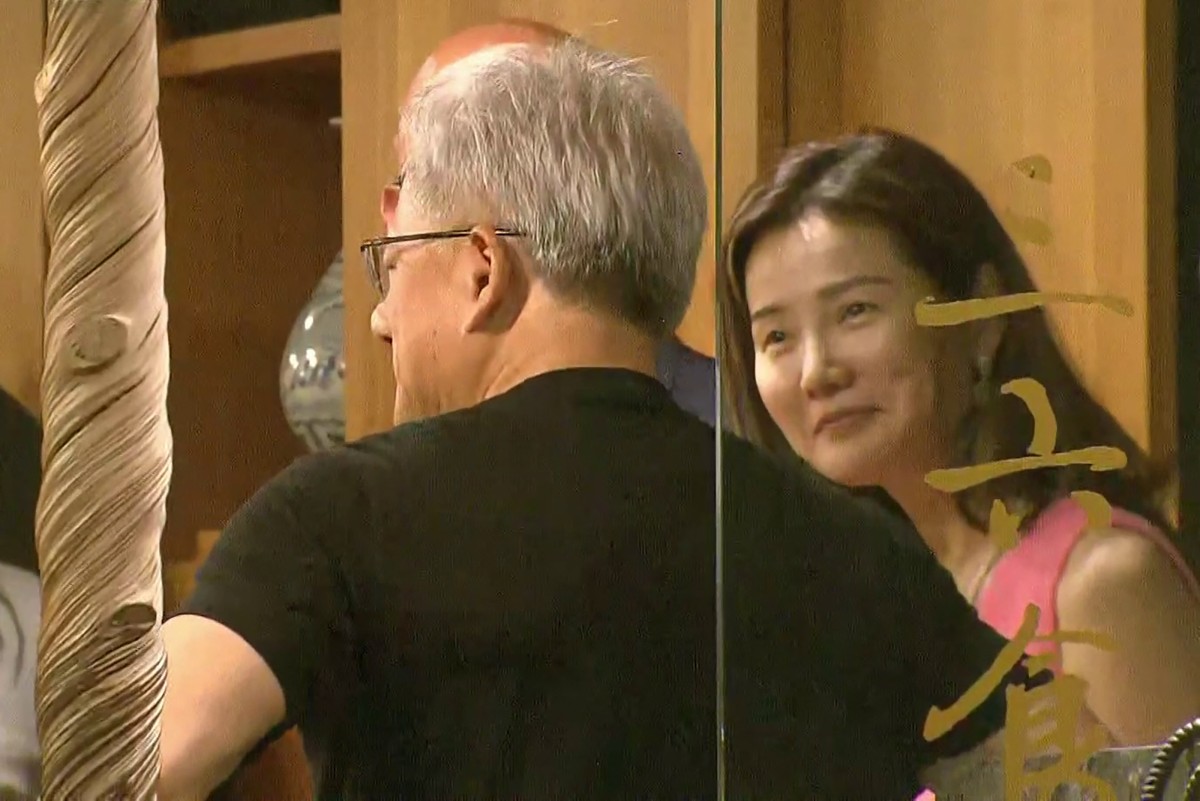
The scandal surrounding NVIDIA CEO Jensen Huang and his alleged affair with Alice Huang, a Chinese businesswoman, has gained significant traction on social media platforms in mainland China. In a recent post, Bai Jie, a former CCTV director, confirmed that Alice Huang had indeed worked at CCTV and remarked that while Huang’s infidelity might be minor, the potential espionage implications are far more serious. Following her statements, Bai Jie found herself silenced on Weibo, as her account was banned from posting.
On November 9, Bai Jie, who operates under the pseudonym “Mute” on Weibo, took to the platform to affirm that Alice Huang had worked alongside her at CCTV, describing Huang as someone who had always appeared to be exceptional in her skills. However, this post was quickly deleted by Weibo, though Bai Jie later claimed in the comment section that she did not delete it herself, insisting it was not her doing. Just a day after this incident, Bai faced a sudden ban on her Weibo account.
Reports from Caixin on November 10 shed light on Alice Huang, revealing that she hails from Hunan province and is approximately 42 years old. She holds a master’s degree in media management from Hong Kong Baptist University and has previously mentioned her work experience at Hunan TV, although her tenure at CCTV might have only been as an intern.
Publicly available information shows that Alice Huang boasts four years of media experience and eight years in the securities industry on her LinkedIn profile. She has held positions as a reporter for both Hunan TV and CCTV before transitioning to finance, where she has worked as the Assistant to the President at HSBC Private Bank and has held vice president roles at Citic Securities and Shanghai Hexi Investment.
Interestingly, Hunan TV executives have reportedly told the New York Post that they have never heard of Alice Huang, and no mention of her can be found on the official websites of either Hunan TV or CCTV.
In recent media reports from the United States, Alice Huang, a Chinese executive at Singaporean company Megaspeed, has been under suspicion from U.S. intelligence officials, who believe she may have been recruited by the Chinese Ministry of State Security. It is alleged that she was responsible for collecting information on Jensen Huang and persuading NVIDIA to expand its operations in China by making advanced chips available to the market. On November 8, Jensen Huang publicly admitted to the affair.
One of the most striking aspects of Bai Jie’s original post was her claim that “the affair is minor, but espionage is a serious issue. A high-level investigation has already been initiated.”
Li Linyi, an expert on Chinese affairs, commented that the majority of Chinese internet users cannot access foreign websites and, therefore, do not have a complete understanding of the situation involving Jensen Huang. He pointed out that the Chinese Communist Party (CCP) employs internet censorship to maintain its grip on power. Bai Jie’s ban from Weibo may have been linked to her remark about the serious implications of espionage that could be at stake.
The reports by Caixin did not address the allegations of Alice Huang being a Chinese spy, nor did they mention the ongoing investigation into NVIDIA’s CEO, Jensen Huang. Similarly, a report from Chinese media outlet Time Weekly on November 10 focused solely on the revelation of Jensen Huang’s affair and failed to touch upon any espionage claims.
Amidst the unfolding situation, the Chinese government has vehemently denied any allegations linking Alice Huang to espionage activities. On the U.S. side, NVIDIA’s board has initiated an independent investigation into Jensen Huang, and the U.S. Congress has summoned him for a closed-door briefing. Furthermore, the FBI and federal agencies may be conducting further inquiries to determine if NVIDIA was involved in any potential leaks of sensitive technology.
In light of these developments, discussions surrounding Alice Huang’s past and her potential ties to the Chinese Ministry of State Security continue to evolve, raising serious concerns about the international ramifications of such allegations.