
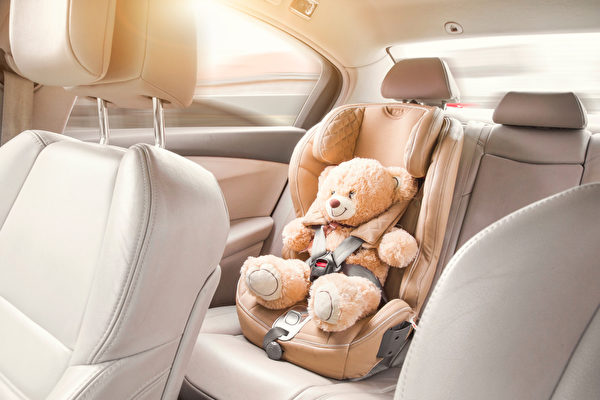
Los Angeles Police Department (LAPD) has issued an important reminder to drivers regarding the proper use of car seats to significantly reduce the risk of injury for children involved in traffic accidents.
Recent research from the Ohio University College of Medicine highlighted alarming statistics revealing that over half of the children injured in car accidents were either improperly secured or completely unrestrained. In light of these findings, LAPD is actively encouraging local residents to take advantage of free guidance offered at its four traffic divisions across the city, where parents and caregivers can learn the correct way to use child safety seats.
The aforementioned study connected the misuse of child safety seats and seat belts to a higher incidence of severe injuries and fatalities among children aged 1 to 13. By analyzing nearly 40,000 cases of child injuries, researchers discovered that a striking 39% of the children examined had not utilized any form of restraint at all. Furthermore, 19% were using devices that did not meet the appropriate age, height, or weight requirements.
The research further indicated a concerning trend in the misuse of child restraint devices, which increased from 6% among one-year-olds to 39% among seven-year-olds, before dropping back down to 1% by age 13. Additionally, the percentage of children completely unrestrained rose with age, escalating from 33% of one-year-olds to 50% of children by age 13.
To address these troubling trends, the study advocated for enhanced educational efforts aimed at families, emphasizing the need for parents to understand the appropriate stages at which children should transition from car seats to booster seats, and ultimately to using seat belts directly.
According to the guidelines, all children under the age of two must be secured in rear-facing car seats. For children who weigh 40 pounds or more, or are 40 inches tall or more, they should continue to use car seats or booster seats in the back seat. Once a child reaches eight years of age or is at least 4 feet 9 inches tall, they can transition to a booster seat but must still be restrained with a seat belt.
Caregivers are encouraged to contact any of LAPD’s traffic divisions to receive expert advice on the optimal use of child car seats. The police are also available to assist in checking whether a seat has been subject to a product recall or if it has exceeded its usage limit, as well as to guide parents through the proper installation and usage methods. This valuable service is provided at no cost, but advanced appointments are necessary.
Here are the locations and contact details of the four LAPD traffic divisions offering these services:
– **Central Traffic Division**
Address: 251 E. 6th Street
Phone: 213-833-3745
– **South Traffic Division**
Address: 4125 S. Crenshaw Boulevard
Phone: 323-421-2577
Note: Seat checks are conducted every Wednesday from 9:30 AM to 1:00 PM, and an appointment is required.
– **Valley Traffic Division**
Address: 7870 Nollan Place, Panorama City
Phone: 818-644-8143
Note: Seat checks occur every Thursday and are strictly by appointment only.
– **West Traffic Division**
Address: 4849 Venice Boulevard
Phone: 213-473-0215
Note: Seat checks are available every Wednesday from 8:00 AM to noon, and it is suggested to make an appointment in advance.
In concluding their advisory, LAPD provided drivers with a simple “five-point check” to determine if a child is appropriately secured in a seat belt without the need for a booster seat.
1. When seated, does the child’s back rest completely against the vehicle’s seat back?
2. Do the child’s knees bend comfortably at the edge of the seat?
3. Is the lap belt low and snug across the child’s hips or upper thighs?
4. Does the shoulder belt cross the center of the child’s shoulder and chest?
5. Can the child maintain this proper seating position throughout the entire trip?
The LAPD made it clear that if the answer to any of these questions is “no,” the child still requires the use of a booster seat. These guidelines aim to ensure a safer travel experience for children, helping to protect them in the event of a traffic accident.