
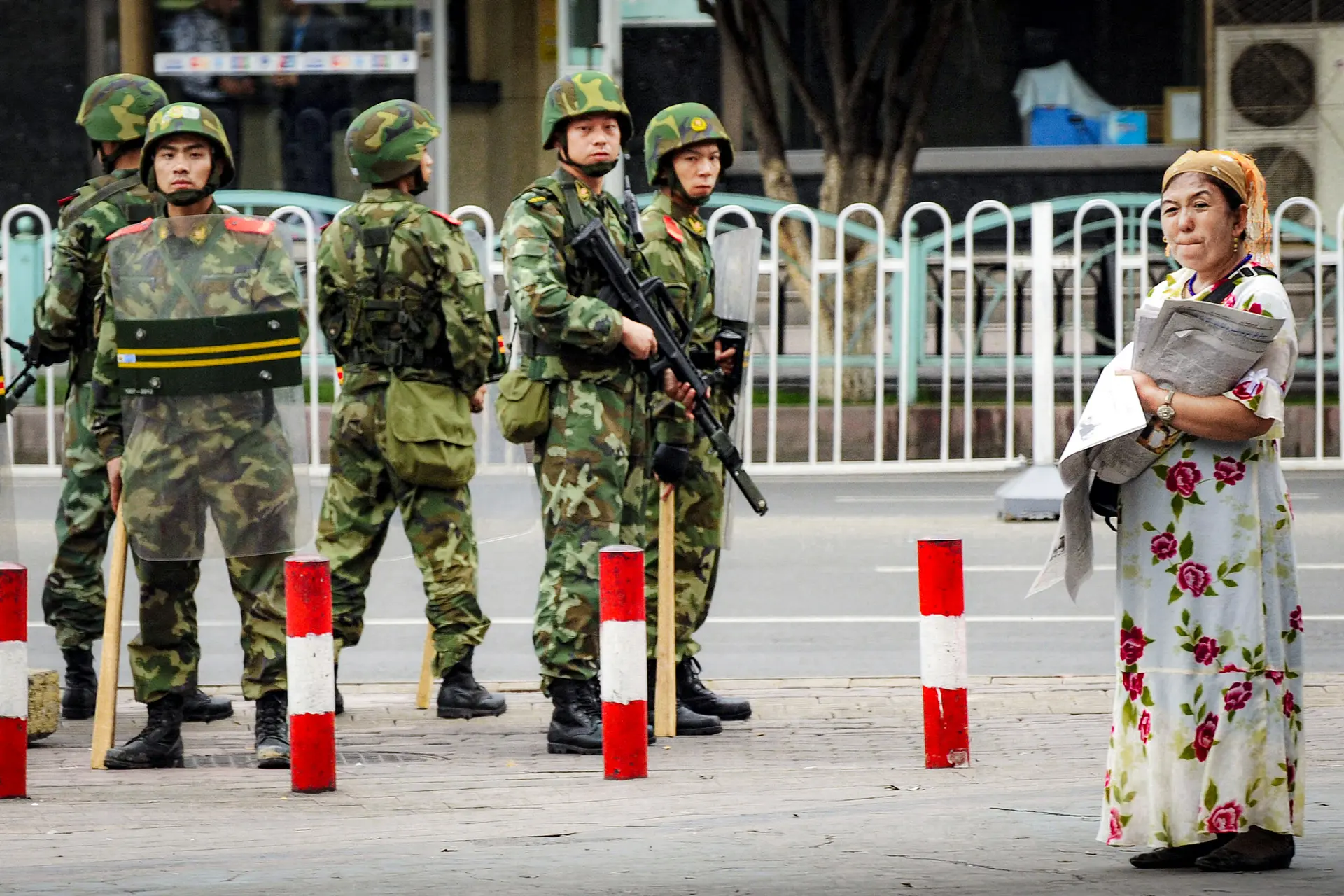
The recent series of high-profile dismissals within the Chinese Communist Party (CCP) following the Fifth Plenary Session has raised eyebrows regarding the party’s approach to governance and internal discipline. Notably, three significant figures close to President Xi Jinping have faced serious repercussions: Wang Ning, the commander of the People’s Armed Police Force; Yu Yanhong, the head of the National Administration of Traditional Chinese Medicine; and Ma Xingrui, who has been formally indicted. These events reflect not a triumph of strict governance but instead a stark contradiction to the proclaimed successes of the party.
In the wake of the Fifth Plenary Session, the rapid succession of three senior officials falling from grace illustrates the volatile climate within the Party.
First on the list was Wang Ning, who was stripped of his positions as a standing committee member of the National Committee of the Chinese People’s Political Consultative Conference and vice-chair of the Foreign Affairs Committee, having his membership suspended as well. Wang, a former general in the armed police, succeeded Wang Jianping—a man who was himself ousted under suspicious circumstances two years after being replaced by Wang Ning in 2014. Eventually, in 2020, Wang Ning reached the mandatory retirement age, and his successor, Wang Chunqing, was similarly expelled from the CCP and the military due to severe disciplinary violations in October 2025.
This pattern is concerning, highlighting that all three commanders of the armed police under Xi have encountered significant problems during their tenures. Furthermore, various political commissioners within the armed police ranks—including Zhang Hongbing, Zhu Shengling, and An Zhaoqing—have also faced expulsion from party membership or have been absent from key political events such as the National Committee of the Chinese People’s Political Consultative Conference. The armed police appears increasingly to be a focal point for Xi Jinping’s purges.
Before the CCP’s Eighteenth National Congress in 2012, the armed police force was nominally under the dual leadership of both the Central Military Commission and the State Council. However, in practice, the Central Political and Legal Affairs Commission held the power to mobilize them directly. This is significantly why Zhou Yongkang was able to command the armed police to instigate a coup. Additionally, Xi quickly downgraded the Secretary of the Political and Legal Affairs Commission from a Politburo Standing Committee member to a mere Politburo member after taking power—later reclaiming the authority over the armed police completely into the Central Military Commission.
The armed police are deeply integrated into local economic activities, controlling vast financial resources and assets, making the sector a well-known hotspot for corruption within the military. Wang Jianping, the first to fall from grace, had held the position of commander since 2009, and his downfall was a predictable consequence of his involvement with Zhou Yongkang. However, both Wang Ning and Wang Chunqing were appointed during Xi’s reign.
Notably, Wang Ning was entrusted with the critical task of eliminating Zhou Yongkang’s influence within the armed police. It’s essential to recognize that he was one of the few individuals Xi trusted during his political ascent, having connections to the Nanjing Military Region and the 31st Group Army, which remain among Xi’s closest military ties. Xi, lacking a military background, relied heavily on the relationships he built during his time in Fujian with the local troops of the 31st Group Army. This reliance later led to the significant purge of military personnel close to Xi, particularly following the downfall of Miao Hua, who had risen to prominence within military affairs.
The current round of purges may be a continuation of military cleanouts targeting officials within the “red second generation” and “military second generation.” Following the elimination of Zhang Youxia, it appears that Xi’s requirements have shifted from combating corruption to demanding absolute loyalty from military leaders. Any senior officers potentially aligned with different factions or strategic views regarding Taiwan and who diverge from Xi’s agenda seem prone to expulsion, regardless of their prior loyalty or Xi’s direct patronage.
The second major incident involved Yu Yanhong, a former senior party member of the National Health Commission and the head of the Traditional Chinese Medicine Authority, who is currently under investigation for significant disciplinary violations. Yu voluntarily reported to the authorities following the sentencing of her predecessor, Yu Wenming, for taking bribes amounting to 60 million yuan ($9 million).
The relationship between Yu Yanhong and the Xi family is notable, as she is closely connected to Zeng Yixin, who is often referred to as Xi’s personal physician. Both hail from Hunan Province and have worked together in the medical community in Guangdong Province. Furthermore, there are rumors suggesting Yu was also involved in providing personal healthcare services to Xi’s mother, Qi Xin. This connection points to a blend of personal and professional ties within the intricate power dynamics of the CCP.
Yu’s political career has been relatively impressive; she transitioned from a front-line obstetrician-gynecologist to high-ranking positions within the health sector. However, her corruption allegations arise post the 2018 appointment as vice-governor of Guangdong Province and her subsequent roles in the National Health Commission. Following the outbreak of COVID-19, Yu played a visible role in the central task force sent to combat the pandemic in Hubei, where she announced the efficacy of traditional Chinese medicine in treating COVID-19.
The circumstances surrounding her voluntary surrender to the authorities raise questions, especially since her reported corruption would likely stem from her time in positions of power granted by the National Health Commission. The notion of her voluntarily reporting to the authorities seems dubious, as it often serves to mitigate the repercussions faced during corruption crackdowns, suggesting a also broader network involved in shielding officials.
Her qualifications and experience may not inherently involve her in the high-level power struggles but could render her vulnerable to being a casualty of political rivalries, especially given her connections with Ma Xingrui and Xi Jinping.
The third high-profile case is that of Ma Xingrui, who has now officially been indicted. The prosecution accuses him of utilizing his position to amass personal benefits and accepting substantial bribes. His alleged misconduct dates back to 1999, demonstrating a long history of corruption that persisted throughout his career in various government roles without restraint after the party’s Eighteenth National Congress.
These three cases depict a broader issue of corruption within the CCP. While Ma Xingrui’s corruption genesis predates Xi, it became exacerbated during Xi’s administration. The escalating trajectory of his corrupt actions correlates with the increased power he amassed during this period. Xi Jinping’s first term was defined by a rigorous anti-corruption campaign, yet the momentum of these investigations suggests either a failure to implement a robust anti-corruption framework or a deliberate oversight that allowed corrupt practices to thrive among his protégés.
If Ma Xingrui represents an example of unchecked corruption, then Yu Yanhong illustrates the phenomenon of corruption emerging amid anti-corruption efforts—effectively a defiance of governance norms.
Wang Ning’s reputation is less documented, but the trend suggest that the position of armed police commander is ripe for fostering violations of party discipline.
According to the findings published in the Fifth Plenary Session resolutions, Xi Jinping claims to have implemented effective measures to strengthen party discipline since assuming leadership, as evidenced by the growing number of high-ranking officials under scrutiny.
Yet the increasing frequency of internal purges suggests an overwhelming necessity to target disloyal officials, thus revealing that the CCP has not established a resilient framework for preempting corruption or disloyalty. The sentiment that officials “dare not indulge in corruption” appears to ring hollow. From this perspective, Xi’s self-positioning during the Fifth Plenary Session comes off as exaggerated—if not entirely baseless.
Remarkably, all three individuals involved in these scandals are closely tied to Xi Jinping, which places them within his faction in the complex political landscape of the CCP.
This scenario presents two possibilities: On one hand, it could reflect the often-discussed notion of “cutting inward” where Xi turns against his own affiliates. On the other hand, it may be an orchestrated effort to elevate Xi’s anti-corruption rhetoric to a level that necessitates significant introspection, utilizing the shortcomings of his close allies to consolidate power further. This indicates Xi has failed to establish an unwavering circle of loyalty among his allies or enforce transparency within his own ranks.
Historically, the CCP has been synonymous with rampant corruption, and despite Xi’s purported anti-corruption measures, the environment remains unchanged. The downfall of individuals within Xi’s inner circle starkly contradicts his proclaimed ideals of strict governance. This casts a new light on assertions made during the Fifth Plenary Session, which claimed to resolve contradictions that Mao Zedong could not address, bringing into question the efficacy of Xi’s leadership on critical issues of governance.