
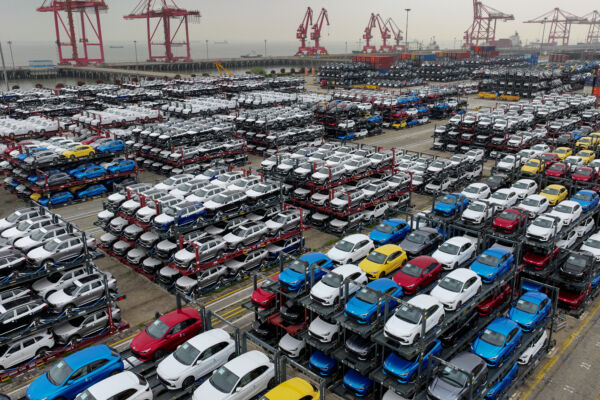
According to the latest forecast from the China Passenger Car Association (CPCA), the automotive export market in China is expected to experience a significant slowdown in growth in 2027, following an explosive surge in 2026. This prediction comes amid the dual pressures of rising tariffs in Europe and the United States, along with a decline in domestic sales.
As the U.S. implements high tariffs on imported goods, major overseas markets such as the European Union, Thailand, and Brazil have also increased their tariffs or established import quotas. With the export market facing increasing challenges, the domestic car market is simultaneously experiencing a downturn, leading to compounded pressures on China’s automotive industry.
In a briefing on Monday, CPCA Secretary-General Cui Dongshu noted that the anticipated slowdown in export growth can largely be attributed to trade barriers imposed by various countries aimed at protecting their local industries. Cui indicated that the expected export growth rate for 2027 is projected to drop to 10%, a stark contrast to the ultra-fast growth seen in the current year. This decline will further weaken the buffer that overseas markets have traditionally provided for Chinese automotive manufacturers.
Currently, Chinese car manufacturers are grappling with a persistent decline in domestic sales. Data shows that in October, domestic passenger car sales plummeted by 27.3% year-on-year, marking the thirteenth consecutive month of decline. Cui and several high-level executives from automotive companies, including Geely’s Vice Chairman Gui Shengyue, have openly acknowledged the challenges presented by advance demand being scraped away due to the premature expiration of subsidy policies, alongside an economic slowdown. As a result, the traditionally robust autumn sales season, known as the “Golden September and Silver October,” has nearly vanished and may become the norm moving forward.
The intense price wars within the domestic market have now begun to impact exports as well. Notably, BYD, China’s largest electric vehicle manufacturer, has reported a significant slowdown in global sales growth for October. Their profit performance in the third quarter also fell short of market expectations. Additionally, the delivery figures for new energy brands such as Huawei’s HarmonyOS Intelligent Driving (HIMA), Li Auto, and Nio have all seen declines.
Analysts from institutions like Nomura Securities have pointed out that the domestic automotive market in China has officially entered a harsh “elimination round” phase, with projections indicating an alarming 23% decrease in annual domestic sales for 2026.
This complex and challenging landscape reflects the broader struggles of the Chinese automotive industry, which faces both internal and external obstacles that threaten its growth and sustainability in an increasingly competitive marketplace.