
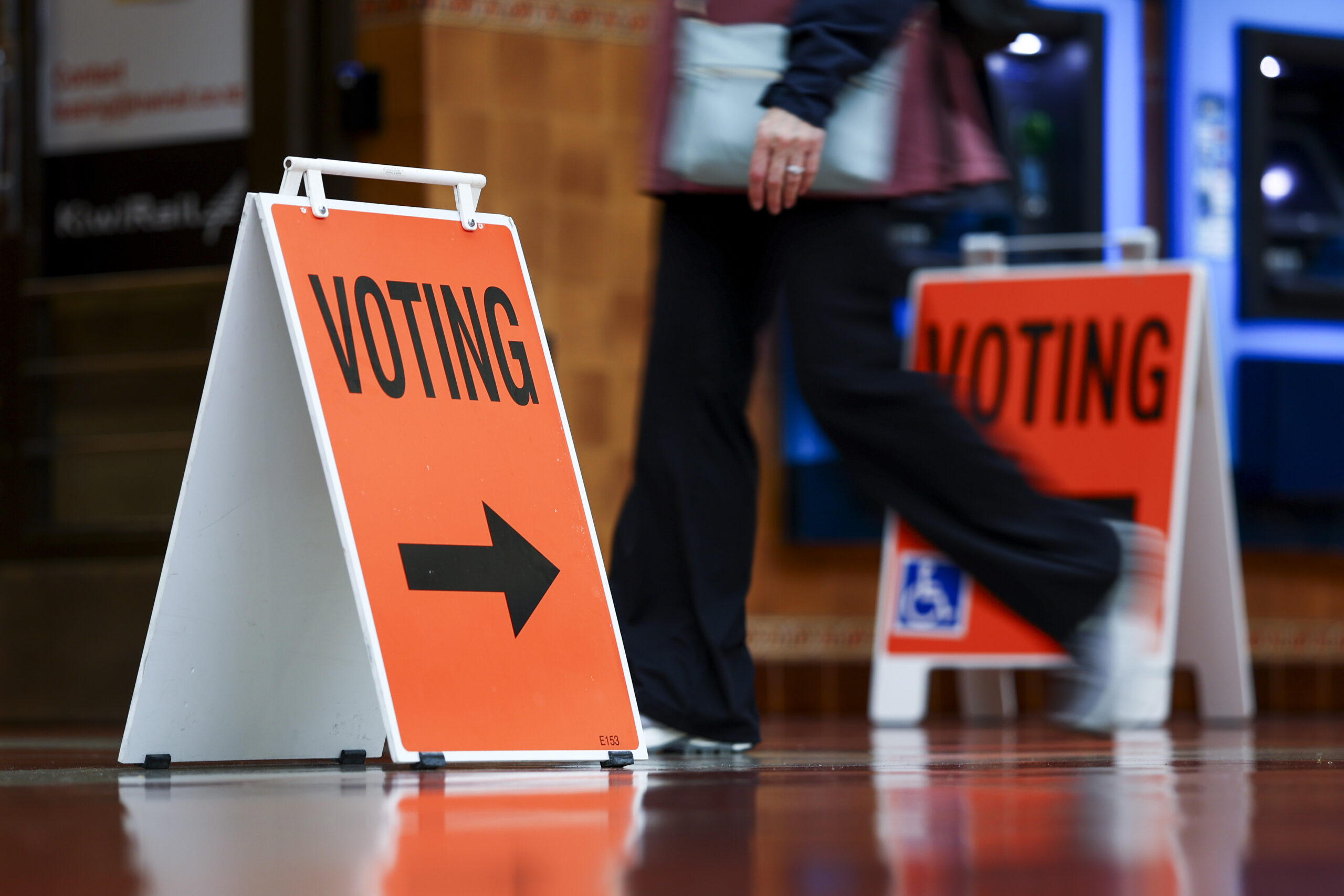
On Saturday, November 7, New Zealand held its parliamentary elections, and initial counting of the votes indicates that the government coalition led by Prime Minister Christopher Luxon has secured 67 of the estimated 131 seats in parliament, a result that places them just one seat above the threshold for a majority. Notably, about 400,000 special votes are yet to be counted, which could potentially alter the allocation of seats. The official results are expected to be released on November 27, leaving the question of who will govern for the next three years still uncertain.
This election has illustrated a decline in support for the two major traditional parties. The Labour Party (LAB) and the National Party (NAT) received respective vote shares of 29.36% and 29.21%. According to Reuters, the combined vote share of these two parties marks the lowest point since the current electoral system was introduced in 1996. Although the Labour Party received a slightly higher percentage of the vote, the National Party is projected to win 42 seats, six more than the Labour Party, thanks to strong performances in local electorates. Meanwhile, several minor parties have seen an increase in support.
Preliminary results released by the New Zealand Electoral Commission on November 7 indicate that the National Party is expected to gain 42 seats, with its governing partners, the ACT Party and New Zealand First, projected to secure 13 and 12 seats respectively, totaling 67 seats. In the 131-seat parliament, the majority threshold stands at 66 seats.
However, the Electoral Commission estimates that there are still 399,365 special votes pending verification and counting, including votes cast overseas and those from across electoral boundaries. Historically, this type of voting has tended to favor left-leaning parties. The Associated Press noted that in the last four elections, the National Party has lost between one to two seats once the special votes were accounted for.
Following the election, Luxon addressed his supporters, suggesting that the National Party has a chance to form the next government. He remarked, “But I must inform everyone that the race is too close to call.”
Labour Party leader Chris Hipkins did not concede defeat either, stating, “Based on tonight’s situation, it is clear we need to wait a bit longer to know how the next government will be constituted.”
Notably, the centrist Opportunities Party (OPP) has crossed the 5% threshold for party votes for the first time, projected to win 7 seats, which could play a crucial role in coalition negotiations. OPP leader Qiulae Wong expressed a willingness to negotiate with both sides. However, Luxon has previously ruled out the possibility of sharing power with this party.
The National Party’s voter share has fallen from 38.08% in 2023 to 29.21%. While the Labour Party’s vote has seen a slight recovery compared to the previous election, it remains below 30%. In contrast, the Green Party (GP), ACT Party, and New Zealand First have seen their vote shares rise to 13.30%, 10.92%, and 9.78% respectively, compared to previous elections. Key issues for this election included economic weakness, inflation, and rising living costs.
The election results underscore the unique aspects of New Zealand’s Mixed Member Proportional (MMP) system, where voters cast separate ballots for parties and local candidates. When a party wins an excess of local seats beyond what is proportional to its party vote share, this results in “overhang seats.”
The 42 seats projected for the National Party are entirely derived from local electorates. Despite securing only 0.57% of the party vote, the Māori Party managed to gain 5 electorate seats.
Typically, the New Zealand Parliament comprises 120 seats; however, due to the overhang seats created by the National Party and the Māori Party, this election will see an increase to 131 seats. Consequently, despite having a lower party vote total, the National Party will occupy more seats in Parliament than the Labour Party.
Because the National Party secured more local seats than it could claim in proportional allocation, it did not obtain any party list seats. As a result, some senior MPs who did not win in their electorates, including Deputy Leader and Minister of Finance Nicola Willis, may not return to Parliament.
Willis expressed disappointment, saying, “The chances of me returning to Parliament seem very low.”
Additionally, House Speaker Gerry Brownlee, Transport Minister Chris Bishop, and Minister of Defense and Justice Paul Goldsmith also face the possibility of losing their seats.
On the other hand, the Associated Press highlighted that with the increased seats for the ACT Party and New Zealand First, these parties may seek to exert greater influence in the upcoming coalition negotiations.
Both major party leaders have indicated that coalition talks will not commence until the official results are announced. Smaller parties may also support the government during crucial votes through “confidence and supply agreements” without formally joining the Cabinet.
Until a new government is formed, the current coalition led by the National Party will continue to function as a caretaker government. The estimated voter turnout for this election was 74.6%, a decrease from the 78.2% recorded in 2023.