
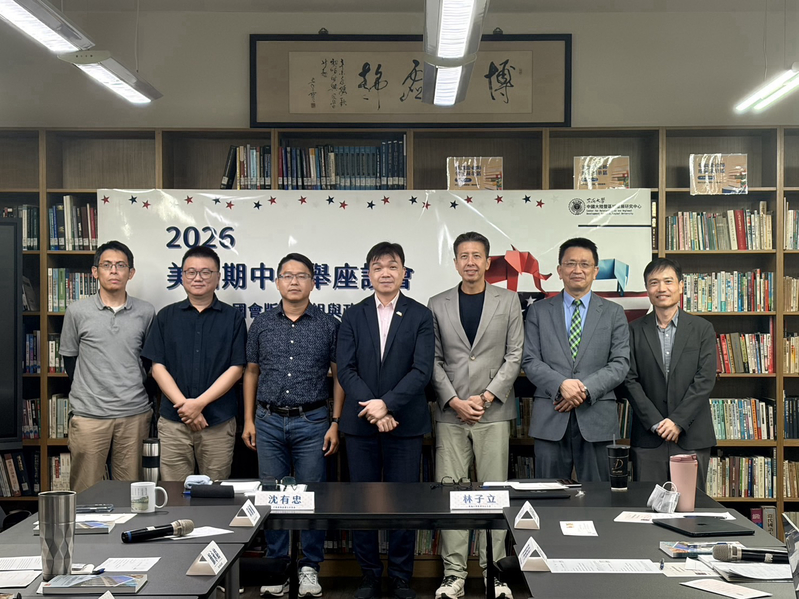
The recently concluded U.S. midterm elections have drawn attention to the evolving geopolitical landscape, particularly in relation to Taiwan’s security and its bilateral relations with the United States. The Deputy Minister of the Mainland Affairs Council of the Republic of China, Shen Youzhong, emphasized the importance of maintaining peace and stability in the Taiwan Strait, which he described as a shared interest among Taiwan, the U.S., and democratic nations around the globe. He asserted that these interests would remain steadfast regardless of the outcomes from the midterm elections, and pledged that the Taiwanese government would continue to foster open communication with various sectors in the United States to deepen the Taiwan-U.S. partnership.
On November 6, Shen Youzhong attended a forum hosted by the Center for Mainland Studies at Tung Hai University, titled “2026 U.S. Midterm Elections – Congressional Landscape Restructuring and Political Evolution.”
During his address, Shen noted that bipartisan support for Taiwan in the U.S. Congress has always been characterized by a strong consensus, suggesting that the recent midterm elections were unlikely to disrupt this support. He elaborated that ongoing disputes between the U.S. and China relating to trade, technology, and geopolitics represent structural issues that are not easily altered. Although the results of the midterm elections might inject some uncertainty into Sino-American relations, the fundamental nature of their competition is expected to remain unchanged.
Shen also observed that the Chinese Communist Party (CCP) has reacted minimally to the midterm election results, indicating a desire to maintain a facade of stability in its relationship with the United States. This approach seems aimed at ensuring a smooth transition for Xi Jinping into his fourth term during next year’s “21st National Congress.” Recently concluded Party meetings have seen the reprimanding of 34 members of the Central Committee, including several senior military figures and even some close allies of Xi himself, highlighting the internal security threats Xi perceives within his own ranks.
Looking ahead to the upcoming “21st National Congress,” Shen emphasized that Xi’s immediate priority is to secure both internal and external stability to eliminate potential obstacles to his re-election. However, he faces significant challenges, including internal purges, economic downturns, and exacerbating social discord. Should Sino-American relations experience further instability, the CCP may respond with more aggressive actions, aiming to divert attention from domestic issues.
Shen cautioned that the CCP might resort to inciting nationalism by increasing military deterrence against Taiwan, conducting harassing operations, applying economic pressure, pursuing international isolation, and enhancing aggressive measures such as “governing before unifying.” As local elections in Taiwan enter a critical period, citizens are urged to approach issues of CCP interference and cross-border suppression with heightened vigilance.
Finally, Shen reiterated that as the midterm elections in the United States and the fifth plenum of the CCP conclude, Taiwan’s local elections continue to progress. The government remains committed to carefully responding to various changing external circumstances to maintain stability in Taiwan-U.S. relations and to monitor developments within the CCP’s political landscape. He also called upon the public to unify in safeguarding the nation’s sovereignty and way of life rooted in freedom and democracy, while allowing for diverse electoral preferences.