
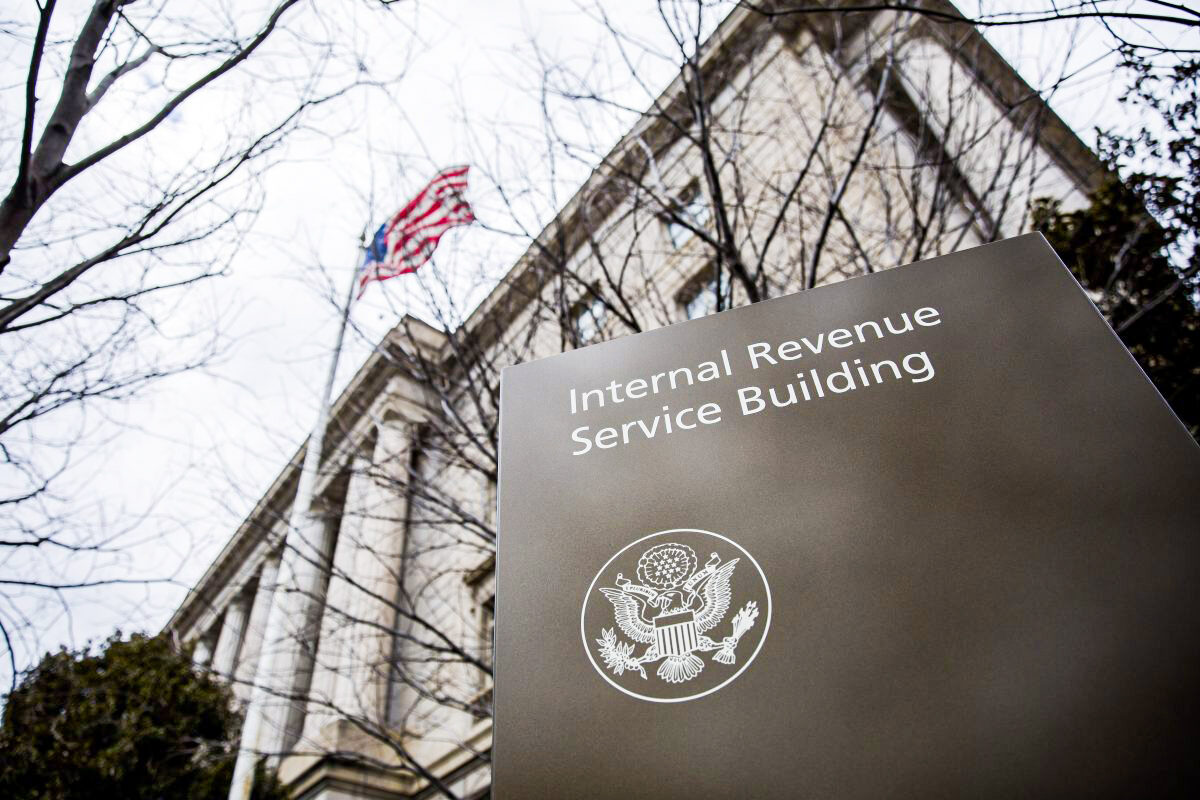
On November 5, the Internal Revenue Service (IRS) released its inflation adjustments for the 2027 tax year, revealing substantial increases across several key federal income tax thresholds and the standard deduction. Notably, the standard deduction for married couples filing jointly will rise to $33,200, reflecting a $1,000 increase from the previous year.
This announcement was made via IRS press release IR-2026-133, which detailed nearly 70 tax item adjustments for the 2027 tax year, encompassing the tax rate schedule, standard deduction amounts, and other relevant provisions. The specific details of these adjustments can be found in Revenue Procedure 2026-35.
The adjustments will generally affect taxpayers when they file their returns in 2028. However, taxpayers preparing to file their returns in the spring of 2027 should continue to use the figures published in October of the previous year, specifically for the 2026 tax year.
Frank J. Bisignano, the IRS Commissioner, commented on the updates, highlighting that American individuals and businesses will benefit from enhanced tax advantages in the upcoming tax year. This includes increases in the standard deduction and the child tax credit, as well as higher allowable deductions for corporate expenses.
For the 2027 tax year, the standard deduction for married couples filing jointly will increase to $33,200, up from $32,200 in 2026. Single filers and married individuals filing separately will see their standard deduction rise to $16,600, compared to $16,100 in the prior year. Heads of household will also benefit from an increase, with the deduction moving from $24,150 in 2026 to $24,925 in 2027.
It is important to note that the maximum marginal tax rate will remain at 37%, applicable to individual taxpayers with taxable income exceeding $661,375, and for married couples filing jointly with taxable income over $793,650. While the tax rates themselves will not change, the income thresholds at which these rates apply are adjusted.
The IRS has projected an approximate 3% increase across the various threshold levels based on its calculations from the latest releases, aimed at preventing “bracket creep,” which happens when taxpayers find themselves in a higher tax bracket due solely to inflation-related increases in nominal income. Thus, if a taxpayer’s income remains steady in 2027 compared to 2026, they may experience a lessened federal tax burden due to the broadened income ranges at which tax rates apply.
Additionally, the child tax credit for 2027 will increase to a maximum of $2,300 per qualifying child, which represents a $100 increase from the 2026 limit. The refundable portion of this credit will also rise to $1,800, again matching the $100 increase.
In terms of estate and gift taxes, the basic exclusion amount for decedents in 2027 will be $15.48 million, compared to $15 million in 2026. The annual gift exclusion will increase from $19,000 to $20,000, while the annual exclusion amount for gifts to non-U.S. citizen spouses will be adjusted from $194,000 to $201,000.
Additional adjustments relevant to average households include significant increases in business expensing capabilities, with Section 179’s maximum amount rising to $2.64 million for 2027, up from $2.56 million in the prior year. The limit on deductions for sport utility vehicles (SUVs) will also increase to $33,100.
It is essential to note that under current law, some provisions that had previously been adjusted for inflation will no longer receive annual increases. For the 2027 tax year, personal exemptions will remain at zero, consistent with the figures from 2026. Moreover, the income thresholds for the Lifetime Learning Credit have not been adjusted since 2021, with the limits set at $80,000 to $90,000 for single filers, and $160,000 to $180,000 for married couples filing jointly.
The “Working Families Tax Cuts” referenced by the IRS in their release pertains to the One Big Beautiful Bill Act, which was enacted in July 2025. When the IRS released the 2026 tax year adjustments last year, they similarly referred to this act, noting its establishment of permanent changes to the personal exemption rules initially set forth in the Tax Cuts and Jobs Act of 2017.