
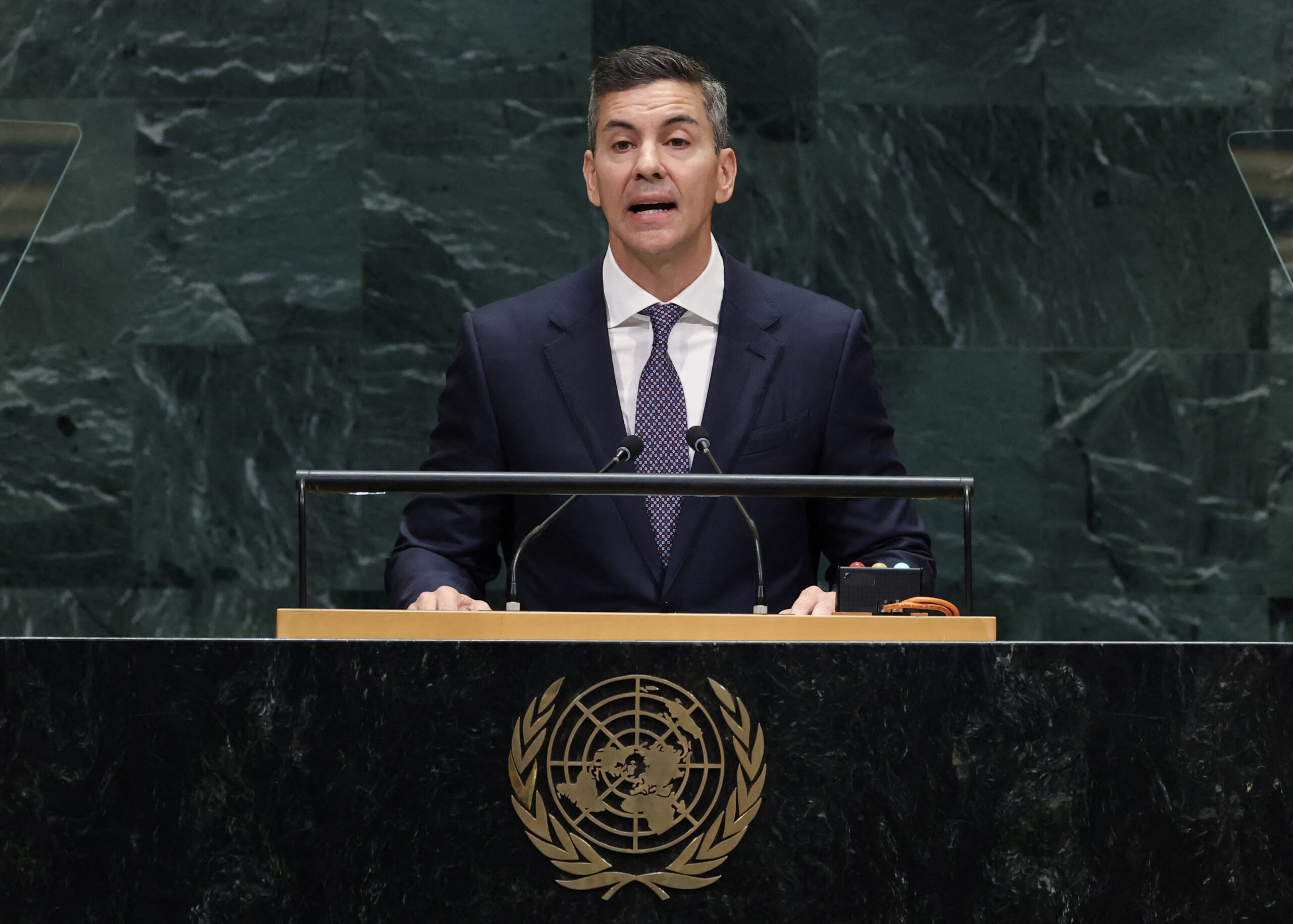
Ueno Bank, a significant digital banking institution in Paraguay, has officially ceased operations, triggering a wave of political and financial turmoil within the country. In a dramatic turn of events, President Santiago Peña announced his resignation on Thursday, November 5, due to the fallout from the bank’s collapse.
In a video shared on social media platform X, Peña expressed his regret, stating, “If I have disappointed anyone at any point, I want to apologize.” He emphasized, “I never intended to betray the trust that the people placed in me.”
Peña’s resignation is directly tied to the financial crisis surrounding Ueno Bank, with accusations from lawmakers regarding potential conflicts of interest and misconduct on his part. Although Peña has vehemently denied these allegations, he clarified that his decision to resign aimed to preserve national stability, social peace, and the integrity of democratic institutions. He also stated his intention to participate in an impeachment hearing before the Senate to defend himself.
As Peña stepped down just hours before parliamentary members were set to initiate impeachment procedures, he did so after losing support from his conservative political party, the Colorado Party. He remarked that his resignation was not motivated by personal pride but rather a matter of responsibility and accountability to the Paraguayan people.
On the same day that Peña announced his resignation, the House of Representatives voted unanimously, with 78 in favor and none against, to approve impeachment charges against him. The case has since been forwarded to the Senate, which began the relevant procedures on the evening of November 5, notifying Peña to appear for his defense on the morning of November 6.
As of now, Peña’s resignation has not yet been accepted by Congress, and he could still face impeachment proceedings. If his resignation were to be accepted, he would retain the status of a lifetime senator, enjoying parliamentary immunity. However, if convicted through impeachment, he would lose this privilege and potentially face legal consequences.
According to the Paraguayan Constitution, once the Senate forms a court to conduct the trial, a two-thirds majority is required to officially convict and remove the president from office.
Elected in 2023, Peña had close ties to Ueno Bank’s parent company, Grupo Vazquez, being one of its minority shareholders until he sold his shares in March 2025. Ueno Bank was launched as a digital service brand by Grupo Vazquez in 2022 and received official banking status from the Central Bank of Paraguay in December 2023.
Under Peña’s administration, Ueno experienced rapid growth. With a population of 6.5 million in Paraguay, the bank attracted around 3 million customers, equating to approximately 60% of the adult population. Moreover, Ueno managed around $850 million in public funds, which included resources linked to national agencies and pension schemes.
However, earlier this week, the Central Bank of Paraguay determined that Ueno Bank’s solvency indicators fell below half the legally required minimum due to excessive lending to related enterprises and a significant capital shortfall following financial report adjustments.
In response, the Central Bank announced the initiation of a “resolution procedure,” effectively placing the bank under takeover and liquidation. As a result, millions of accounts were frozen, disrupting savings, payments, and welfare. This prompted thousands of citizens to take to the streets, demanding Peña’s resignation.
Following the crisis at Ueno Bank, Carlos Carvallo, the head of the Central Bank of Paraguay, resigned on November 3. Furthermore, authorities issued arrest warrants for eight senior executives of Ueno, all of whom subsequently turned themselves in.
Following Peña’s resignation, the prices of Paraguay’s sovereign bonds dropped, and the national currency, the guarani, saw its exchange rate against the US dollar dip below 6,500, reflecting a nearly 5% decrease in value on that day.
The repercussions of this crisis continue to unfold, impacting the political landscape and economic stability within Paraguay.