
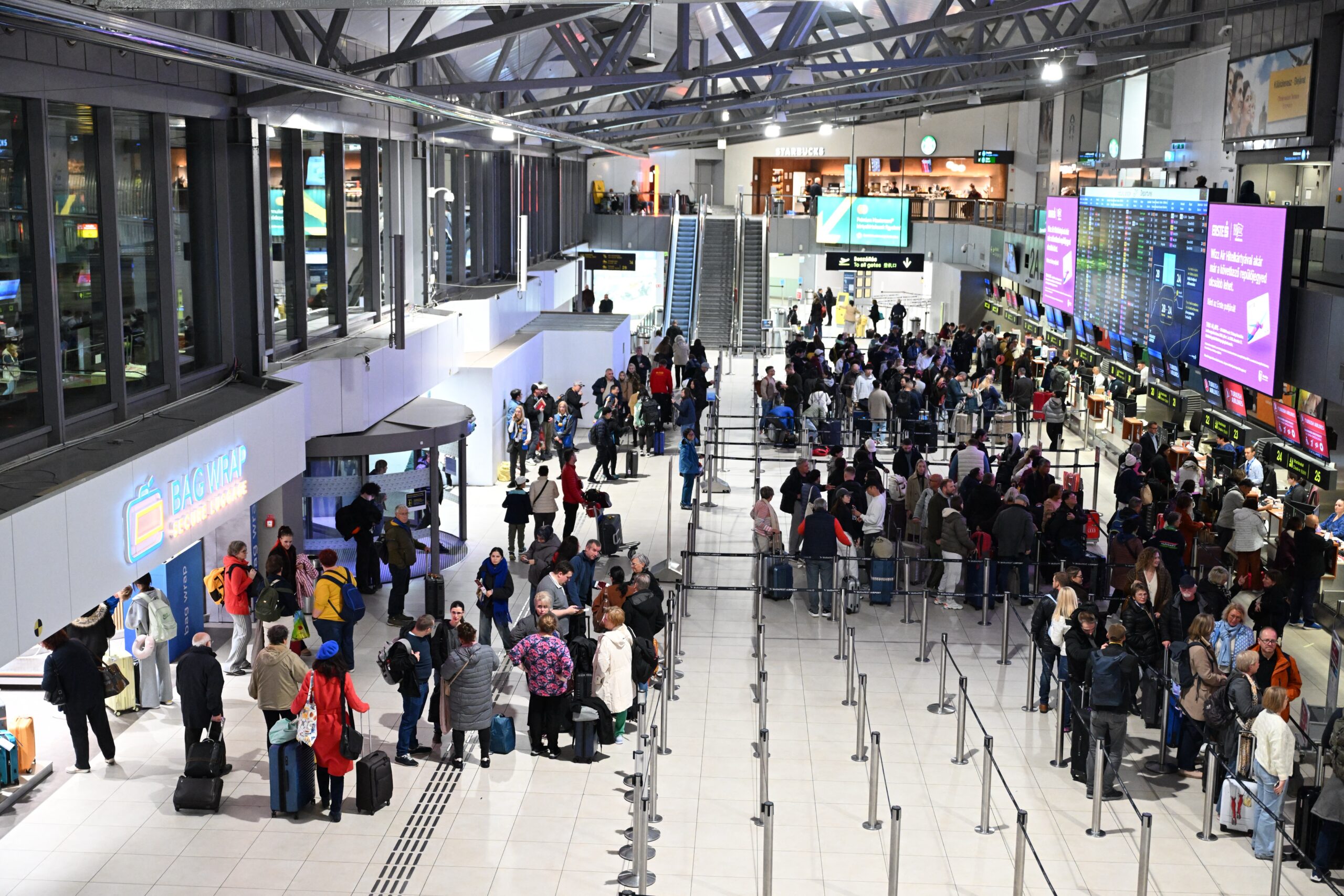
In a troubling development this week, European airspace has faced a series of large-scale anonymous bomb threats. On Thursday, November 5, multiple airlines were compelled to make emergency landings, escort flights with military aircraft, or contend with significant delays due to these threats. While all alerts ultimately turned out to be false alarms, experts and industry leaders have noted that such a coordinated and widespread series of threats is extraordinarily rare.
According to reports from various sources, including Reuters, Bloomberg, and the BBC, the number of flights affected by threats soared dramatically on Thursday. Current statistics indicate that at least 25 commercial flights across Europe were impacted by malicious hoaxes throughout the day.
Affected airlines included Aer Lingus, Finnair, EasyJet, LOT Polish Airlines, Wizz Air, Ryanair, Iberia, and Air Europa. Flights destined for cities such as Prague, Paris, Rome, Brussels, Milan, Sofia, Vienna, and Bucharest experienced disruptions.
Among the incidents, Aer Lingus flight EI402 from Dublin to Rome declared an emergency mid-flight and was rerouted to the Évreux-Fauville Air Base in France for a safe landing.
Finnair’s flight AY1761 from Helsinki to Rome was escorted by Italian Air Force Eurofighter Typhoon jets to Rome’s Fiumicino Airport, which had to close for approximately 30 minutes for a security sweep. Another Finnair flight, bound for Vienna, also received a threat.
Ryanair experienced threats on three flights coming from London, Madrid, and Copenhagen to Sofia, Bulgaria. Notably, the London flight was diverted to Plovdiv, the country’s second-largest city.
Wizz Air reported that one of its flights from Milan to Warsaw was rerouted to land at Vienna International Airport after a threat was received while en route.
At Czech Republic’s Prague Airport, four flights were subjected to threats, with the country’s national counter-terrorism and cybercrime unit formally opening an investigation. In a similar instance, LOT Polish Airlines flight LO235 from Warsaw to Brussels faced threats mid-flight but safely landed at Brussels Airport, where it underwent thorough checks by the Belgian federal police, confirming that the warning was a false alarm.
These threats were largely communicated through anonymous emails or phone calls directed at airlines, airports, or law enforcement agencies.
In a stark contrast to earlier incidents, some threats on Thursday bore clear political and social undertones. The Aeroporti di Roma, the authority managing airports in Rome, confirmed that some anonymous threat letters were signed by a radical group known as “Fighters of the Male State.” The letters specifically targeted what they described as “feminist regimes” in Europe, claiming that their intention was to “turn the sky red” with explosions to mark a historical event.
Security agencies emphasized that despite the rigorous ground security checks, no explosive devices were found on any of the involved aircraft. However, the ongoing disruptions demonstrated a marked continuity over several days.
On Monday, November 2, a Wizz Air flight from London Luton to Sofia received a threat in-flight and was escorted by Hungarian Air Force Gripen fighters to safely land in Budapest.
On Tuesday, November 3, at least seven flights, including ones heading to Murcia, Rome, and Warsaw, along with a cruise ship traveling to Israel, received prank threats, prompting Warsaw Modlin Airport to temporarily close.
European Union Transport Commissioner Apostolos Tzitzikostas and UK Transport Secretary Heidi Alexander publicly condemned the incidents, labeling them as “unacceptable malicious false threats.”
Currently, international law enforcement agencies have begun a collaborative investigation. Security experts, such as those from Osprey Flight Solutions and Dyami, speculated that while a networked mimicry of criminal behavior cannot be dismissed, the scale of these incidents has raised concerns. Authorities are wary that this could be a low-cost trial run of “hybrid warfare” tactics by geopolitical adversaries or their supporters, aiming to test European countries’ defense readiness, cripple transportation infrastructure, and instill public panic.
Even if these incidents are ultimately confirmed as false alarms, the repercussions involve significant operational delays, necessitating emergency landings, thorough searches, and the unloading and reloading of passengers and luggage. Airlines incur substantial expenses related to fuel, passenger rebooking, accommodation for stranded travelers, and crew overtime.
Ben Smith, the CEO of Air France-KLM, remarked that the aviation industry has never faced such a coordinated threat. However, he reassured stakeholders that airlines have effective response mechanisms in place and expect limited overall impact on operations and passenger travels. At present, there are no plans for the government to alter existing protocols in response to these events.