
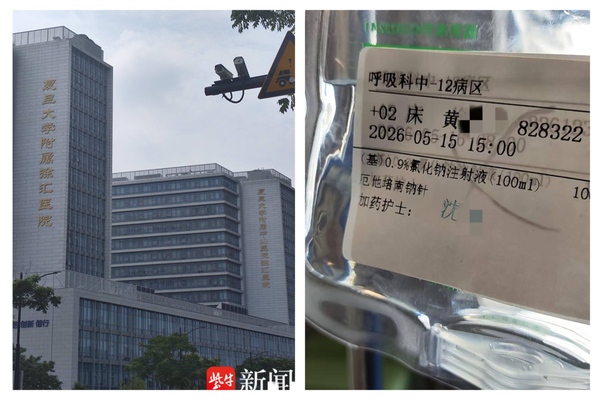
In Jiangsu, a 66-year-old man, suffering from a persistent cough, sought medical treatment at a top-tier hospital in Shanghai. After receiving a recommendation from doctors, he was transferred to a secondary-tier hospital for further observation and care. However, just a day after being admitted, he was informed that his condition was untreatable at that facility and was advised to seek care from other top-tier hospitals. During the prolonged waiting period for appointments with specialists from these institutions, the elderly man remained hospitalized for a total of 9.5 days, incurring medical expenses of over 20,000 yuan (approximately $3,000). Despite continuing to visit various hospitals, it took him much longer before the actual cause of his health issues was identified.
Following the emergence of this troubling case, the referral practices of the involved hospitals attracted significant media attention.
According to a report from a local news outlet, a family member named Mr. Huang recounted that his father had experienced a long-term cough, for which the underlying cause had yet to be discovered despite multiple treatments. Desperate for answers, Mr. Huang sought assistance from a renowned hospital. On May 11, he managed to secure an appointment with a respiratory specialist at Zhongshan Hospital in Shanghai. There, a series of tests, including pulmonary function assessments and an enhanced CT scan, were conducted, and the doctor prescribed cough medication.
By May 14, Mr. Huang managed to arrange a follow-up appointment through the hospital’s outpatient service. The attending physician recommended hospitalization; however, due to high demand for beds, he suggested that they admit the patient to a “branch hospital,” specifically recommending the Xuhui District Central Hospital. Throughout the interaction, the doctor implied that this branch was affiliated with Zhongshan Hospital and could effectively treat his father’s illness.
On May 15, Mr. Huang escorted his father to the Xuhui District Central Hospital and completed the necessary admission procedures. Unfortunately, the very next day, the hospital staff informed them that they could not treat the patient and recommended transferring him to another top-tier hospital.
Afterward, Mr. Huang made appointments with specialists at various other hospitals in Shanghai. Upon discharge—even after 9.5 days of hospitalization—the accumulated medical expenses amounted to 20,749.77 yuan. Notably, the hospital had not alerted the family about any outstanding fees during the father’s stay, and they only realized upon discharge that there was an unpaid balance of over 18,000 yuan.
The family’s discontent grew when they discovered that they had mistakenly believed they were admitted to a branch of Zhongshan Hospital. In reality, the Xuhui District Central Hospital is classified as a secondary-tier facility.
In the following months, Mr. Huang took his father to multiple hospitals across Shanghai, ultimately spending more than 50,000 yuan without uncovering the source of his ailment. The turning point came when they visited the Second Affiliated Hospital of Soochow University, where medical professionals finally diagnosed the elderly patient with an esophagotracheal fistula. Following treatment, his condition showed marked improvement.
After lodging a formal complaint with relevant authorities, the Xuhui District Medical Insurance Bureau investigated and uncovered numerous violations at the Xuhui District Central Hospital. Notable issues included non-compliance in medication administration and erroneous billing for serum myoglobin tests. In total, fines amounting to 5,849.32 yuan were imposed, of which 4,075.41 yuan was to be refunded to the patient, while 1,773.91 yuan pertained to the medical insurance fund. Additionally, the hospital faced an overall penalty of 8,773.98 yuan, and the involved physician received a formal reprimand affecting their medical insurance credits.
Further scrutiny revealed that although the hospital building bore signage indicating it was the “Xuhui Hospital Affiliated with Fudan University Zhongshan Hospital,” hospital authorities clarified that there is virtually no relationship between Zhongshan Hospital and the Xuhui District Central Hospital.
Reports highlighted that the Xuhui District Central Hospital had previously faced administrative penalties on multiple occasions. Since October 2025, the hospital had been penalized three times by the Xuhui District Medical Insurance Bureau, accruing fines totaling nearly 900,000 yuan.
On November 4, discussions about the case trended on Weibo under the topic “Top-tier hospital doctors referring patients to secondary-tier hospitals,” sparking widespread discussions among internet users.
One netizen recounted their own family member’s experience of advanced cancer, describing how they were directed to a private rehabilitation center due to a lack of available beds in the hospital, resulting in expenses exceeding 100,000 yuan over a month.
Another user shared that despite consulting a well-known chief physician at a prestigious hospital, they were advised to get a costly procedure done at a private clinic but assured that it would be covered by insurance.
A video blogger expressed frustration upon learning about this referral practice, stating that it raises serious concerns about patient welfare. They noted that the penalties imposed on the hospital were insignificant compared to the distress and additional financial burdens incurred by patients and their families due to the misguided referral processes.
Critics reiterated that healthcare should never be treated as a business and that patients should not be seen merely as sources of revenue. The credibility attached to appointments at top-tier hospitals stems from the trust patients place in these institutions. If that trust is misused as a marketing tool, it raises serious ethical concerns about the healthcare system as a whole, impacting not just individuals but public confidence at large.