
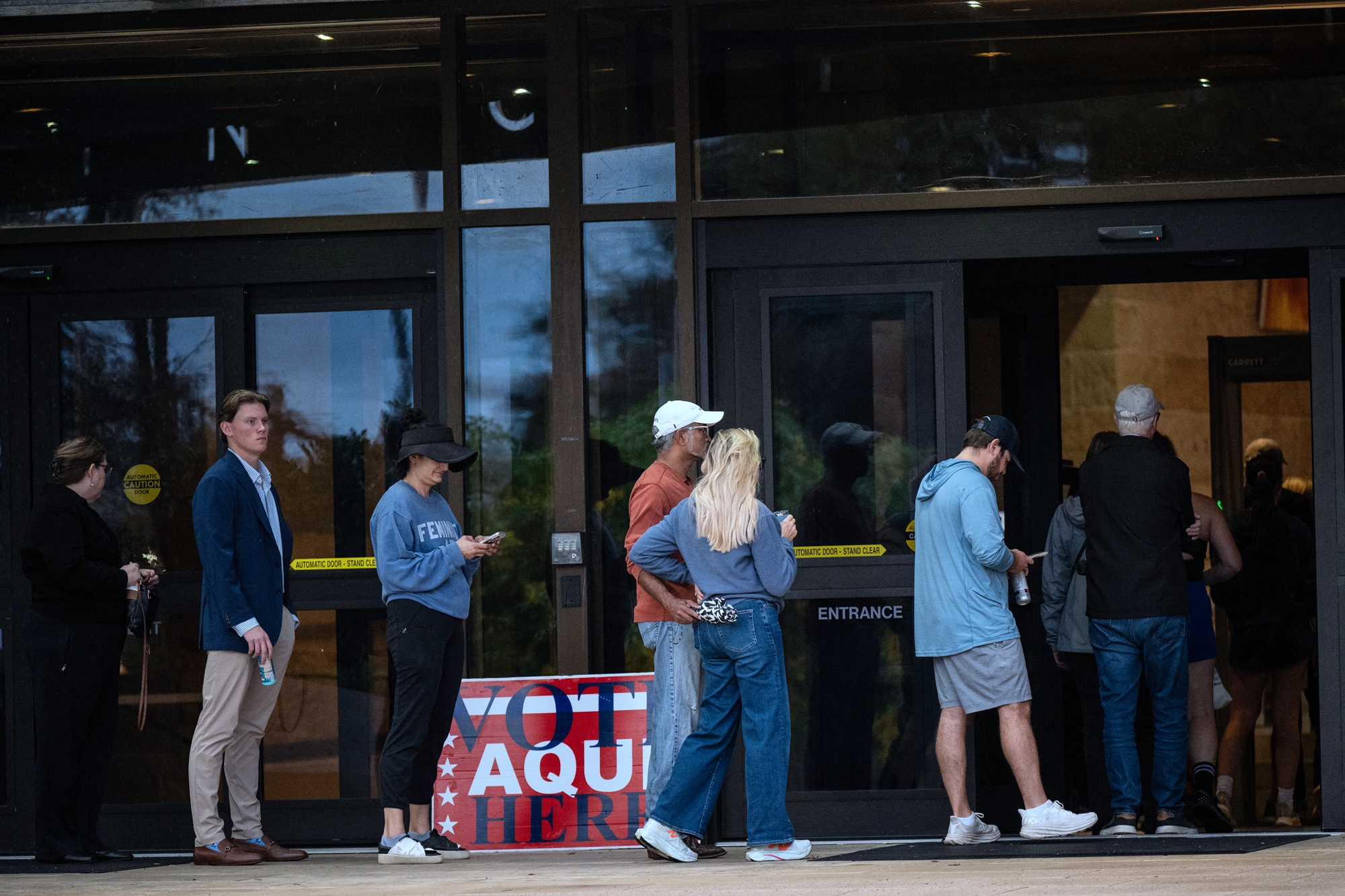
On November 3, the United States conducted its midterm elections, witnessing significant breakthroughs for the Democratic Party in various states’ federal Senate races, where they successfully challenged numerous incumbent Republican senators and candidates. Notably, Texas saw its first Democratic senator in 33 years, while Kansas elected a Democratic senator for the first time since 1932, indicating that the Republican Party faces formidable challenges in several of its traditional strongholds.
In Georgia, Democratic Senator Jon Ossoff triumphed over Republican Congressman Mike Collins. Ossoff first entered the Senate in January 2021 after winning a runoff election and is now successfully securing re-election, positioning himself as a potential contender for the 2028 presidential race.
In the early hours of November 4, Democratic candidate Troy Jackson claimed the federal Senate seat in Maine, defeating long-serving Republican Senator Susan Collins. This victory represents a significant shift in political dynamics within the state.
Meanwhile, in Michigan, Abdul El-Sayed, a Democratic candidate, emerged victorious against Republican opponent Mike Rogers, securing a seat in the United States Senate. With this victory, El-Sayed will become the first Muslim senator in American history, set to be sworn in on January 3.
As of Wednesday morning, Republican incumbent Senator Dan S. Sullivan held a narrow lead of just 1,677 votes over Democratic challenger and former Congresswoman Mary Peltola; this margin represents less than one percent of the total votes cast. Sullivan garnered 48.5% of the votes while Peltola received 47.7%.
On Tuesday evening, following the election of Democrat Josh Turek to fill a vacant Senate seat in Iowa, Republican Ashley Hinson extended her congratulations. Hinson stated during a speech to supporters that while the campaign may be over, her commitment to serving the people of Iowa continues.
Democratic Senator Sherrod Brown will return to the United States Senate after Ohio voters rejected incumbent Senator Jon Husted, marking a significant setback for the Republican Party. Brown is poised to complete the final two years of the term previously held by Vice President J.D. Vance.
James Talarico’s election marks a historic moment for Texas, bringing the state “back to blue” for the first time in 33 years. According to reports from Decision Desk HQ, Talarico defeated former Republican Attorney General Ken Paxton with a vote share of 58% to 40%, bringing new energy to the Democratic base.
Democrat Roy Cooper won the race for the United States Senate seat in North Carolina, adding a crucial victory for the party seeking to reclaim control of the Senate. Having served two terms as governor, Cooper’s moderate political stance led him to become the first Democrat elected to the Senate from North Carolina since 2008, the same year that former President Barack Obama won the state during his initial presidential campaign.
In Kansas, Adam Hamilton achieved a historic victory in the Senate race, further bolstering the Democratic party’s efforts to gain control of Congress nationwide. This election marks the first time since 1932 that a Democrat has been elected to the federal Senate from Kansas.
Republican Senator Pete Ricketts from Nebraska successfully defeated independent candidate Dan Osborn, who previously had received support from the Nebraska Democratic Party.
The United States Congress is comprised of the House of Representatives and the Senate. All 435 House seats were up for election, with representatives serving a fixed two-year term. Additionally, 35 of the 100 Senate seats were up for grabs, with senators serving a six-year term.
The American government is divided into three branches: executive, legislative, and judicial, with power exercised by the President, Congress, and the judiciary respectively. Therefore, which party controls Congress is crucial, as it significantly influences the legislative process.