
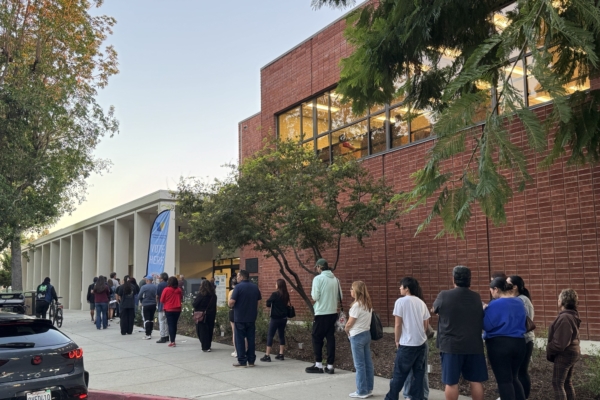
The midterm elections in California concluded on November 3, 2026, marking a significant event in the state’s political landscape. The ballots not only included crucial positions such as governor and congressional representatives but also featured 14 substantial ballot measures that could profoundly impact the everyday lives of California residents. The outcome of these measures is anticipated to influence the state’s trajectory for years to come, addressing various pressing issues from housing bonds to taxation and electoral processes.
Among the numerous measures presented, two have gained particular attention: Proposition 39, which mandates voter identification verification, and Proposition 40, targeting a one-time wealth tax on billionaires.
Proposition 39 requires voters to provide proof of identity when casting their ballots. For in-person voting, this would mean presenting a government-issued identification, while mail-in voters must supply the last four digits of their identification number.
As of 9:30 PM on election night, 59.7% of voters opposed Proposition 39, with only 40.3% in support.
On the other hand, Proposition 40 proposed to levy a one-time wealth tax of 5% on qualifying taxpayers with assets exceeding $1 billion. This initiative was driven by the California Healthcare Workers Union (SEIU-UHW), which argued that such a tax would help bridge the funding gap left by federal healthcare cuts.
However, opposition to this proposition came from numerous politicians, including many from the Democratic Party, who voiced concerns that this tax could prompt billionaires to leave California, potentially destabilizing the state’s economy and job market. Indeed, several notable billionaires have already made the decision to relocate out of the state.
As of the same time on election night, Proposition 40 also faced significant opposition, with 56.5% of voters against the measure and 43.5% supporting it.
In addition to Proposition 39 and Proposition 40, the preliminary results for the remaining 12 ballot measures as of 9:30 PM on November 3 are as follows:
Proposition 1, which proposes to issue bonds for affordable housing projects, garnered 59.3% support from voters, while 40.7% were opposed.
Proposition 2 aimed at expanding California’s financial emergency reserve fund received backing from 59.9% of voters, with 40.1% opposed.
Proposition 3 sought to make the additional income tax on high earners permanent, enjoying support from 58.8% of the voting population and facing opposition from 41.2%.
Proposition 4, which would allow public funds to support political campaigns, was met with 52.1% opposition against 47.9% support.
Proposition 5, which proposed changes to the recall election process for state officials, was narrowly supported by 50.4% of voters, with 49.6% against.
Proposition 37 aimed to issue bonds for housing assistance to middle-income families, securing an impressive 60.9% of the vote in favor, while 39.1% opposed it.
Proposition 38 sought funding for immunology research through bonds, achieving 57.3% support against 42.7% opposition.
Proposition 41, which proposed auditing new state taxes, was met with 52.3% opposition, with 47.7% of voters in favor.
Proposition 42 aimed at prohibiting the introduction of new personal property taxes, receiving 54.7% support against 45.3% opposition.
Proposition 43 sought to raise the voter approval threshold for special taxes, with 54.6% opposing it and 45.3% supporting it.
Finally, Proposition 44, which mandated that community health clinics spend 90% of their income, was overwhelmingly rejected with 82.7% opposing it and only 17.3% in favor.
Proposition 45 aimed to expedite environmental reviews for certain construction projects. This measure similarly faced significant opposition, with 54.2% against and 45.8% in favor.
It is important to note that these results are preliminary and reflect the voting landscape as of election night. Over the following month, officials are expected to continue updating the data, further clarifying the public’s stance on these critical measures.