
A well-known financial author has recently compiled a reading list that highlights six influential books frequently discussed among investors, entrepreneurs, and corporate executives. The subjects covered in these works range from incentives and capital to judgment and history.
The author emphasizes that reading habits are not determined by one’s income level. Anyone can access these books through libraries, bookstores, or even their mobile devices. He believes that the insights offered in these books demand more from readers than typical self-help or money-saving literature, making them worthy of multiple readings and discussions among those striving for higher achievements.
The following is a summary of the recommended titles:
**1. “Poor Charlie’s Almanack”**
This compilation features speeches and thoughts from Charlie Munger, long-time partner of Warren Buffett. The author points out that Munger does not promote the idea that one habit can transform a life. Instead, he encourages readers to utilize frameworks from economics, psychology, biology, mathematics, and history to examine business decisions from multiple angles before investing real money.
It’s noted that this book is substantial in length, some editions are priced quite high, and certain sections can be somewhat dry, lacking quick-fix formulas. According to the author, Munger’s central thesis is that the cost of stupidity in both business and life often exceeds the limitations of talent.
**2. “The Intelligent Investor”**
In this seminal work, Benjamin Graham differentiates between investing and speculation. He emphasizes the concept of “margin of safety,” where buyers should leave room for errors when assessing the value of a company or security. Buffett has often stated that Graham’s influence on him has been profound.
The author observes that while some case studies in the book may feel outdated or certain passages complex, it cultivates the habit of asking important questions about an asset’s true value rather than being swayed by market chatter.
**3. “Principles: Life and Work”**
Ray Dalio, founder of Bridgewater Associates, delves into an occupational issue in this book: how intelligent individuals often make expensive mistakes when companies conceal negative information, prioritize personal image, or view dissent as disloyalty.
Dalio proposes a solution involving a set of written decision-making rules accompanied by a culture of direct feedback within organizations. While the author acknowledges that some readers might find such an intensive approach unappealing, he emphasizes that ambiguous standards can easily lead to repeated mistakes.
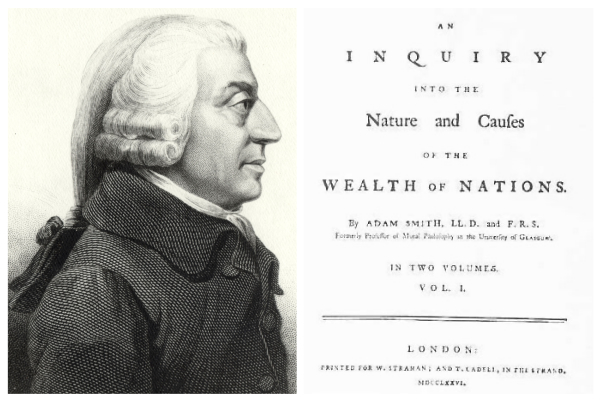
**4. “The Wealth of Nations”**
Adam Smith’s groundbreaking work, published in 1776, explores how trade, division of labor, and individual interests shape economic life. The book is lengthy and employs 18th-century language, which may present a challenge for modern readers.
The author points out that the insights contained within this work remain valuable today, explaining how specialization can boost productivity and how trade and competitive rules impact both the general populace and merchants.
**5. “Meditations”**
Written by Roman Emperor Marcus Aurelius, “Meditations” is a collection of private notes that were never intended for public consumption. These writings document how Aurelius managed his temper, fulfilled duties, and confronted fears amidst immense public pressure.
The text frequently encourages readers to focus on the task at hand, avoid unnecessary distractions, and maintain inner peace in the face of uncontrollable events. The author remarks that while the advice may seem straightforward, implementing it can be far more challenging.
**6. “Thinking, Fast and Slow”**
Nobel laureate Daniel Kahneman examines how people evaluate risk, make guesses, and construct narratives based on incomplete information in this book. It covers common cognitive biases such as anchoring effects, overconfidence, loss aversion, and hindsight bias.
The author illustrates that traders can spot these biases in losing positions, while business owners may identify them in hiring decisions.
**7. “The Innovator’s Dilemma”**
Professor Clayton M. Christensen of Harvard Business School investigates a business phenomenon: well-managed companies that continue to service their existing, high-quality customers may be overtaken by initially humble competitors that seem to offer inferior products.
The author suggests that this perspective is significant for both corporate executives and investors, as companies that are successful with strong sales and customer satisfaction can still miss market shifts, with past successes not guaranteeing future achievements.
**8. “The Art of War”**
The author notes that this ancient Chinese military text is often misapplied in the business world, as it doesn’t advocate for ruthless behavior or turning every disagreement into a conflict.
A deeper reading reveals that “The Art of War” emphasizes preparation, intelligence, timing, and restraint—highlighting the idea that winning without engaging in battle is preferable to a loud confrontation. This principle is relevant for negotiations, competition, investment, and determining when to walk away from an unfavorable deal.
These books are not just pivotal for understanding the intricacies of investments and business practices; they are rich in wisdom applicable to various aspects of personal and professional growth. Engaging with them can significantly enhance one’s analytical capabilities and strategic thinking in the complex world of business.