
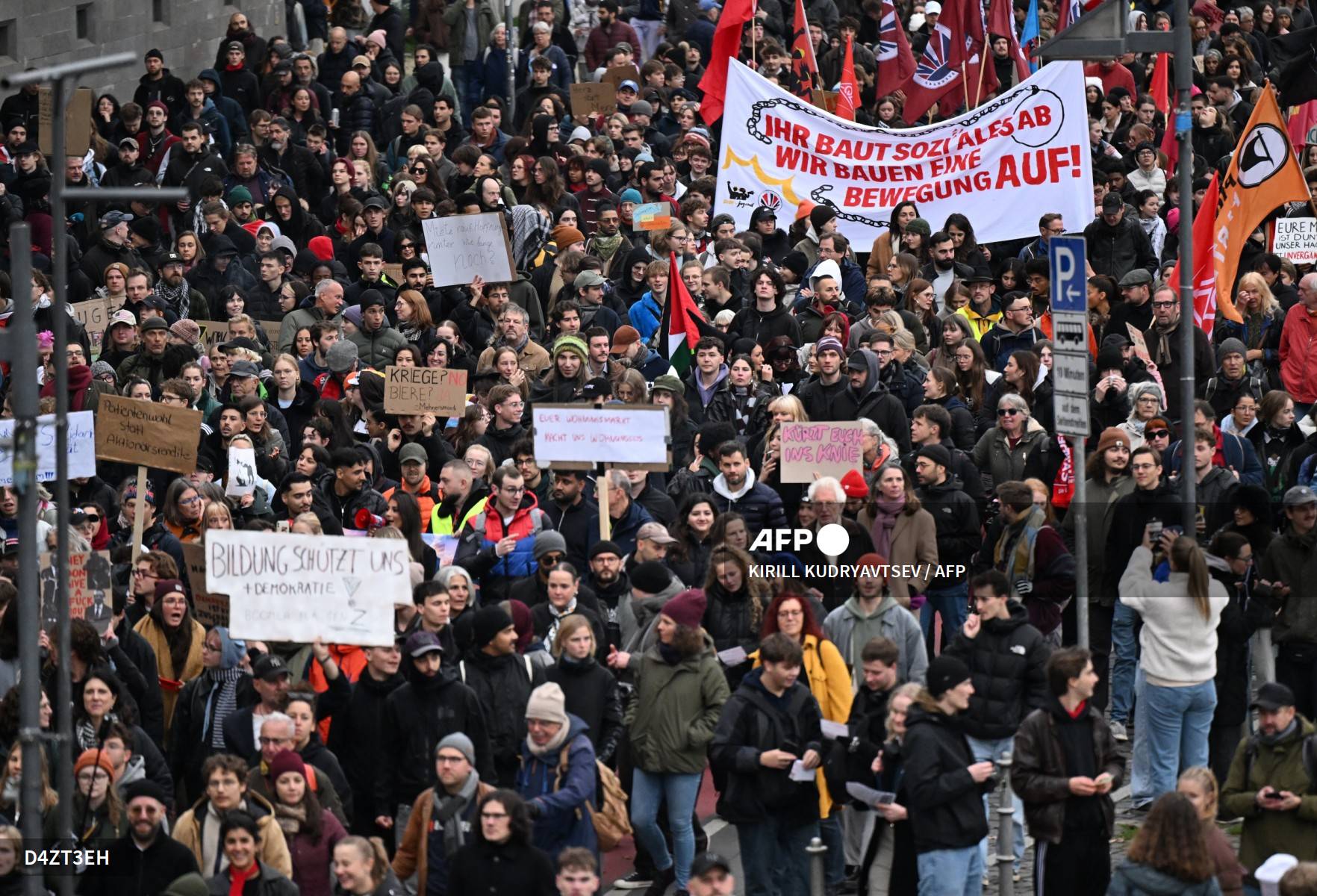
On Halloween, October 31, 2026, Germany saw a massive wave of demonstrations led primarily by young people. Inspired by youth movements in other European countries, the activist group “Gen Z regelt,” which translates to “Generation Z takes charge,” organized rallies in 34 cities nationwide, including Berlin, Frankfurt, Munich, Cologne, and Hamburg. Tens of thousands of young individuals took to the streets to demand improvements in educational facilities, increased investment in healthcare and social services, relief from the rising cost of living pressures, and a strong opposition to the reintroduction of mandatory military service.
Although the daytime demonstrations proceeded largely in a peaceful manner, the German Ministry of the Interior had previously issued warnings that far-left extremist groups and individuals associated with foreign extremist factions might attempt to infiltrate and exploit this movement. Roman Poseck, the Interior Minister of Hesse, specifically emphasized the importance of preventing violent incidents similar to the recent riots in France, which included looting, burning police cars, and assaults on law enforcement personnel from occurring in Germany.
Fears of potential unrest and violence were palpable, leading many businesses and retailers across Germany to close their doors early on Halloween day. Notably, stores along the upscale shopping street Kurfürstendamm in Berlin boarded up their windows in anticipation of any disruptions.
As night fell, tensions escalated significantly in some cities. In Hamburg, protesters set roadblocks on fire and hurled smoke bombs, prompting riot police to intervene. In Berlin, demonstrators threw bottles and eggs at police officers. Meanwhile, in Cologne, which hosted one of the largest gatherings, protesters launched fireworks at the police, who responded by deploying water cannons and using pepper spray to disperse the crowd.
The police issued a statement underscoring their zero-tolerance policy against any kind of violence directed at emergency responders.
This widespread protest occurs against the backdrop of Germany’s struggles as the largest economy in Europe attempts to rejuvenate economic growth while facing significant challenges such as an aging population, a declining labor force due to retiring baby boomers, and increasing pressures on pensions and public services.
The initiative has attracted involvement from various political and social groups, leading to questions about the identity and direction of the movement. Consequently, the National Student Organization (BSK) has decided to distance itself from the protests, announcing its plan to stage a separate demonstration on November 20.
These events reflect a dynamic and complex situation in which societal demands and political realities converge, showcasing the urgent need for dialogue and solutions in addressing the concerns of young people in Germany.