
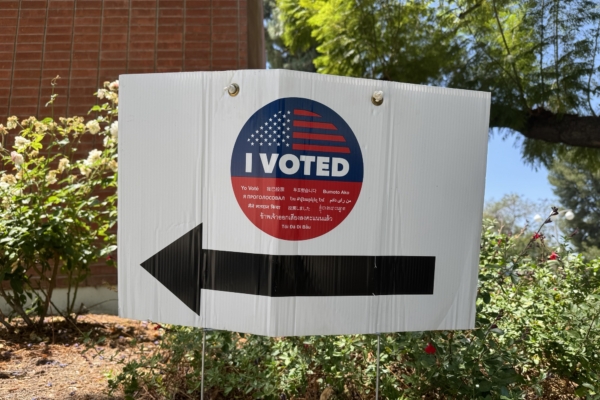
November 3rd is the official voting day for the 2026 midterm elections in California, with unusually intense races for Governor, Mayor of Los Angeles, and several high-profile ballot measures such as voter ID and the millionaire’s tax garnering significant attention.
According to the tradition, all active registered voters in California receive a mailed ballot. Data from the Secretary of State’s office shows that as of October 21st, over 2.35 million California voters have returned their mail-in ballots. Among them, over 400,000 voters in Los Angeles County, nearly 300,000 in San Diego County, and approximately 240,000 in Orange County have already cast their votes.
For those who prefer not to use mail-in ballots, voters can cast their votes in person at polling centers or by dropping off their completed paper ballots in designated ballot boxes.
In counties implementing the Voter’s Choice Act, the first round of voting centers will open on October 24th to allow local voters to begin casting their votes in person.
This primary election in California covers a wide range of public offices, including Governor, Lieutenant Governor, Secretary of State, State Auditor, State Treasurer, Attorney General, Insurance Commissioner, and Superintendent of Public Instruction. All California voters are eligible to participate in these office races.
Voters will also elect 52 U.S. Congress members, State Senators from even-numbered districts, 80 State Assembly members, members of the California Board of Equalization, as well as local officials in counties and cities. However, the contents of ballots vary depending on the specific district, and given the large number of voters using mail-in ballots, results for some seats may not be immediately available.
California, being the most populous state in the U.S., has made this year’s election the center of attention. Voters are keenly interested in issues such as taxation, oil prices, healthcare, homelessness, and public safety, and they are hopeful that the winners will bring about positive changes.
With the incumbent Democratic Governor Newsom unable to run for re-election due to term limits, Republican candidate Steve Hilton and Democratic candidate Xavier Becerra are engaged in a fierce competition for the Governor seat. Regardless of the final outcome, the elected candidate will be responsible for managing the fourth largest economy in the U.S. and tackling major issues such as cost of living, homelessness, and education.
Hilton’s focus includes stopping hidden taxes on new homes, reducing vehicle registration fees, gasoline prices, and electricity bills for Californians, exempting the first $150,000 of personal income from state taxes, combating masked crimes, and providing support for small businesses.
Becerra’s priorities include safeguarding healthcare access, constructing more affordable housing, lowering costs, enhancing clean energy, reducing pollution and emissions, and expanding educational resources.
As a significant metropolitan area in the U.S., Los Angeles’ mayoral race is also drawing attention this year. Incumbent Mayor Karen Bass is seeking re-election, but facing scrutiny following the wildfires in January 2025.
Her opponent is current City Council member for District 4, Nithya Raman, whose campaign position leans further left than Bass, focusing on tenant rights protection and progressive housing policies.
The Secretary of State reminds all voters that all mail-in ballots must be postmarked no later than November 3rd (with a postmark from the post office as proof) and received by the county elections office within 7 days after election day to be considered valid.
・・・
1. Proposition 1: Issuance of Bonds for Affordable Housing Projects
Authorizes California to issue $11.25 billion in state government bonds for affordable housing projects, including housing assistance for veterans, seniors, disabled individuals, and low-income families.
2. Proposition 37: Issuance of Bonds for Homeownership Assistance for Middle-Income Families
Authorizes the issuance of $25 billion in bonds to establish a program providing assistance for the purchase of new homes by middle-income families, such as down payment assistance. The bonds will primarily be repaid through the borrowers’ loan repayment amounts. The assistance loans will not exceed 17% of the home purchase cost, with the remaining housing costs to be covered by the borrower obtaining a mortgage loan.
3. Proposition 3: Permanentization of Additional Income Tax for High Earners
Permanently extends the additional income tax imposed on high earners until 2031, with the tax revenue allocated to K-12 schools, community colleges, and healthcare services, among others. The additional tax, implemented in 2012, imposes an additional 1% to 3% tax on high earners (those with incomes over $371,479) on top of the California base income tax.
4. Proposition 40: Billionaire Wealth Tax
Imposes a one-time 5% wealth tax on taxpayers meeting the criteria with assets exceeding $10 billion, with the revenue primarily used for medical care, food assistance, and education programs. Assets include stocks, bonds, bank deposits, etc., excluding personal real estate and most retirement account deposits, based on their valuation as of December 31, 2026. The proposition was initiated and promoted by the California Healthcare Workers Union (SEIU-UHW), advocating to fill the gap caused by federal healthcare funding cuts through a one-time wealth tax.
5. Proposition 41: Audit of New State Taxes
Requires an audit of new programs funded by state special taxes and restricts the practice of excluding new tax revenues to evade state government spending limits.
This is a counterproposal to Proposition 40. If passed, any state taxes enacted after January 1, 2026 that do not comply with the approved state government spending limit provisions will be deemed invalid.
6. Proposition 42: Prohibition on New Personal Property Taxes
Prohibits the state government from levying new taxes on personal property and limits certain retroactive state taxes.
If all three propositions 40, 41, and 42 are approved, if either proposition 41 or 42 receives more support than proposition 40, the latter will be invalidated.
7. Proposition 43: Raise Threshold for Voter Approval of Special Taxes
Requires a two-thirds vote for certain special taxes voted on by local voters, rather than the current threshold where a simple majority suffices for approval.
8. Proposition 4: Allowing Public Funding for Campaign Activities
If passed, this proposition will eliminate the 1988 law that prohibits the use of public funds for campaigns, allowing state and local governments to establish campaign funds to assist candidates under specific conditions. However, this only removes restrictions, with specific rules determined by individual local governments.
9. Proposition 5: Modification of State Official Recall Election System
This proposition, if passed, will change California’s practice of over a century. Currently, California voters can decide whether to recall a state official while also electing a replacement official. Under the proposed change, voters would only vote on whether to recall an official, without selecting an alternative candidate. If an official is recalled, the vacancy would be filled through a special election or appointment according to the position and relevant procedures.
10. Proposition 39: Voter ID Requirement
Requires additional identification when voters cast their ballots. In-person voters must present a government-issued ID, while mail-in voters must provide the last four digits of a designated ID number.
11. Proposition 38: Immunotherapy Research Bonds
Authorizes California to issue $8.4 billion in state government bonds to support immunology and immunotherapy research, including studies related to cancer, heart disease, and Alzheimer’s.
12. Proposition 44: Requirement for Community Health Clinics to Spend 90% of Revenue on Services
Requires federally qualified non-profit health centers (clinics serving low-income and medically underserved populations) to allocate at least 90% of their annual income towards providing healthcare services. Violations would result in fines.
13. Proposition 45: Expedited Environmental Review for Certain Construction Projects
Amends certain provisions of the California Environmental Quality Act (CEQA) to expedite reviews for eligible residential, transportation, water resource, healthcare, and clean energy construction projects while adjusting related legal proceedings and review timelines.
14. Proposition 2: Expansion of California’s Fiscal Emergency Reserve Fund
Modifies the state government budget reserve system to raise the cap on the emergency fund and exclude funds deposited into the emergency fund from “expenditure limits”.