
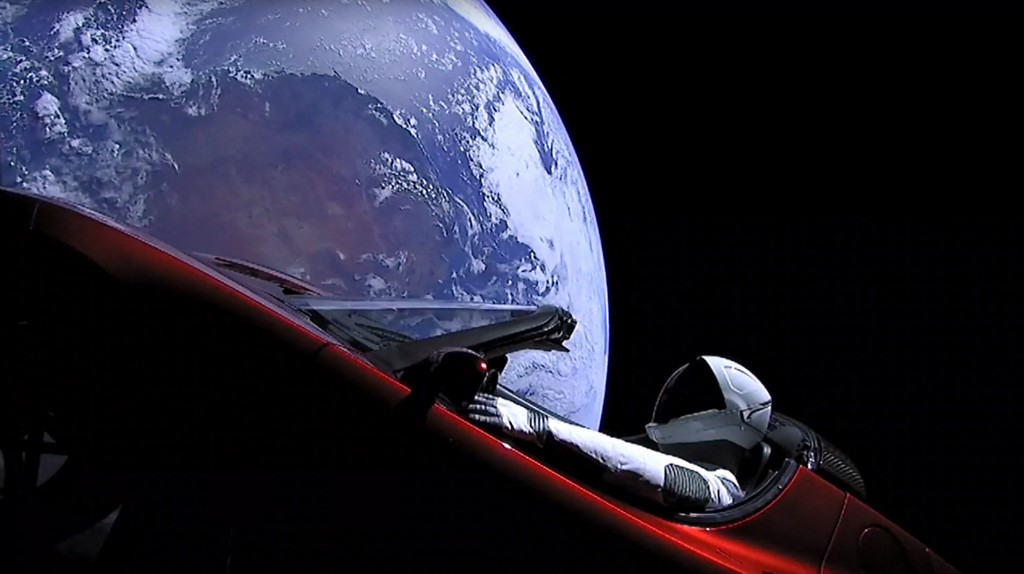
Elon Musk publicly stated on Tuesday, October 20, that he believes merging Tesla with SpaceX is a good idea. If the merger plan comes to fruition, it will create a behemoth enterprise valued at approximately $3.5 trillion, making it one of the most valuable companies globally.
Traditionally, electric car manufacturer Tesla and rocket company SpaceX have been seen as essentially independent entities. However, with Musk expanding into the fields of artificial intelligence (AI), robotics, advanced manufacturing, satellite communication, and computing infrastructure, the business boundaries of the two companies have gradually become blurred. This includes AI computing infrastructure such as on-earth data centers and potential data centers in orbit.
Musk himself explained his support for the merger of Tesla and SpaceX as a win-win situation. He expressed during SpaceX’s third-quarter financial call, “I do believe that merging these companies is of great value because we are essentially at the superintelligence (SI) inflection point.”
Through collaborating to develop superintelligence software, chip designs, Terafab, as well as robotics, the ability to transport on a large scale to orbit, Starmind satellite constellation (orbit data centers), connectivity services, we can gain many benefits.
Analysts at Reuters point out that one of the advantages of the merger is streamlining decision-making processes, concentrating resources, and influence.
Musk has ambitious projects that often involve multiple companies, requiring approvals from different boards and shareholders. After the merger, management can more freely allocate funds, engineering talents, and infrastructure into the most pressing and promising areas.
Musk has always aimed to have a greater influence on Tesla to advance his strategies in artificial intelligence and robotics rapidly. Currently, he holds nearly a fifth of Tesla’s shares and has voting control in SpaceX. If the merger occurs, his voting rights in the new company will undoubtedly surpass his current ownership stake in Tesla.
Analyst Dan Sheehan at Telos Wealth Advisors pointed out that this deal itself will not increase Musk’s wealth but will concentrate it more in one stock. The committee specially established to evaluate the merger deal must consider this aspect.
Another benefit of the merger is the complementary nature of the businesses of both companies. For instance, SpaceX’s Starlink satellites can provide communication connectivity for Tesla’s autonomous taxi services, self-driving systems, and the Optimus humanoid robot.
Meanwhile, Tesla’s battery and energy storage products can help meet SpaceX’s increasing power requirements, including the future power needs of data centers.
In fact, the two companies have already been cooperating. The semiconductor and AI computing project, Terafab, aims to produce advanced chips for use in Tesla vehicles, robots, and SpaceX’s AI and data centers. Musk aims to begin large-scale production by the end of 2028.
Moreover, Tesla’s expertise in factory automation can complement SpaceX’s efforts to industrialize Starship production, and the next-generation Roadster sports car is also planned to incorporate technology derived from rockets.
The merged company can also unify strategic supply chains, combining Tesla’s scale advantages in batteries, semiconductors, and manufacturing equipment with SpaceX’s needs for special metals, electronic devices, propulsion system components, and satellite hardware.
Musk emphasized on Tuesday that the final decision on the merger lies with the shareholders. For Tesla, the merger deal would require support from 50% of all shares, not just half of the voting shares, which is a significant threshold.
Reuters analysts believe the biggest challenge of merging the two companies comes from geopolitics and regulatory issues. SpaceX is a major contractor for the US military, intelligence agencies, and NASA, while Tesla still has close ties with China, with its Shanghai factory playing a crucial role in automobile production and sales. This combination could lead to stricter scrutiny from US regulatory agencies, national security officials, and Beijing.
The merger will also face obstacles in terms of shareholders and corporate governance. Investors need to believe that the value created by merging two already complex businesses will exceed the value of maintaining both companies independently. Issues such as conflicts of interest, voting control, and fund allocation are likely to arise.
Additionally, there are execution risks. Starship, autonomous taxi services, humanoid robots, AI data centers, mobile communications, and orbital infrastructure are all costly and highly technologically challenging investment projects. Merging Tesla and SpaceX will not reduce these risks but consolidate them under one company.