
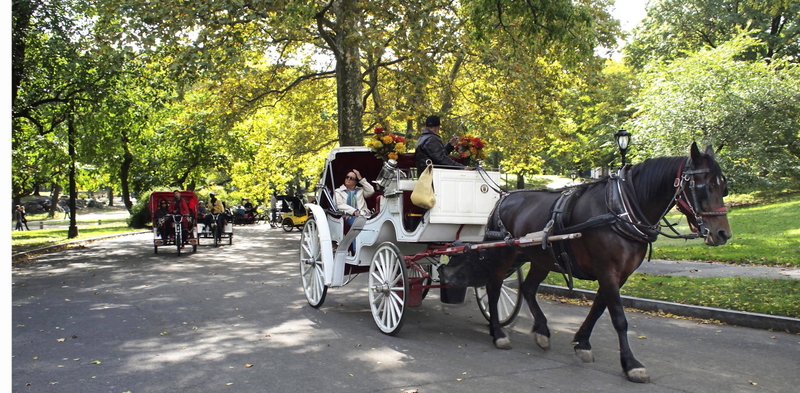
Wearing a black top hat and riding in carriages driven by coachmen, shuttling through Central Park and the streets of Manhattan, it feels like a relic from another era.
This iconic feature of New York may soon become history.
Since the 19th century, carriages have been shuttling through Central Park. However, in recent years, animal rights activists have condemned what they see as inhumane and unsafe treatment of the horses.
On Thursday, October 22, New York City council members are set to vote on a bill that would ban carriage operations in Central Park, with the proposed implementation date set for June 1, 2028.
In the past decade, proposals to shut down the carriage industry in New York City have been consistently rejected by the city council. However, with the majority of council members now endorsing this bill and with the support of Mayor Zohran Mamdani, the tide seems to be turning.
Angelica Vega, a 45-year-old resident in the area, expressed her sadness at the potential disappearance of the carriages from the park, which have been a part of the landscape even before they moved into the neighborhood. She has been walking her dogs in Central Park for 20 years, sometimes up to three times a day.
“Not being able to see them in the park anymore is truly heartbreaking,” she said.
The tragic death of 18-year-old Romanch Mahajan, an Indian tourist, in a carriage accident during the summer has further fueled support for the ban. On June 17, when the coachman stepped away to take a photo for Mahajan’s family, the horses suddenly spooked and Mahajan was thrown out of the carriage, leading to his death.
Mahajan’s family has submitted a $50 million claim to the city government and expressed their support for the carriage ban.
The ban is expected to result in hundreds of job losses, including carriage owners, coachmen, and stable workers, sparking concerns about the future fate of the horses.
Ahmet Bilici, a 52-year-old who grew up on a farm in Turkey and later became a carriage driver after immigrating to the United States in 2003, highlighted the financial implications of the ban. He mentioned that a coachman’s annual income could reach six figures, especially if they own their carriage business, with fares exceeding $70 for every 20 minutes.
“I have a permit issued by the city government. If I haven’t done anything wrong, why are they targeting my livelihood?” Bilici questioned, while waiting for customers by his carriage.
The bill requires the city government to develop a transition plan by April and consider schemes to compensate carriage operators for their losses and help them find arrangements for the horses. The proposal also prohibits the horses from being slaughtered.
Since New York City only issues 68 carriage permits (also known as medallions), which are not openly sold on the market and are often passed down through generations within families, they can be worth hundreds of thousands of dollars.
The Transport Workers Union has denounced the proposal.
Christina Hansen, a carriage owner and union representative, emphasized the iconic status of the horses in Central Park. “The horses in Central Park are iconic. We are as much a part of this city as the Statue of Liberty and the Empire State Building,” she told Reuters.
Dan Padilla, a resident of California, and his wife, who were visiting New York, had booked a carriage service in advance. They see this as a possibly once-in-a-lifetime experience to enjoy a carriage ride in Central Park.
“I’m concerned about it,” Padilla said. “It’s one of those things people think about doing when they mention Central Park.”
Ron Shechtman, a lawyer who frequently rides his electric bike through Central Park, expressed his regret about losing this long-standing tradition but clarified that he doesn’t personally miss the days of cycling around horse manure.