
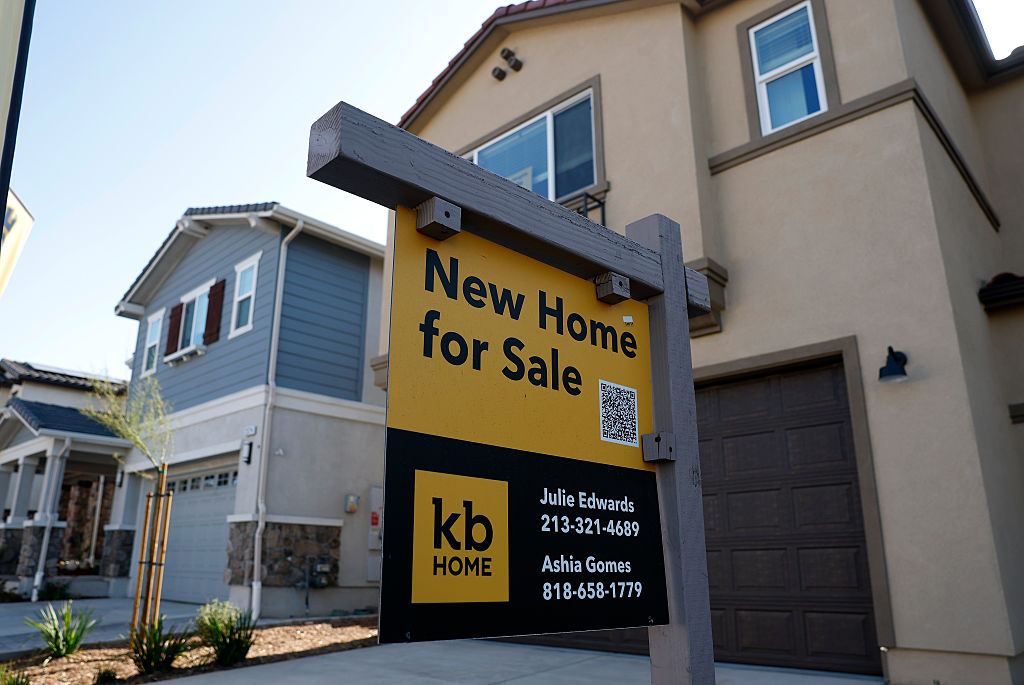
The latest data released on Tuesday, October 20th, showed that mortgage rates in the United States surged in September, severely impacting the real estate market. Experts have noted that the increase in mortgage rates is dampening buyers’ affordability, plunging the U.S. real estate market into a deep freeze.
The National Association of Realtors (NAR) in the United States released data on Tuesday revealing that sales of existing homes in September hit the lowest level on record since 2001, dropping by 7.3% from August and 11.3% from the same period last year.
The primary reason for the decline in home sales is the recent significant rise in borrowing costs. According to data from Mortgage News Daily, the average interest rate for the most common 30-year fixed-rate mortgage in the U.S. was around 6.8% at the beginning of September, but rose to 7.6% by the end of the month. The sharp increase in mortgage rates has led to a drop in loan demand, causing more buyers to exit the real estate market. By comparison, the average rate five years ago was just around 3%, which also fueled the prosperity of the real estate market.
New housing starts are another important indicator of the real estate market’s condition. The latest report from the U.S. Census Bureau released on Tuesday showed that the annualized rate of single-family housing starts in the U.S. for September was 859,000 units, a 4.56% decrease and the lowest level since September 2025.
The number of single-family housing permits approved by the government is a measure of future construction activity. In September, only 845,000 single-family housing units were granted building permits, a 4% decrease from August and the lowest level since 2023.
According to a survey released by the National Association of Home Builders (NAHB) on Tuesday, the home builder confidence index for October is at the lowest level in 14 years.
Robert Dietz, the Chief Economist of NAHB, stated in a press release, “Due to significant challenges in supply and affordability, the housing market remains under pressure. Demand still exists, but rising mortgage rates, increasing construction costs, and weakening consumer confidence are causing more buyers to take a wait-and-see approach.”
With the current increase in mortgage rates, buyers purchasing homes with loans are required to spend several hundred dollars more each month, limiting their purchasing power.
In mid-September, the Federal Reserve raised its benchmark interest rate by 25 basis points, marking the first rate hike since July 2023. However, market expectations indicate that the Fed will keep the benchmark rate unchanged at the upcoming meeting.
While the Federal Reserve does not directly control mortgage rates, its actions in interest rate policy can affect the yield on 10-year Treasury bonds, thereby indirectly influencing the level of mortgage rates.
Regarding the impact of soaring mortgage rates on the real estate market, Chris Rupkey, the Chief Economist of the financial market research company FWDBONDS, commented that unless effective measures are taken in Washington, “the housing market will fall into a slumber.”
“It’s not winter yet, but the real estate market is entering a deep freeze,” he further cautioned.