
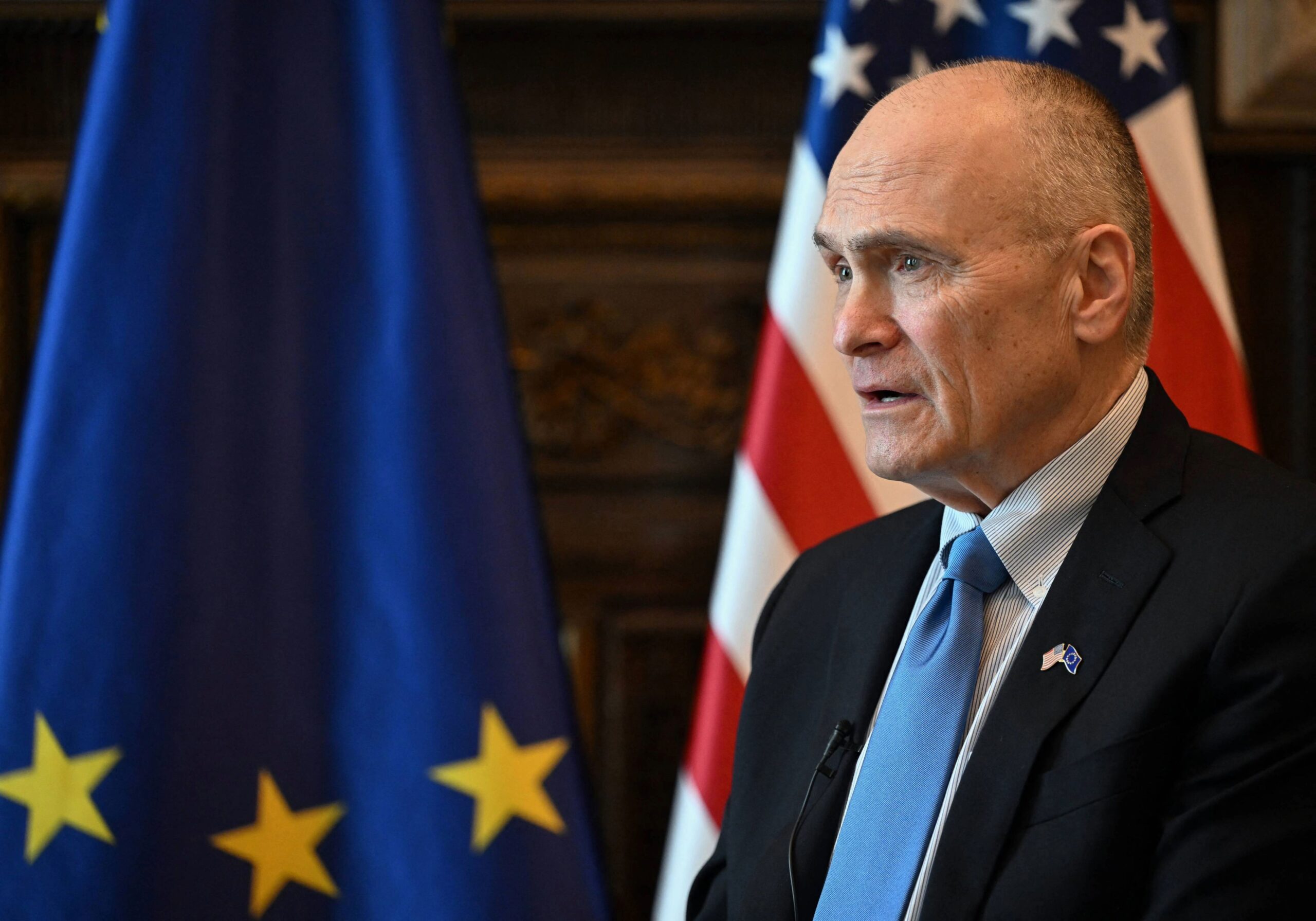
The US Ambassador to the European Union, Andrew Puzder, issued a warning in an interview with the Financial Times UK that if the EU persists in pushing forward with new satellite spectrum regulations that limit American companies like Elon Musk’s SpaceX from entering certain markets in Europe, European companies will face retaliation.
Puzder, when asked if European companies should be concerned about facing retaliation, stated that considering the scale of the US market, “Europe should be wary as this could be devastating for those companies.”
The European Commission proposed new regulations on May 27 this year, aiming to redistribute the 2GHz mobile satellite frequency band that enables smartphones to connect directly to satellites. This move is part of the EU’s overall strategic efforts to strengthen technological sovereignty, reduce reliance on foreign tech giants, and promote the development of European companies.
One-third of this new regulation mandates reserved for governmental use, to be provided by EU operators and integrated into the EU’s self-built satellite network IRIS². Non-EU operators such as SpaceX, operating Starlink, can access up to one-third of the frequency band, affecting their operations.
Currently, in Europe, the 2GHz frequency band is utilized by two US companies, EchoStar and Viasat, whose licenses will expire in May 2027. The new regulations will determine the spectrum allocation after their expiration, and non-EU companies like SpaceX are seeking access to more satellite frequency bands.
SpaceX has strongly criticized the EU’s proposed adjustment of spectrum allocation, warning that this move could result in a decrease in network connectivity quality in Ukraine. Since the Russia-Ukraine war in 2022, Starlink has been a crucial pillar in Ukraine’s civilian and military communications.
Recently, Ukraine accused Starlink and the military version, Starshield, of being throttled, alleging the involvement of the US government. The US denied the allegations and stated it was investigating the issue. Subsequently, Ukraine’s Deputy Prime Minister and Minister of Digital Transformation, Mykhailo Fedorov, announced that the military’s use of Starlink connections is being restored, but speed restrictions on the Starshield system have not been fully lifted.
Following this event, there has been a growing demand within the EU to reduce dependence on US technology and develop alternative solutions for satellite networks.
Puzder expressed his recognition of Europe’s right to protect sensitive government information but opposed legislation that favors domestic companies at the expense of American competitors. He believes that Europe’s regulatory approach and restrictions on investments in American companies could hinder the EU’s ambitions to strengthen its domestic tech industry, as US tech companies are increasingly frustrated with regulatory constraints and fines in the EU.
Puzder emphasized that Europe should not strive to suppress the dominant position of American companies and instead should cooperate in competing with China in areas such as AI and quantum computing. He urged Europe to abandon the regulatory mindset of constantly trying to prevent things from happening.
He also stated that the US has the capability to win this competition, “but if we cooperate with Europe instead of confronting it, things will be much easier.” Previously, the US government had stated that the worst-case scenario for the Western world would be losing to China in the AI race.
In response, the European Commission stated that the proposal aims to encourage EU suppliers to enter the market to achieve diversification while remaining open to non-EU operators.