
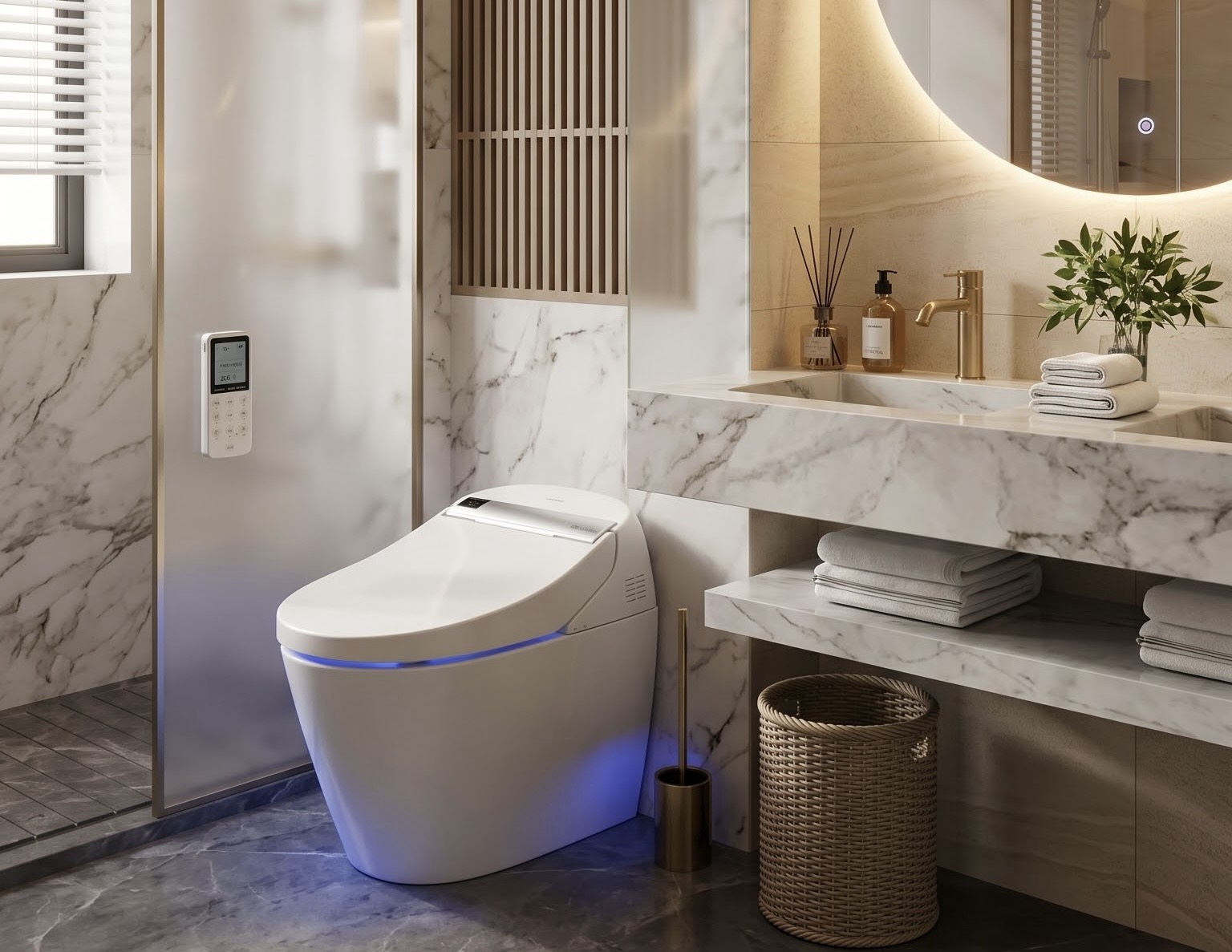
The latest survey by the home platform Houzz shows that among American homeowners who replaced or upgraded their toilets during bathroom renovations, 31% installed bidets, an increase of 10 percentage points from the previous year.
According to the results of the “2026 US Bathroom Trends Survey” released by Houzz, nearly half (47%) of homeowners who installed new or upgraded toilets added at least one special feature, increasing by 9 percentage points compared to the previous year.
Among the features, bidet attachments accounted for 31%, adjustable water pressure 30%, warm air dryers 28%, all showing a 10 percentage point increase from the previous year; heated seats accounted for 27%, an increase of 8 percentage points. Other convenient features also saw an increase: automatic cleaning (22%) and night lights (20%) each increased by 6 percentage points, automatic deodorization (14%) increased by 5 percentage points.
The prices of bidet toilet seats vary, with simpler models costing less than $100, while high-end electric bidet seats or standalone bidet units can cost several thousand dollars.
In these products, features such as heated seats, remote control for adjusting water direction and pressure, and drying functions require electricity; non-electric models rely on internal valves that control water flow using the home’s water pressure, following the same principle as showers or faucets. In other words, homeowners choosing electric models need to ensure there is a nearby power outlet.
According to the home service platform Angi, the average cost of hiring an electrician to install a power outlet ranges from $130 to $300 per outlet; if new wiring needs to be pulled within the walls, the cost will be higher.
Electrician Henry from Utah told Epoch Times that if wiring needs to be installed within the walls, the cost is usually between $700 and $1,000, depending on the installation difficulty, whether it requires wall repairs, or the need for additional circuits.
Homeowner Linda mentioned that buying a bidet toilet seat for her home cost over $500. Since there was no power outlet near the toilet, she had to have an electrician add one, which cost her $750. She expressed that the cost of adding the outlet was even higher than the bidet toilet seat itself, making the overall cost quite expensive.
The survey was conducted online in August 2026, inviting registered Houzz users to participate via email. A total of 1,619 respondents, all homeowners over 18 years old, had completed, were undergoing, or planning to start bathroom renovations or expansions within the past 12 months or in the next 3 months. The data was weighted based on the Houzz user group.
In the early stages of the COVID-19 pandemic in March 2020, panic buying of toilet paper swept through many parts of the United States, leading to emptied store shelves and a subsequent surge in sales of bidet products.