
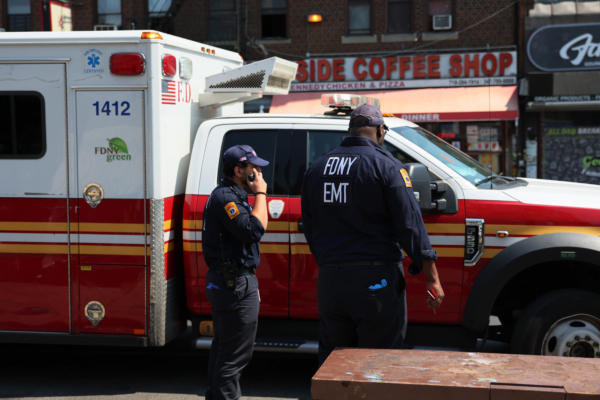
A report from the Office of the New York City Comptroller revealed that over the past decade, life-threatening medical emergencies in the city have increased by over 22%, while ambulance response times have lengthened by nearly four minutes. Issues such as ambulance maintenance and low compensation for emergency personnel are exacerbating the pressure on the emergency medical system.
The report analyzed data from the New York City Fire Department (FDNY) for the fiscal years 2015 to 2026, finding that response times for life-threatening medical emergencies have increased by 3 minutes and 50 seconds, a growth of over 41%. For non-life-threatening medical emergencies, response times have more than doubled. The Comptroller’s Office stated that the reasons for the increase in critical cases are not yet clear.
The report highlighted that ambulances frequently require maintenance, leading to a shortage of operational vehicles. On a day in January of this year, the Fire Department only had 360 ambulances in service, falling below the daily target of 488 vehicles, resulting in a shortage of 128 ambulances.
Staff turnover is also a significant issue. The report pointed out that low salaries for emergency personnel contribute to a high turnover rate. In a hearing held by the Fire Department in October 2025, the turnover rate was reported to be 5%, but this figure did not account for emergency personnel who transitioned to become firefighters, potentially underestimating the actual situation.
Currently, Emergency Medical Technicians (EMTs) start with an annual salary of about $44,000, which can increase to over $68,000 after five and a half years of service. Due to salary disputes, EMTs and Paramedics have not signed a new union contract since 2022. The union is demanding salary increases and regular raises comparable to those of firefighters.
The Office of the Comptroller recommended that the city government should at least raise the salaries of emergency personnel to match those of similar positions in private hospitals, estimating a cost of $352 million. Additionally, a comprehensive plan should be developed to address structural issues affecting response times.
A spokesperson for the Fire Department stated that efforts are ongoing to reduce response times, including improving coordination with hospitals, enhancing operational efficiency in busy areas, and expediting the return of ambulance units to service after completing missions.