
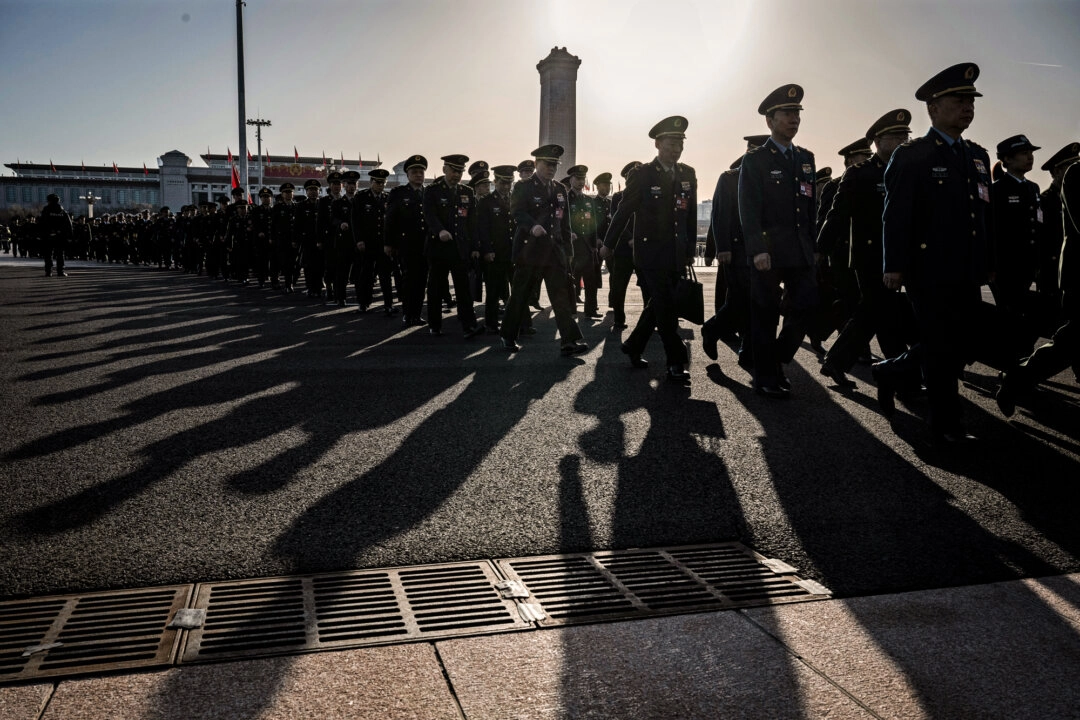
【Epoch Times News, October 16, 2026】The official Communist Party publication recently published a speech by Xi Jinping at the beginning of the year, emphasizing the continuous fight against corruption and condemning “two-faced individuals” who are always ready to jump ship. Analysts suggest that this move is directly aimed at the upcoming Fifth Plenary Session of the Central Committee, indicating intensified power struggles within the CCP. The shadows of the cases involving Zhang Yuxia and Liu Zhen are still looming, casting doubt on Xi’s control over the military.
The CCP’s magazine “Qiushi” recently published Xi Jinping’s speech from the Fifth Plenary Session of the 20th Central Commission for Discipline Inspection on January 12. Xi has been leading the anti-corruption campaign for over a decade, yet he stated that corruption remains prevalent. He stressed that corruption is the “biggest risk, biggest threat, biggest challenge,” and that the fight against corruption must not cease for a moment, not even take half a step back. Xi emphasized that corrupt individuals, regardless of their position or contributions, will not be tolerated. He warned against those with dual motives and inconsistent actions, labeling them as “two-faced individuals”.
The theme of the Fifth Plenary Session is comprehensive and strict governance of the Party, with expectations of increased scrutiny from the outside. The number of Central Committee members expelled from the party may break records dating back decades.
Senior political commentator Chen Pokong analyzed for Epoch Times that Xi’s speech at the beginning of the year, now being published, is related to the major cases of Zhang Yuxia and Liu Zhen. Zhang Yuxia and Liu Zhen were taken down by Xi Jinping in late January. Xi’s speech on January 12 was stern, specifically targeting these two individuals. Before the Fifth Plenary Session, he made this speech, indicating his intentions for re-election and long-term governance, as well as his disposition towards purging individuals. “Anyone who opposes him, he will purge.”
Regarding the intense power struggles within the CCP, the Political Bureau Standing Committee has lost members like Zhang Yuxia, He Weidong, and Ma Xingrui. The Central Military Commission now only consists of Xi Jinping and Zhang Shengmin. Speculations suggest potential personnel changes during the Fifth Plenary Session, including vacancies in the Political Bureau and Central Military Commission. Local leadership changes are also progressing rapidly, with the upcoming 21st National Congress in the fall being crucial for Xi to secure another five-year term as the Party leader and maintain full control over the military.
Chen Pokong mentioned that the current Military Commission lacks sufficient members, with junior generals filling in for positions previously held by senior officers, indicating a strategic advantage for Xi Jinping. He believes that those with limited military experience and distant from Xi are easier to control, establishing absolute authority.
Moreover, the appointment of a new Minister of National Defense without additional title or rank as a State Councilor and a Military Commission member, and the omission of Political Bureau membership for Vice Chairman Zhang Shengmin, indicate Xi’s strategic efforts to maintain hierarchical distance for security purposes. The Military Commission vacancies could potentially be filled during the Fifth Plenary Session with new Central Military Commission members, Vice Chairpersons, or Political Bureau members, pending Xi’s decisions. If not addressed, the matter may be postponed until the 21st National Congress.
In analysing the situation, Tang Jingyuan expressed that despite Xi Jinping removing Zhang Yuxia and Liu Zhen, he has not fully regained military control. “Xi’s military authority was previously overshadowed by Zhang Yuxia, as evident from the five serious charges levied against him. However, there has been no public support from senior military leaders in affirming investigations or distancing from Zhang Yuxia.” Tang noted the lack of endorsement from major military branches and officers towards Xi’s authority.
Tang Jingyuan further observed a significant irregularity with Xi’s unprecedented absence from any military unit or region visit in over ten months. This departure from traditional practices, which typically involve frequent visits during holidays, demonstrates Xi’s lack of trust in the military. Tang implies a strong resistance within the military towards Xi’s leadership.
Raising concerns over Xi’s weakened military grip, Tang highlighted the importance of monitoring Xi’s power consolidation through critical indicators such as military control, personnel appointments, and organizational discipline. The composition of the new Military Commission, whose members are closely aligned with Xi or Hu Jintao, will be pivotal in determining Xi’s ability to govern effectively.
On October 15, the CCP and military departments announced a two-month special campaign to combat inappropriate online promotion and dissemination of military-related information. The operation targets malicious dissemination of negative military career information and sensitive topics like military missions, training equipment, and operations.
Tang Jingyuan suggested that this online crackdown is primarily directed towards preparing for the Fifth Plenary Session, which may involve significant personnel changes within the Party and military structures. The special operation serves as a means of “maintaining stability” for sensitive periods around and following the Fifth Plenary Session.
Chen Pokong interpreted the pre-Fifth Plenary Session online crackdown as a sign of Xi Jinping’s distrust towards the military. He assessed that Xi perceives widespread discontent within the military, potentially jeopardizing his leadership. Chen expressed concerns that Xi’s centralized control might be further undermined, considering the ongoing purges and internal challenges he is facing.
According to Qiushi magazine, Xi Jinping denounced two-faced individuals within the Party, accusing them of pursuing personal gains and being ready to desert at any moment. Xi emphasized, “Regardless of position or contribution, corruption will not be tolerated.”
Shortly after Xi’s earlier remarks, on January 24, Political Bureau member and Military Commission Vice Chairman Zhang Yuxia came under investigation. On April 3, Political Bureau member Ma Xingrui also underwent scrutiny. Official reports cited Zhang Yuxia’s deviation from Party principles and forming unofficial alliances.
Chen Pokong indicated that Xi’s anti-corruption campaign targets individuals irrespective of their rank or contributions, including veteran politicians. Xi limits their participation in political discussions and restricts their speech. He possesses incriminating evidence on corruption, family ties, and personal associations, using it selectively to exert control. Those who remain silent, such as Zhang Gaili’s scandal with a tennis player, are left untouched. However, outspoken figures like Wang Qishan and Huang Qifan face scrutiny.
Regarding the issue of “two-faced individuals,” Xi Jinping has emphasized this notion in recent years. Chen Pokong noted the failure of Xi’s anti-corruption methods, with corruption continuing to prevail within the Party. He argued that Xi’s anti-corruption rhetoric serves personal interests rather than resolving systemic issues.
Since 2023, Xi Jinping has launched a three-year purge across the Party, military, and government structures, particularly after removing Zhang Yuxia. Observers speculate on Xi’s power stability amid these initiatives, sparking discussions in overseas networks.
Tang Jingyuan posited that Xi Jinping’s anti-corruption campaign does not solely address power stability concerns; rather, it reflects the life-or-death struggle he currently faces. Observing Xi’s ability to maintain power and control will depend on military authority, personnel appointments, and organizational discipline, all of which are critical elements for gauging his leadership efficacy.
Tang suggested that Xi Jinping’s current predicament is highly challenging. To sustain his current position through the Fifth Plenary Session and potentially secure re-election during the 21st National Congress, Xi faces significant hurdles.
Chen Pokong highlighted Xi Jinping’s perception of imminent threats despite outward appearances of centralized power. Xi views his position as vulnerable, hence the successive waves of purges to maintain control. Beijing’s extensive surveillance network indicates Xi’s deep-seated fears of potential downfall, prompting fervent internal security measures.
Chen asserted, “No country, no party, no leader constantly emphasizes anti-corruption.” He criticized Xi’s approach, equating it with the paths of dictators like Stalin and Mao, where the success of the individual outweighs the failures of the system or the nation.