
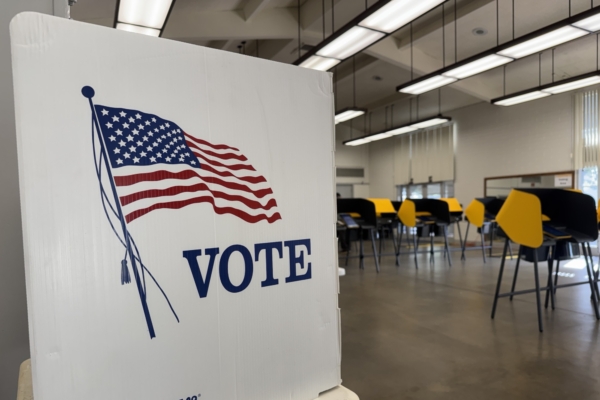
California Voters to Decide on 14 Ballot Measures in the Upcoming Election on November 3, which could potentially shape the state’s future for the next few years. The non-profit organization California Policy Center (CPC) has outlined the contents of the ballot measures, the controversies surrounding them, and their perspectives, while recommending voters to make independent assessments.
Veterans and Affordable Housing Assistance Program Bonds: Proposed issuance of $112.5 billion in “Veterans and Economic Assistance Housing Bonds,” with $100 billion allocated for affordable housing and homeownership programs, and only $12.5 billion earmarked for veterans to help them purchase farms, homes, and mobile homes; the majority of the funds will flow into government projects.
The California Legislative Analyst’s Office (LAO) estimates that repaying the bonds will take 25 years, with annual payments ranging from $500 million to $600 million.
Supporters argue that several affordable housing programs for low-income groups in California have already run out of funds, and that Californian voters have long approved similar veterans’ housing bonds, so why not continue? Governor Newsom, the California Democratic Party, and the California Housing Coalition support this measure.
Opponents claim that the initial borrowing of $112.5 billion by the government will ultimately result in repayment exceeding $250 billion with interest; taking no measures to increase housing supply will further drive up housing prices. District 8 State Assemblyman David J. Tangipa and “Reform California” organization oppose this measure.
CPC is against it, expressing concerns that it will burden California with enormous debts for decades, potentially leading to increased government debt, higher taxpayer burdens, and inflation, which might be rejected by voters.
Raising the cap on the Government’s “Budget Stability Account” (also known as the “Rainy Day Fund”) and the “Gann Limit” (a voter-approved 1979 law enacted to limit government spending growth): The proposal aims to double the cap on California’s “Budget Stability Account” from 10% of General Fund tax revenues to 20%, and to exclude funds deposited in the stability account from the “Gann Limit”; essentially allowing the government to circumvent state law expenditure limits to fund special projects like illegal immigrant healthcare.
Supporters argue that a larger reserve would help the government deal with the volatility caused by high-income earners’ reliance on income and capital gains taxes. Governor Newsom and the California Democratic Party support this measure.
Opponents claim that the “Gann Limit” was designed to compel the government to return surplus revenue to taxpayers or schools, rather than retaining it; excluding emergency reserves from the limit relaxes constraints on government spending growth. The California Republican Party, State Assemblyman Joe Patterson, and “Reform California” oppose this measure.
CPC is against it, warning that if passed, it could lead to Governor Newsom using emergency funds, with approximately $20 billion already drawn in the past eight years, alongside the state maintaining commitments to future expenditures amounting to billions of dollars, including providing Medi-Cal to undocumented immigrants.
Making a temporary income tax increase targeting high-income earners permanent: The tax was initially established by Proposition 30 in 2012, extended in 2016 by Proposition 55, due to expire by the end of 2030. The tax targets individuals earning at least $361,000 annually or joint filers at $721,000, with 89% going to K-12 schools and 11% to community colleges.
Supporters include the California Teachers’ Union, as the tax’s permanence would ensure stable school budgets. The California Teachers Association, California School Employees Association, and the California Democratic Party also back this proposal.
Opponents argue that voters were initially assured in 2012 and 2016 that the tax increase was temporary to assist the government during the economic downturn. However, it has become one of the reasons high-income earners are leaving California; evidence suggests that the tax hike has, in fact, decreased state tax revenue. The California Taxpayers Association, the State Republican Party, and “Reform California” oppose this measure.
CPC is against it, citing Proposition 3 as confirmation of economist Milton Friedman’s view that “nothing is more permanent than a temporary government program.”
Allowing the use of public funds (tax revenues) to finance political campaigns: Current laws, outside of charter cities, prohibit the use of public funds to finance most public office campaigns. They set spending limits and eligibility criteria, with only five cities in California currently allowing this practice.
Supporters include the California Democratic Party and the ACLU of California.
Opponents argue that taxpayers want their money used for schools, fire departments, libraries, and road construction, not political advertising or election campaigns. The California Taxpayers Association, the State Republican Party, and “Reform California” oppose this measure.
CPC is against it, emphasizing that tax funds should be prioritized for essential services rather than political campaigns.
Eliminating the right for voters to choose alternative candidates on recall election ballots: For 115 years, California voters have had the right to recall state officials and simultaneously elect replacement officials. This proposal would prohibit voters from selecting replacement candidates. The Legislative Analyst’s Office states that when a state official is recalled, a special election is typically held to elect a new representative; if the governor is recalled, the lieutenant governor finishes their term; the proposal also allows recalled officials to pursue reelection to the same position.
Supporters of this measure include the California Democratic Party, California Common Cause organization, and the California League of Women Voters.
Opponents argue that the current process gives voters the immediate option to select successors when voting to recall officials, and this proposal would transfer this power to political establishment. The Election Integrity Project California, Inc., the State Republican Party, and “Reform California” oppose this measure.
CPC is against it, noting that voters who value public accountability and the direct election of elected officials would likely oppose it.
Government-issued $250 billion in bonds for mortgage assistance: Also known as the Middle-Class Homeownership and Family Home Construction Act, this proposal authorizes the California Housing Finance Agency (CalHFA) to issue up to $250 billion in revenue bonds to provide fixed-rate mortgage loans to homebuyers.
Homebuyers who have resided in California for at least one year, earn no more than 200% of the median area income, and make a minimum 3% down payment are eligible to apply. The target housing must be newly constructed or renovated homes, and buyers must be first-time homebuyers, with the loan covering 17% of the purchase price, with the remaining funds secured by the homebuyers through a mortgage loan.
Supporters argue that the measure will expand the supply of housing for the middle class and help buyers overcome down payment barriers. The California Democratic Party and the California Association of Realtors support this measure.
Opponents maintain that the government should not intervene in the mortgage market due to associated risks, and this proposal could drive up housing prices. Advocates for taxpayer rights point out that if the state government fails to repay the loans, any default liabilities would fall on California taxpayers. “Reform California” opposes this measure.
CPC is against it, advocating against government expansion into private financial markets.
Issuance of $84 billion in bonds to fund immunology research and treatment: This proposal establishes a research institute affiliated with the University of California (UC), with a minimum of $42 billion allocated for cancer, heart disease, and Alzheimer’s disease research; administrative operating costs are capped at 2% of the funding, with the first 10% of revenue generated from research results to be allocated to the state’s general fund.
Supporters argue that the measure considers fiscal accountability, emphasizing potential public health benefits and collaborative models. The California Democratic Party, Alzheimer’s Association, and “Reform California” support this proposal.
Opponents disagree with using debt (borne by taxpayers) to fund scientific research, especially when there is no guarantee of marketable treatment solutions as evidenced by past failures in the pharmaceutical industry despite significant investments. Critics point to instances like the stem cell research in 2004 where taxpayers invested $6 billion but only generated about $16 million in revenue. Furthermore, the proposal requires any therapies developed to be sold in California at discounted prices, potentially leading companies to prioritize sales in other states.
CPC is against it, highlighting fiscal restraints and anticipating voter opposition due to concerns about accumulating long-term debt.
Voter ID, Citizenship Verification, and Voter Roll Maintenance: Americans need to present identification when buying alcohol, renting a car, cashing a check, obtaining prescription medications, buying cigarettes, entering courtrooms, starting new jobs, applying for marriage licenses, checking into hotels, opening bank accounts, or purchasing firearms. So why not require ID for voting?
This proposal would mandate voters to present government-issued ID (or the last four digits thereof when voting by mail) when casting ballots in person. Additionally, election officials would be required to maintain accurate voter rolls and report the proportion of verified citizens. The State Auditor’s Office would be responsible for auditing these procedures.
Supporters argue that this would enhance trust in the election process since most states (along with democratic countries worldwide) require identity verification when voting. The California Republican Party and “Reform California” support this measure.
Opponents believe that requiring ID would disproportionately impact low-income voters, disabled voters, or recently relocated voters. The ACLU, the California Democratic Party, and the League of Women Voters of California are against this proposal.
CPC supports it, as political establishment and Attorney General Rob Bonta are making efforts to obstruct this proposal, changing its initially fair title – “Establishing Additional Voter ID and Citizenship Verification Requirements” – to a highly misleading and unsettling title, “Ban on Voting Without Government-Issued ID.”
Also known as the One-Time Billionaires Tax or Wealth Tax on the Ultra-Rich. This proposal targets California residents with global assets exceeding $10 billion on January 1, 2026, levying a one-time 5% wealth tax, encompassing tangible and intangible assets and wealth (stocks, bonds, and “legal or equitable interests”). The “2026 Billionaires Tax Reserve Fund” would be established to fund healthcare, education, and food assistance programs. The Legislative Analyst’s Office notes that real estate and retirement accounts are typically excluded from taxation.
Supporters argue that reduction in federal Medicaid funds necessitates the tax, which affects only the super-wealthy. The initiative is backed by the SEIU United Healthcare Workers West union, the California Democratic Party, and the Democratic Socialists of America – California.
Opponents contest the lack of limitations ensuring the tax is a one-time levy and its failure to specify a cap increase (like a subsequent 10% hike in the future). While proponents anticipate generating $1 trillion or more in revenue, critics argue that it could lead ultra-rich individuals to exit California, potentially causing the state to lose $25 billion in tax revenue, according to economists at the Hoover Institution.
Opponents of the measure include Governor Newsom, Governor candidate Steve Hilton, California Professional Firefighters Association, California Teachers’ Union, California Business Roundtable, California Housing Coalition, and “Reform California.”
CPC is against it, advocating for maintaining low tax rates and preserving the state’s tax base, likely finding support among voters concerned with long-term debt.
Independent Pre-Election Audits, Protection of State Expenditure Caps, and Response to Wealth Tax: This measure, a counter-proposal to Proposition 40, prohibits new taxes enacted after January 1, 2026, from being exempted from the “Gann Limit” expenditure, mandates pre-vote audits for special taxes generated through statewide ballot measures, and requires periodic audits every four years for special taxes.
Supporters believe that independent pre-election and regular audits would allow voters to clearly and objectively understand the use of their tax money, preventing state legislators and proponents of citizen ballot measures from circumventing the “Gann Limit” and blocking Proposition 40. Sergey Brin, co-founder of Google, the State Republican Party, and “Reform California” support this proposition.
Opponents argue that the measure is intended to counteract the “Wealth Tax” proposed in Proposition 40. The California Democratic Party and SEIU United Healthcare Workers West union oppose this proposal.
CPC supports it, as independent pre-election audits for tax-increasing proposals and independent audits for new taxes align with accountability and transparency objectives.
Protection of Retirement Savings and Personal Assets from Additional Taxes or Retroactive Taxes: This proposal, aimed at countering Proposition 40, prohibits new state taxes on retirement-held assets, personal holdings, and other forms of personal savings owned or controlled after January 1, 2026, as well as barring retroactive taxes on 401(k) accounts, individual retirement accounts (IRAs), mutual funds, business interests, digital assets, and intellectual property.
The measure contains exceptions, allowing emergency taxes to be levied during significant crises or fiscal emergencies, with related revenues limited to addressing the emergency. Proposition 42 is a direct countermeasure to Proposition 40; if both proposals pass, the one receiving more “yes” votes would take effect.
Supporters contend that retroactive or tax increases on retirement savings and personal assets are unfair. “Reform California,” Sergey Brin, co-founder of Google, the State Republican Party, and the California Professional Firefighters Association support this measure.
Opponents see this measure as creating barriers for the “Wealth Tax.” The California Democratic Party and SEIU United Healthcare Workers West union oppose it.
CPC is supportive, underlining the need to protect retirement savings and personal assets from additional or retroactive taxes affecting potential voter support.
Requiring a Two-Thirds Majority Vote for Local Special Tax Measures: A proposal demanding that local special taxes initiated by “voter initiatives” must secure a two-thirds majority of voters to take effect. The aim is to address a legal loophole resulting from a 2017 California High Court ruling; the ruling allowed special taxes from citizen initiatives to pass with a simple majority (>50%). The measure also prohibits local governments and voter initiatives from imposing new ad valorem property taxes (taxing property based on assessed value), with rates not exceeding the limit set by Proposition 13.
Supporters argue that new state tax requirements should similarly apply to local tax increases. The State Republican Party, the Howard Jarvis Taxpayers Association, and “Reform California” endorse this measure.
Opponents claim this measure will make it more difficult for local governments to raise funds for essential public services. The California Democratic Party, the California Professional Firefighters Association, the California Teachers Association, and SEIU1000 oppose it.
CPC favors this measure, supporting the requirement for a two-thirds majority vote to increase taxes as approved by Proposition 13.
Regulations on Expenditures of Federally Certified Medical Centers: The proposal mandates that federally certified nonprofit health centers set aside at least 90% of their annual income for the provision of healthcare services to low-income groups and underserved populations. The California Attorney General’s Office would be responsible for setting certification standards; centers failing to meet this threshold would face penalties imposed by the state government equivalent to the shortfall, channeled into a new fund, with details overseen by the state legislature.
Supporters believe this measure will hold medical centers and executives accountable. The proposal was introduced and backed by SEIU United Healthcare Workers West union.
Opponents argue that the spending requirements imposed by this regulation overlook a crucial fact – transportation services, community screenings, and patient outreach work are often key to ensuring access to healthcare services for underserved communities. Classifying these supportive services as “overhead” may penalize clinics that provide effective services and may force them to cut back on essential services; additionally, accounting, compliance, and capital expenditures may also be categorized as such “overhead” costs. The California Medical Association, the California Democratic Party, the State Republican Party, the California Teachers Association, “Reform California,” the California Chamber of Commerce, and the California Hospital Association oppose this measure.
CPC is against it, opposing union attempts to impose mandatory spending requirements on private nonprofit medical clinics and potentially force them to create more union-member positions.
Expediting CEQA Reviews for Housing and Essential Infrastructure Projects: The proposal revises the California Environmental Quality Act (CEQA) and the Permit Streamlining Act, aiming to shorten the environmental review period for specific “essential” projects; covering most housing, energy (excluding nuclear), transportation (excluding high-speed rail), water services (excluding the Delta conveyance facility), and medical facility projects; requiring relevant agencies to determine application completeness within 30 days; if no decision is made within the deadline, the application will be deemed complete; and limiting the public comment period for environmental impact reports to within 45 days.
Supporters argue that this measure would prevent the abuse of CEQA reviews as tools for potentially indefinitely delaying urgent housing and energy projects. The California Chamber of Commerce, the California Hospital Association, the California Wind Energy Association, and the California Housing Coalition support this initiative.
Opponents fear that shorter review periods and reduced options for project alternatives would weaken community oversight. Sierra Club California, Communities for a Better Environment, Clean Air Coalition, and the California Democratic Party oppose this measure.
CPC supports it, believing that reform of the California Environmental Quality Act is essential and could find favor with voters concerned with poorly regulated environmental reviews.