
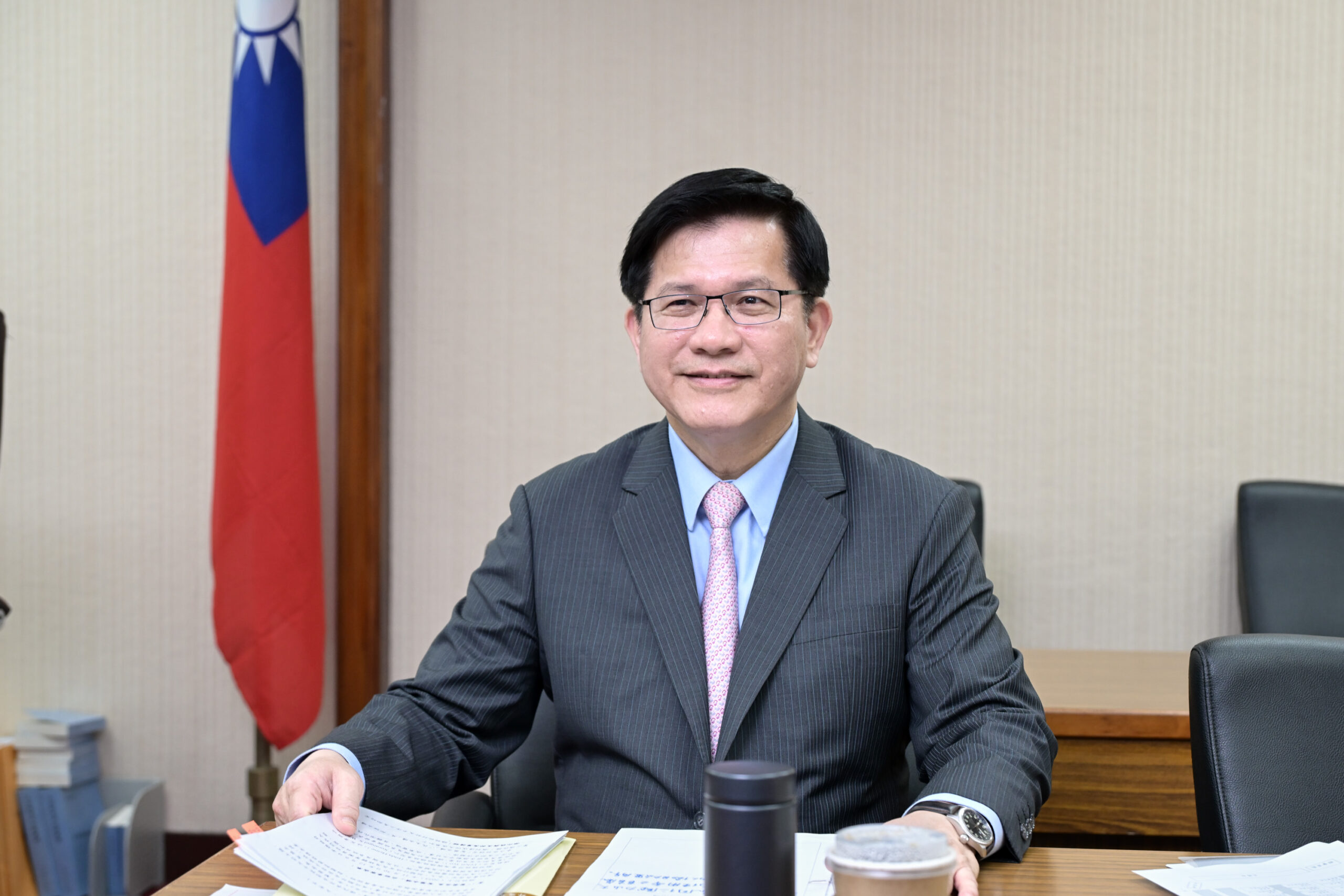
Taiwan’s Minister of Foreign Affairs, Joseph Wu, issued a warning to European countries on Tuesday, October 13th, highlighting the threat to their economic security and political freedom posed by their reliance on Chinese manufacturing. He emphasized that strengthening industrial cooperation with Taiwan could provide assistance to Europe.
Wu, speaking at the Warsaw Security Forum in Warsaw, Poland, accused the Beijing regime of using state subsidies and unfair trade practices to weaken European industries, forcing the continent to become dependent on Chinese suppliers.
He stated, “Due to the fundamental incompatibility between China’s authoritarian ideology and Europe’s democracy, dependence on China poses not only economic risks but also a threat to Europe’s freedom and sovereignty.”
Wu warned that a Europe controlled by supply chains would be a Europe that has sacrificed some of its freedoms.
Drawing parallels between Europe’s reliance on Chinese manufacturing and its previous dependence on Russian energy, Wu highlighted the latter’s vulnerability following Russia’s invasion of Ukraine.
He also cautioned about the “China Shock 2.0,” indicating that a new wave of impact is imminent as Chinese products like electric cars, batteries, solar panels, and steel, heavily supported by the state, flood the international market.
Accusing Beijing of using industrial subsidies and below-cost sales prices to dominate markets, weaken European competitors, and create reliance on Chinese suppliers, Wu pointed out the challenges faced by European manufacturers.
European Union leaders are scheduled to meet in Brussels in two days to discuss economic competitiveness affecting European industries and global trade imbalances.
The European Commission has identified Chinese industrial subsidies, trade practices, and export restrictions as challenges faced by European manufacturers.
According to data released by the European Commission in 2025, the EU had a trade deficit of 359.9 billion euros (approximately 403 billion US dollars) with China.
Of this, the EU imported a total of 559.5 billion euros (approximately 626 billion US dollars) from China, while exporting 199.5 billion euros (approximately 223 billion US dollars) to China. These calculations were based on the exchange rate as of October 13th.
The European Commission also stated that China’s export restrictions on critical raw materials and certain technologies are negatively impacting European supply chains. The EU’s established policy aims to reduce critical dependencies rather than sever economic ties with China.
Wu suggested that Europe could combine its expertise in machinery, automotive engineering, chemicals, and design with Taiwan’s semiconductor manufacturing and electronics supply chains to enhance its industries.
He emphasized, “Taiwan is not asking Europe to trade one dependency for another. We stand with Europe as a partner it can truly rely on.”
Wu highlighted several Taiwanese investments in the semiconductor sector in Europe, such as TSMC’s chip manufacturing project in Germany, United Microelectronics Corporation’s investment in Italy, and Foxconn’s advanced chip packaging project in France, describing them as examples of the “Taiwan model” that promotes cooperation based on democratic values, rule of law, free markets, and complementary industry advantages.
He stated, “Taiwan’s investments are not intended to deplete European industries but to build together with Europe.”
Wu also pointed out a planned technology park in southwestern Poland as a significant step in expanding Taiwan’s industrial presence in Europe.
On October 12th, he visited the proposed site of the TEEMA Technology Park in Miekinia, near Wroclaw, Poland, led by the Taiwan Electrical and Electronic Manufacturers’ Association.
This planned park will bring together Taiwanese and Polish enterprises in fields such as artificial intelligence, smart city technology, electric vehicles, and advanced manufacturing.
The Ministry of Foreign Affairs of Taiwan stated that representatives of Taiwan and Poland plan to sign a memorandum of understanding by the end of 2026, with Taiwan’s International Cooperation and Development Fund facilitating arrangements regarding land acquisition.
The Polish Ministry of Economic Development and Technology also supports the project, viewing the proposed park as a collaborative platform between Taiwanese investors, Polish companies, universities, and research institutions.
Michal Jaros, Deputy Minister of Economic Development and Technology of Poland, expressed in June that Poland is prepared to cooperate with Taiwan to establish a more resilient supply chain.
Wu also connected the project to the future reconstruction of Ukraine, suggesting that the planned technology park could serve as an industrial base for cooperation in artificial intelligence, electric vehicles, and smart city technologies.
“It can become the foundation for Taiwan’s involvement in the reconstruction of Ukraine in Europe,” said Wu.