
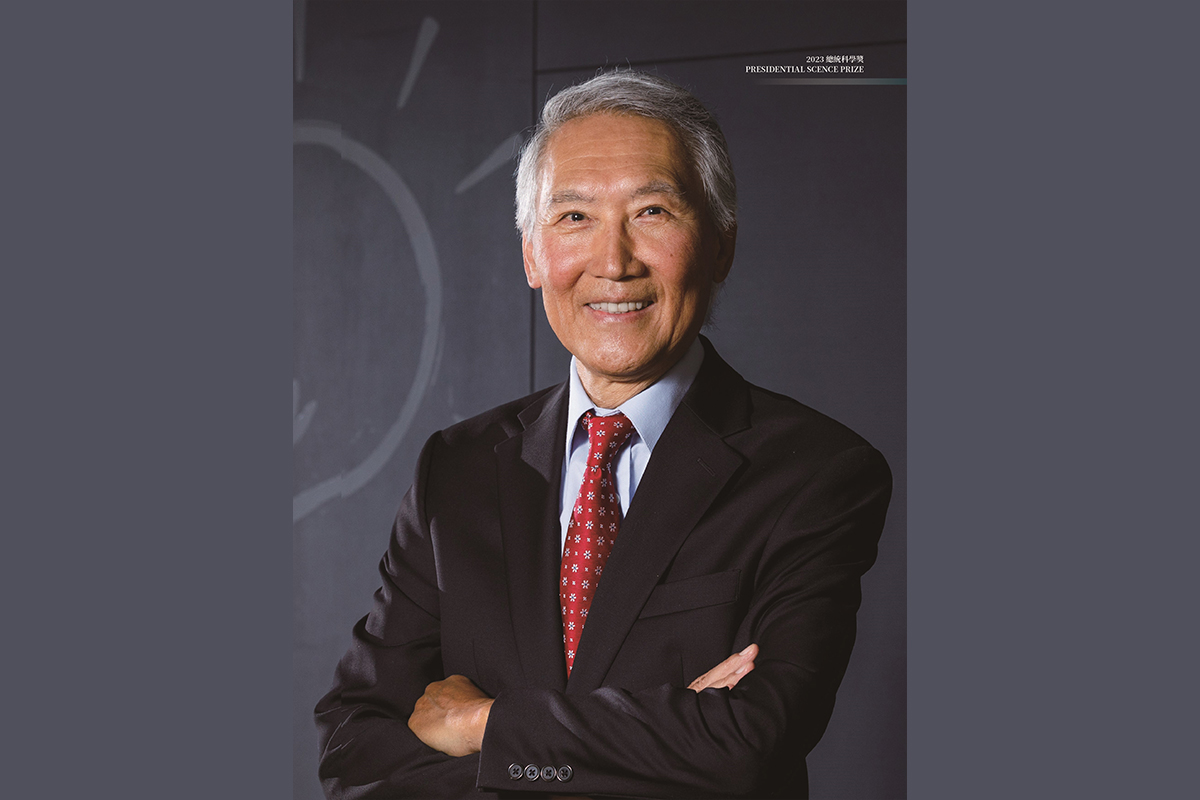
In the 1990s, semiconductor companies worldwide faced a formidable challenge. From IBM to Intel, as transistors on chips became smaller and smaller, the traditional flat structure made it increasingly difficult to control leakage and power consumption. Despite the efforts of thousands of engineers and dozens of companies working together for years, a solution remained elusive. If this challenge could not be overcome, the technological path for making chips smaller, stronger, and more energy-efficient might be at risk, making it difficult to achieve the powerful performance seen in today’s smartphones within a compact design.
Breaking the impasse was retired Professor Chenming Hu from the University of California, Berkeley. Leading a team, he innovatively redesigned the transistor’s critical channel to stand up like a fish fin, creating the renowned FinFET (Fin Field-Effect Transistor). This breakthrough allowed transistors to continue shrinking. Today, a smartphone chip composed of tens of billions of transistors boasts computing power far exceeding that of the computing equipment filling an entire room half a century ago.
Chenming Hu holds many titles – the Father of FinFET, a professor at Berkeley, the inaugural Chief Technology Officer of TSMC, recipient of the IEEE Medal of Honor, and more. His journey from childhood to adulthood, shaped by his family influence, especially remains deeply ingrained in his heart.
Born in Beijing in 1947, Hu moved to Taiwan with his family and grew up in Taipei. His father received training from the Nationalist Government’s Air Force in San Antonio during the war, while his mother graduated from a teacher’s college and taught at an Air Force-affiliated elementary school. Hu reminisces about his upbringing, recalling his parents’ Westernized approach of encouragement and emphasis on effort rather than academic grades.
This encouraging environment influenced Hu’s outlook on life. His early exposure to Western movies and languages molded his determination to excel academically and professionally. He believes that admiration and encouragement from parents and teachers hold the power to shape a child’s capabilities positively, fostering a belief in one’s ability to improve.
In Taiwan, Chenming Hu graduated from the prestigious National Taiwan University before pursuing electrical engineering studies at the University of California, Berkeley. His research focus gradually shifted towards microelectronics and semiconductor devices. His first professor in Berkeley was Andrew Grove, the future CEO of Intel, one of Silicon Valley’s most iconic entrepreneurs.
Hu excelled academically at Berkeley, and Grove invited him to work at Intel, which was a rare opportunity for a Taiwanese student. Despite the tempting offer that included opportunities to work while pursuing a Ph.D. at Stanford University, Hu declined. He honored his commitment to his parents to focus on completing his doctorate before considering other career paths, a decision he does not regret looking back.
Hu’s journey led him to MIT as an assistant professor, staying within the realm of semiconductor-related research. While initially turning down Intel’s invitation, he remained in the United States, advancing his innovations and contributing to the industry’s progress. Hu attributes his success to the quality of education in the US, particularly at the university and research levels, describing it as the best. He lauds the US as an open society full of opportunities, an experience shared by many Chinese students and immigrants in pursuit of their aspirations.
Chenming Hu’s invention of FinFET serves as a prime example. Amidst industry stagnation and uncertain R&D prospects, he took the daring step to develop the technology. Hu believed that while success was not guaranteed, investing efforts into potential solutions was crucial for progress.
From 2001 onwards, Hu served as the inaugural Chief Technology Officer at TSMC, marking a period where he delved deeply into the industry. During this time, he viewed FinFET not as a personal achievement but as a collective advancement, continuing to publish papers to share his findings with peers. Moreover, Hu highly respected TSMC’s former CEO, Morris Chang, not just for his business acumen and industry strategies but also for embodying the core value of integrity. Hu emphasized the importance of integrity and witnessed its profound impact on fostering trust and growth.
Hu reflected on the pervasive influence of semiconductors on people’s lives, reshaping various aspects and even transforming scientific practices today. As engineering simulations, artificial intelligence, vaccine development, and more increasingly rely on computing power, their fundamental basis stems from chips and semiconductors. Hu regards semiconductors as a “democratic technology,” delivering widespread benefits to everyday individuals, underscoring its immense value in serving humanity.
Discussing artificial intelligence, Hu acknowledged the potential risks if nations weaponized technology for harm, emphasizing the importance of responsible utilization. Hu emphasized that the essence of technology is value-neutral; it is humanity’s choices and actions that determine its ethical impact. He highlighted companies like Anthropic working to enhance AI safety and advocated for adopting these practices as international standards to alleviate risks while utilizing technology judiciously.
Hu’s optimism is tempered by caution, recognizing the potential for technology to amplify both the dark and bright facets of human nature. He asserts that fostering a return to humanity’s inherent goodness is crucial for preserving global peace amidst technological advancements.
Beyond his technical achievements, Chenming Hu extends his care to the Chinese community in the United States. Inspired by his passion for research, deep appreciation for its utility, and a stroke of fortune, Hu’s journey across various roles echoes a consistent dedication to humble virtues and values. He emphasizes the importance of uplifting children, solving problems, upholding integrity, seizing opportunities, aiding others, and sharing good fortune.
As a pioneer, educator, philanthropist, Chenming Hu’s life embodies an enduring commitment to modest virtues and values, centered around prioritizing humanity over technology – encouraging children, solving problems, upholding integrity, cherishing opportunities, assisting others, and sharing blessings with the world.