
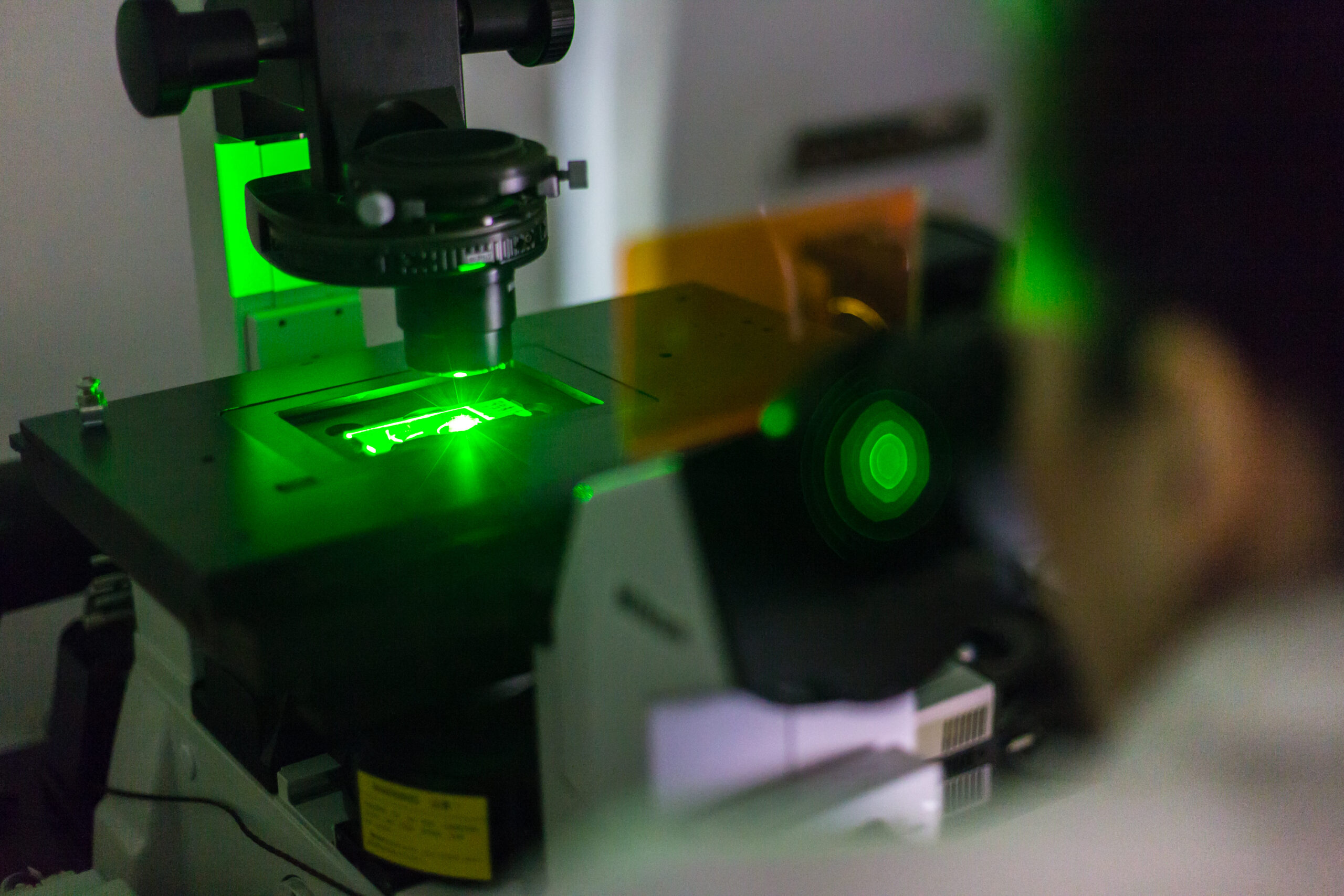
On Saturday, October 3, Japanese optical company Nikon announced that they are carefully reviewing the first place winning entry for the 2026 competition, as it involves several issues related to the use of artificial intelligence (AI).
In mid-September, Nikon announced that a short video created by Chinese researcher Xu Ning from Tsinghua University using advanced microscopic imaging tools had won the 16th Nikon Small World in Motion competition.
The video showcased the movement of cilia in lung tissue samples from a child with Primary Ciliary Dyskinesia (PCD), a rare genetic disease.
At that time, Xu Ning was a researcher at Tsinghua University. According to Nikon, he is currently working as an optical engineer at the National University of Singapore.
However, last week, Nikon shared the award-winning entry on LinkedIn, which quickly garnered criticism from other users, including claims that the video concealed the use of AI-generated tools.
On Saturday, Nikon updated their post on LinkedIn regarding Xu Ning’s award, stating that they are aware of concerns surrounding this year’s competition and are currently reviewing available information on the matter.
Edward Phelps, a bioengineering researcher at the University of Florida Gainesville campus, highlighted several serious issues with the video, noting discrepancies in the movement trajectories of some biological structures shown in the footage.
Phelps pointed out that certain structures resembling mitochondria in purple and nodules in blue seemed anatomically incorrect, while the structure in red remained unidentified.
Ian Donovan, a doctoral student at the University of Texas Southwestern Medical Center, bluntly stated that the video carried a SynthID watermark, indicating that its content was synthetically/AI-generated.
This watermark was initially developed by Google’s DeepMind research lab and has since been adopted by many AI companies.
Nikon previously stated that Xu Ning had cooperated with the review process and provided more background information on the video’s production.
Xu Ning himself responded to some of the criticisms in the comment section of Nikon’s LinkedIn post. He claimed that “the generation of the experimental video, cilia, and their movement did not involve AI technology.”
He acknowledged that his team had conducted post-processing on the structures beneath the cilia but did not make any definitive statements about the anatomical significance of these rendering features.
It is noted that there are widely referenced scientific guidelines in the microscopy field allowing for the submission of stained samples or color images, provided modifications are disclosed and described. These guidelines were published in 2010, a time when generative AI technology did not yet exist and could not directly generate pixel data.
Patrick Hickey, the fifth-place winner of the Nikon photography competition, told the BBC that there are specific rules in the competition, expressly prohibiting the use of generative AI to create images and requiring that images be captured under a microscope.
Judge Christophe Leterrier expressed on LinkedIn that Xu Ning’s winning video exceeded the acceptable boundaries for competition entries, negatively impacting the Nikon Small World in Motion competition and the work of microscopic experts as a whole.
Leterrier explained that the winning image was an AI-generated fluorescent image of an unmarked single cell captured using fast transmission light imaging technology.
He highlighted issues with the “AI coloring” of cells, stating that the model used to generate subcellular structures was trained on specific subcellular components such as DAPI stained cell nuclei as blue, mitochondria as purple, and cell membrane as red. These components were well beyond their training scope, resulting in subcellular structures being inaccurately sized, positioned, and in motion, making the sample difficult to identify.
Leterrier had previously served as a judge for Nikon’s 2020 Small World in Motion competition and was a recipient of several awards himself during the competition.
Former Nikon Small World in Motion competition judge Andrew Moore also commented that this situation reminded him of old photos restored using AI, wherein damaged faces were replaced with new ones.
While high-resolution color photos may look beautiful, Moore added, “If the replaced person is your grandmother, it would certainly feel unsettling.”