
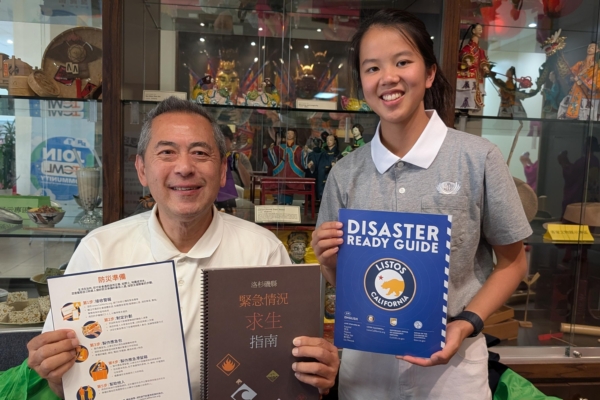
In the face of earthquakes, wildfires, floods, sudden power outages, and other disasters that often strike without warning, knowing how to protect oneself and one’s family in times of crisis becomes a crucial concern for every household.
The American Red Cross community disaster education instructor, Ming Xing, reminds the public that disaster preparedness cannot rely solely on on-the-spot reactions. It is more important to establish a comprehensive awareness of disaster prevention and be prepared in advance – from receiving disaster alerts, developing a family emergency plan, to prepping evacuation kits and stocking up on home emergency supplies to reduce risks in times of emergency.
During disasters, essential infrastructures such as communication, transportation, and electricity may be affected. Waiting until a disaster strikes before preparing can often lead to missed opportunities for response. Therefore, Ming Xing advises the public to be knowledgeable about the types of disasters that their area may face, familiarize themselves with local warning systems, evacuation routes, and shelters, discuss response strategies with family members, ensuring that each household member knows how to act in emergency situations.
Residents in California can access and register for local emergency alerts through CalAlerts.org. They can also download the MyShake earthquake alert application to stay informed about earthquake and other disaster information in a timely manner. In addition, people should pay attention to messages issued by local government, fire departments, and police, and obtain disaster updates and official response guidelines from reliable news sources.
Ming Xing suggests that each family should create an emergency contact list in advance, recording the names, phone numbers, and relevant information of family members, relatives, neighbors, and caregivers, and ensuring that each family member has a copy. It is advisable to designate an out-of-town contact person for each family, so that if communication within the disaster area is blocked, family members can check in with each other through that contact. In cases where phone calls cannot be made, messages can be relayed via text, with an agreed-upon emergency meeting point in advance.
Furthermore, families should plan at least two evacuation routes, understand how to reach safety, and prepare paper maps in case of network disruption or inability to use mobile phones. People should be familiar with emergency plans for their residences, workplaces, and their children’s schools, and conduct practice drills with family members to ensure swift evacuation and reunification in emergencies.
Ming Xing emphasizes that an emergency kit is a crucial aspect of disaster preparedness, and it should be prepared in advance and placed in an easily accessible location in the home, ensuring that it can be quickly grabbed when receiving evacuation notices. The contents of the kit should be tailored to the number of family members and individual needs, with regular checks on expiration dates and conditions of items.
Important items in an emergency kit include identification documents, insurance information, copies of important documents, a small amount of cash, prescription medications, personal medical information, first aid supplies, masks, flashlights, portable radios, mobile phones, and chargers. Important documents should be kept in waterproof bags, and recent photos of family members and pets should be prepared to assist in identification in case of separation.
Additionally, an adequate supply of drinking water, non-perishable and easily consumable food, spare clothes, warm goods, hygiene products, and personal essentials should be prepared. For households with infants, the elderly, individuals with disabilities, or those with chronic illnesses, provisions should be made according to their specific needs, including formula, diapers, assistive devices, extra medications, and relevant medical supplies. Families with pets should also have pet food, water, medications, leashes, carriers, and vaccination records ready.
The emergency kit should be designed for easy portability to avoid hindering evacuation speed due to excessive weight. People can include items such as wallets, keys, phones, chargers, and daily medications on their list of personal items to bring along during evacuation.
In addition to the emergency kit, Ming Xing also advises that not all situations during a disaster are suitable for immediate evacuation. Sometimes, staying indoors may be safer, so families should also prepare a home emergency kit to deal with situations like water and power outages, or road closures.
According to the California disaster preparedness guidelines, people should have at least a three-day supply of basic necessities, including a minimum of 1 gallon of drinking water per person per day for consumption and basic hygiene, along with non-perishable food items, flashlights, spare batteries, first aid supplies, toilet paper, garbage bags, and portable radios. If there are pets at home, their necessary supplies should also be taken into consideration.
During power outages, refraining from opening the refrigerator prolongs food preservation time. When using generators, camping stoves, or grills, they must be placed outdoors in ventilated areas and not used indoors to prevent carbon monoxide poisoning. People should also familiarize themselves with the locations of gas, water, and electricity shut-off switches at home, and take appropriate measures as directed by professionals or authorities.
Ming Xing reminds that different disasters require different response methods:
• In the event of a wildfire, closely follow official evacuation orders, avoid a wait-and-see attitude, and evacuate promptly upon receiving instructions.
• During an earthquake, take cover under furniture, stay away from windows and potential falling objects, and avoid hastily rushing out of buildings.
• When encountering floods, do not walk or drive through standing or flowing water, and be aware of possible post-flood secondary disasters such as mudslides.
• During a power outage, prepare lighting and backup power sources, and avoid using unsafe equipment.
Ming Xing also suggests that people establish mutual assistance networks with neighbors, understand each other’s needs, especially for elderly individuals living alone, those with mobility impairments, and families requiring special care who can arrange in advance for evacuation assistance and emergency support personnel. Parents should inquire with schools about childcare and pickup arrangements during disasters, and caregivers should jointly develop emergency plans with those being cared for.
Disaster preparedness involves not only stockpiling supplies but also establishing a functioning family safety mechanism for emergency situations. Ming Xing recommends that people start gradually preparing today by assembling evacuation kits, checking home emergency supplies, verifying contact information, evacuation routes, and regularly updating relevant information. With the unpredictability of disasters, an extra level of preparedness in advance can enhance crisis response capabilities during emergencies. ◇