
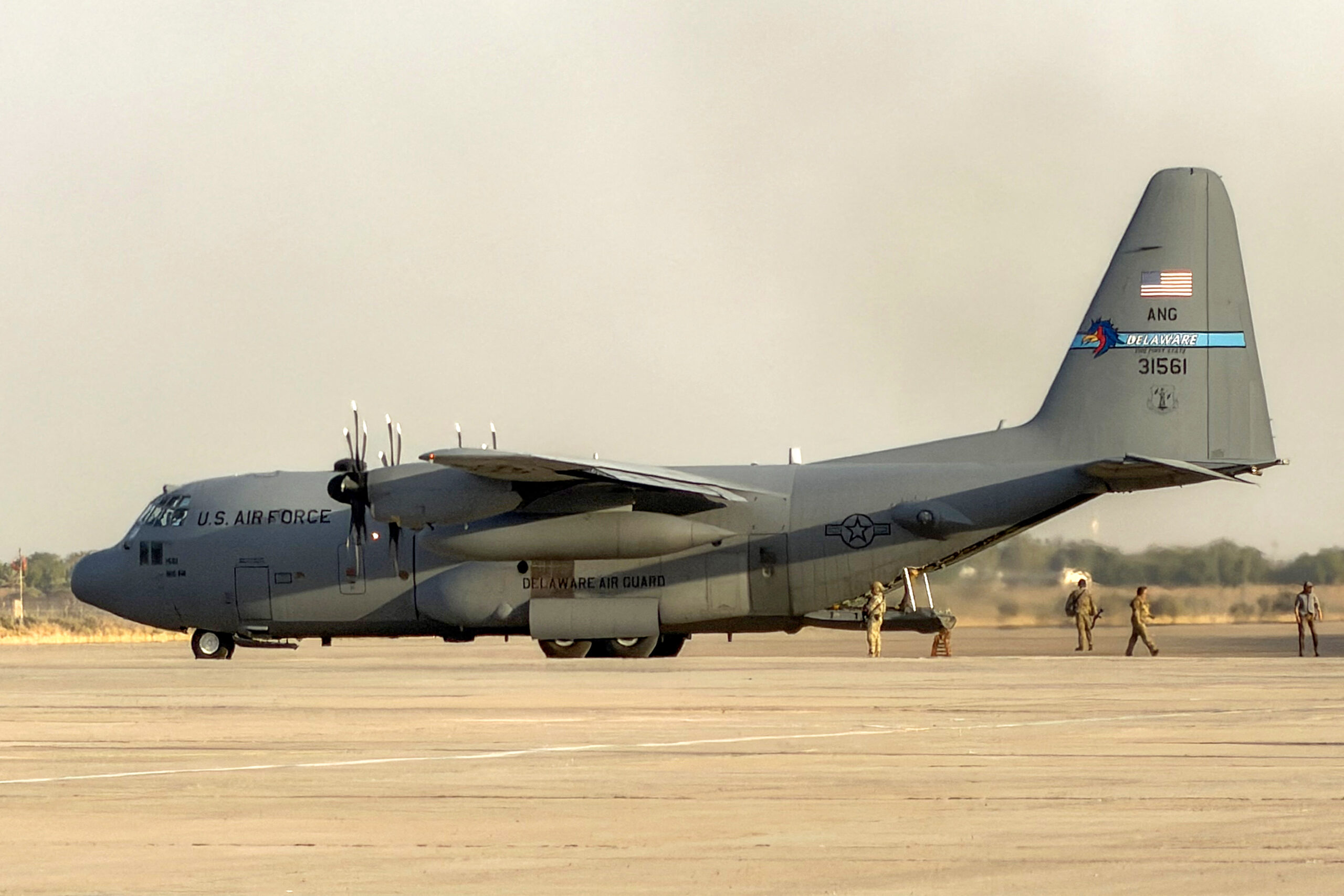
The Pentagon’s Chief Spokesperson, Sean Parnell, announced on Wednesday (September 30th) that the United States and its allies have officially ended the military operation in Iraq under the codename “Operation Inherent Resolve”, marking the end of the US military’s 12-year mission to combat the extremist group ISIS.
With the final batch of US military personnel and equipment completing an “orderly withdrawal” from the Erbil Air Base in the semi-autonomous Kurdish region of northern Iraq, the US military’s presence in Iraq has come to a close.
Parnell stated in his announcement, “This milestone reflects the success of 12 years of military operations, which have eliminated ISIS as an organized military threat in Iraq and the entire region.” This also signifies a transition from wartime coalition operations to security efforts led by the Iraqi security forces, including the Peshmerga forces of the Kurdistan Region, with support from a more normalized bilateral security relationship between the two countries.
The Department of War of the United States will continue to provide targeted training and intelligence support to Iraqi partners in the future.
The Pentagon emphasized that the primary responsibility for addressing ongoing security challenges in Iraq, including suppressing the residual ISIS forces and countering pro-Iranian militia groups that threaten Iraq’s sovereignty and regional stability, has now shifted to the Iraqi government.
According to the Associated Press, on Tuesday (September 29th), at the historic Grand Mosque of al-Nuri in Mosul, authorities raised a large Iraqi flag to mark the departure of the coalition forces. Iraqi Prime Minister, Ali al-Zaidi, presided over the handover ceremony and described the US withdrawal as the beginning of a new phase for Iraq’s sovereignty, institutional strength, military readiness, and unified decision-making.
However, the withdrawal operation has sparked contrasting reactions within Iraq. The powerful pro-Iran militia group Kataib Hezbollah’s security official, Abu Mujahid al-Assaf, celebrated the withdrawal, calling it the “beginning of achieving full sovereignty” while also warning the Iraqi government not to execute American plans.
The Kurdish Regional Government’s Peshmerga forces expressed deep concern over the withdrawal of US air defense systems. The region has faced over 1000 drone and ballistic missile attacks during recent tensions between the United States and Iran.
The US military first entered Iraq in 2003 and withdrew in 2011, only to return in 2014 at the invitation of the Iraqi government to combat the rapidly expanding and rampant ISIS. With the extremist threat diminished to scattered remnants, both the US and Iraq reached a joint statement in September 2024 to gradually end the mission.
Despite the completion of the US withdrawal, the Iraqi government still faces the challenge of disarming non-state armed groups within the country. While some small militias have agreed to surrender their weapons, the powerful pro-Iran militias have refused to disarm. Prime Minister al-Zaidi has extended the deadline for the militias to disarm to June 2027.
The US has stated that it will continue to cooperate with Iraq to ensure that ISIS never regains a foothold on Iraqi soil.