
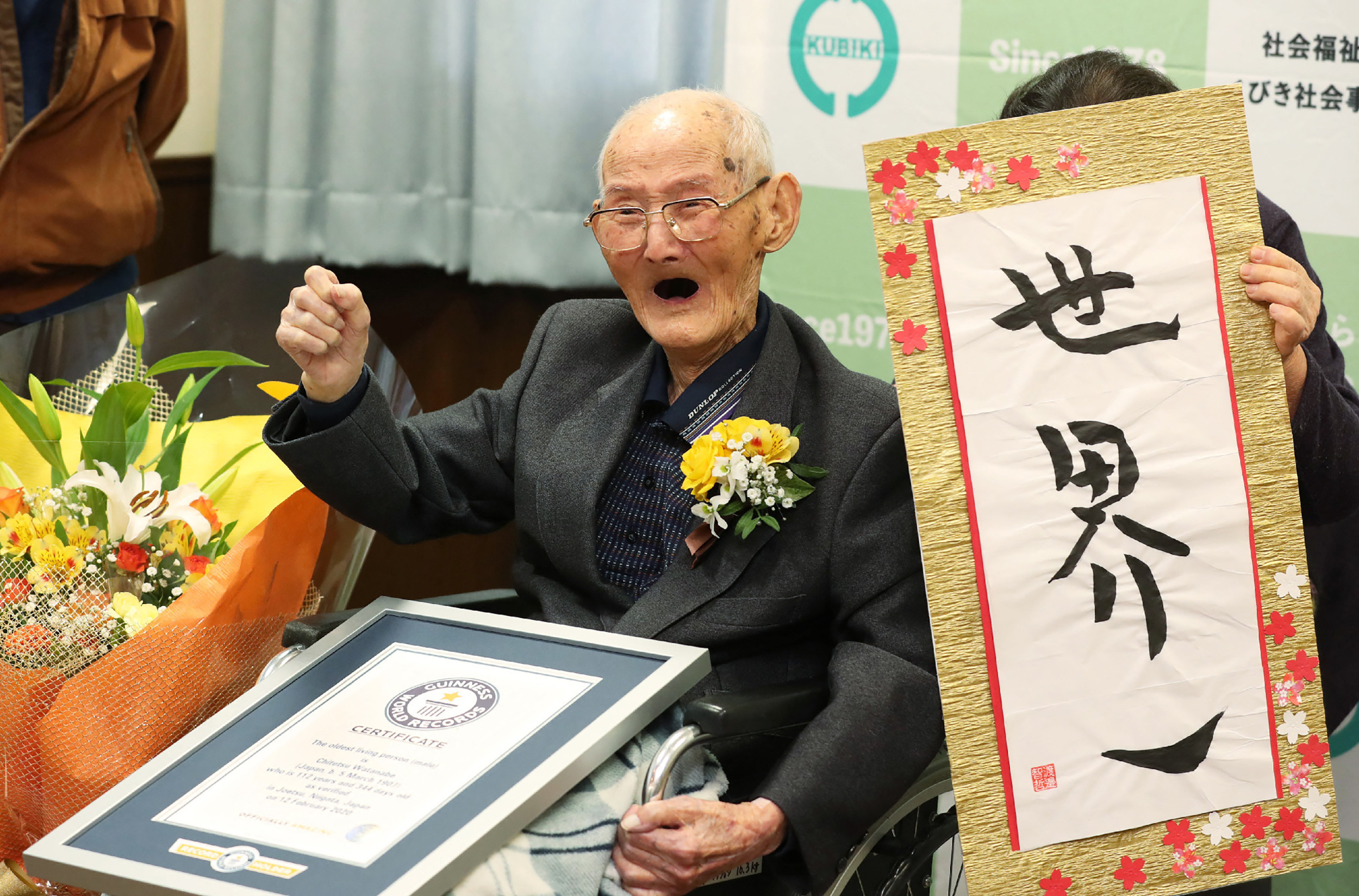
Japan’s Ministry of Health, Labour, and Welfare recently announced that as of September 1st, the number of centenarians in the country has exceeded 107,677, marking the first time it has crossed the 100,000 mark in history. This milestone not only sets a record high but also positions Japan as the country with the highest proportion of centenarians in the world. The question arises: why does Japan have such a large population of centenarians, and do they hold any longevity secrets?
According to the Ministry of Health, Labour, and Welfare, 88% of these centenarians are women. The oldest living woman is 114-year-old Fuyo Kishimoto residing in Kyoto, and the oldest man, Hikaru Kato, is 112 years old and lives in Kumamoto.
Minister of Health, Labour, and Welfare, Kenichiro Ueno, expressed his delight at seeing so many people leading long, healthy, and vibrant lives. He attributes this to advancements in medicine and technology.
The BBC cited experts saying that Japan’s longevity can be attributed to factors such as a healthy diet and active lifestyle. The traditional Japanese diet, primarily consisting of fish, vegetables, and rice, has lower saturated fat content compared to many Western diets. Additionally, elderly Japanese individuals tend to remain active, engaging in regular walking, cycling, using public transportation, or practicing stretching exercises.
Former Japanese nutritionist Asako Miyashita, practicing in the United States, revealed that centenarians in Japan consume five longevity-promoting foods daily, including fish, miso soup, seaweed, roasted sweet potatoes, and radishes.
Experts also mention that Japanese people have strong community ties and life goals, which provide them with the motivation to keep moving forward.
Data released by Japan’s Ministry of Health, Labour, and Welfare in July showed that the average life expectancy in Japan exceeds 84 years, ranking among the highest globally. The average life expectancy for women is 87.33 years, maintaining the world’s top spot for 41 consecutive years, while men have an average life expectancy of 81.35 years.
Japan Living Guide website points out that one of the reasons for Japanese longevity is the country’s preventive healthcare culture, emphasizing the importance of health check-ups before diseases manifest rather than waiting for symptoms to appear before seeking medical help.
Japanese individuals undergo regular health check-ups as a routine part of life, even for those who perceive themselves to be healthy. Many Japanese participate in annual health screenings provided by their employers or local governments, as mandated by law.
Hence, from a young age, Japanese people are instilled with the following mindset:
– Don’t wait for symptoms to get checked.
– Regular health check-ups are standard.
– Early detection of illnesses is a crucial part of maintaining health.
One distinctive feature of Japanese preventive medicine is the “Ningen Dock,” a comprehensive medical screening program that goes beyond basic check-ups. It combines blood tests, imaging studies, and physical examinations for a thorough health assessment.
Introduced in 1954, the “Ningen Dock” has expanded significantly over the years with the rise in health consciousness among the population. Today, it may include brain MRI scans, cancer screenings, cardiac evaluations, and gastrointestinal examinations.
These services are not limited to the elderly but also cater to working professionals, freelancers, and young individuals focused on long-term health.
Another aspect of Japanese preventive medicine is the ease of access to specialists. While patients in many Western countries typically see general practitioners or family doctors first and are referred to specialists only when necessary, in Japan, patients often choose to visit specialists directly based on their symptoms or specific needs, such as consulting a gastroenterologist for stomach issues.
Even smaller clinics in Japan may offer advanced diagnostic services like MRI, CT scans, ultrasounds, and blood tests. In some cases, patients can complete all tests in a single day and receive prompt results.
According to OECD data, Japan ranks high in MRI prevalence globally, earning it the nickname “MRI Superpower.” This accessible healthcare system allows people in Japan to obtain quicker and more flexible services, even for preventive purposes without symptoms.
In recent years, awareness about brain health among Japanese individuals has risen significantly, leading to the increased popularity of MRI scans. Those under stress, with hypertension, smokers, having poor sleep habits, or a family history of strokes or aneurysms are often more inclined to undergo this examination.
It is noteworthy that preventive medicine in Japan is not merely about detecting or preventing diseases; many Japanese view it as a way to understand their bodies, identify health risks early, and seek peace of mind proactively even in the absence of conspicuous symptoms.