
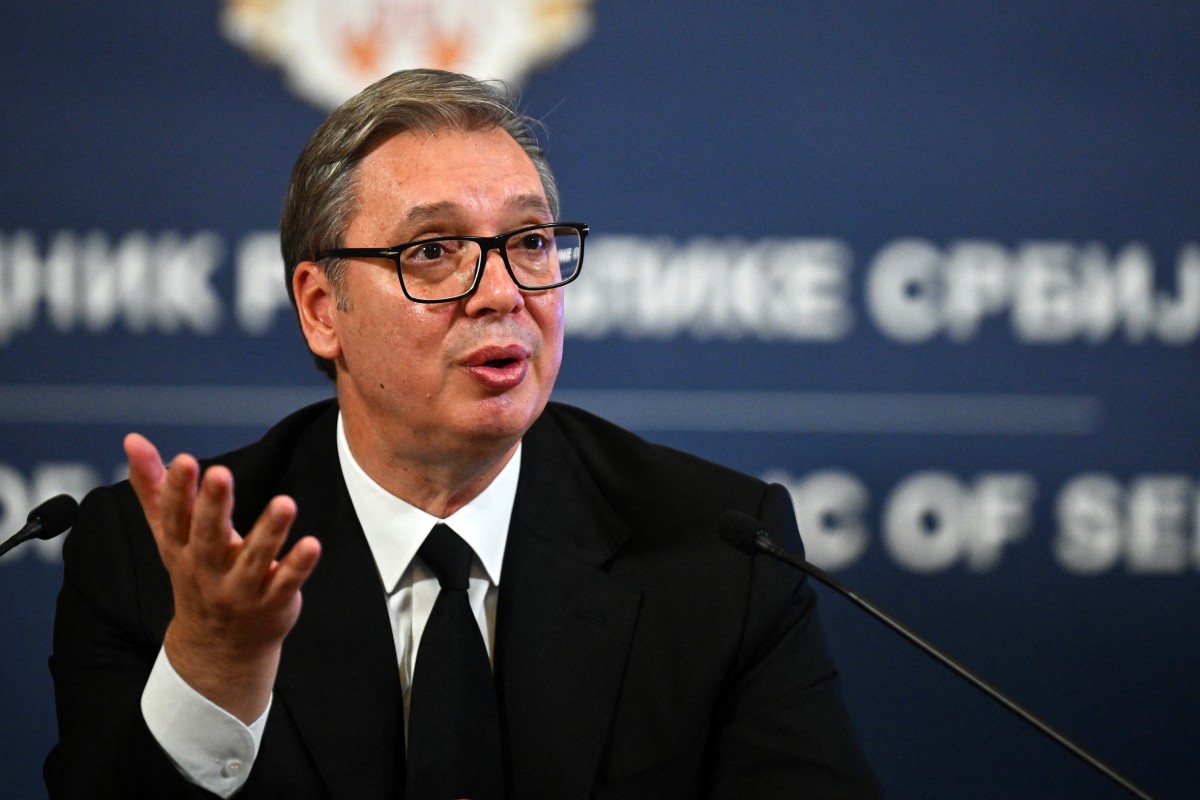
Serbian President Aleksandar Vucic announced his resignation on Sunday (September 27) in order to pave the way for early presidential elections. Vucic’s term as president was originally due to end next year. According to the Serbian Constitution, Parliament Speaker Ana Brnabic will serve as interim president until a new president is elected. Presidential elections must be held within 90 days, with the campaign period lasting between 30 to 60 days.
“By the end of December… we will hold the first round of presidential elections,” Vucic said.
The early parliamentary elections in Serbia scheduled for October will see Vucic’s Serbian Progressive Party (SNS) and its allies facing off against the student-led anti-corruption movement “Students Win” and the pro-Western opposition alliance “European Serbia.” “Students Win,” “European Serbia,” and other parties are yet to nominate their presidential candidates.
Amidst long-term student-led protests and increasing public dissatisfaction with government corruption allegations, Vucic announced his resignation from the presidency. The protests were sparked by the collapse of a roof at the Novi Sad train station in November 2024, resulting in 16 deaths and fueling public anger towards corruption, shoddy workmanship, and lax oversight in construction projects.
Subsequently, people from all walks of life, including students, teachers, workers, and farmers, have been holding protests. Protesters believe that this disaster reflects the governing situation during Vucic’s leadership in the Progressive Party for many years. Vucic had close ties to the renovation project of the train station, which was supposed to symbolize progress in Serbia’s development.
Vucic has been active in Serbian politics for over a decade, serving as prime minister in 2014, then winning his first presidential election in 2017, and re-elected as president in May 2022. According to the Serbian Constitution, the presidential term is five years, with the option of one re-election.
Under Vucic’s leadership, Serbia has become a key target country for China’s expansion and investment policies in Europe. In January 2021, 26 members of the European Parliament called for an assessment of China’s growing economic influence in Serbia.
During his visit to Beijing at the end of May 2026, Vucic was awarded the highest honor of the Communist Party of China, the “Friendship Medal,” by Chinese leader Xi Jinping.