
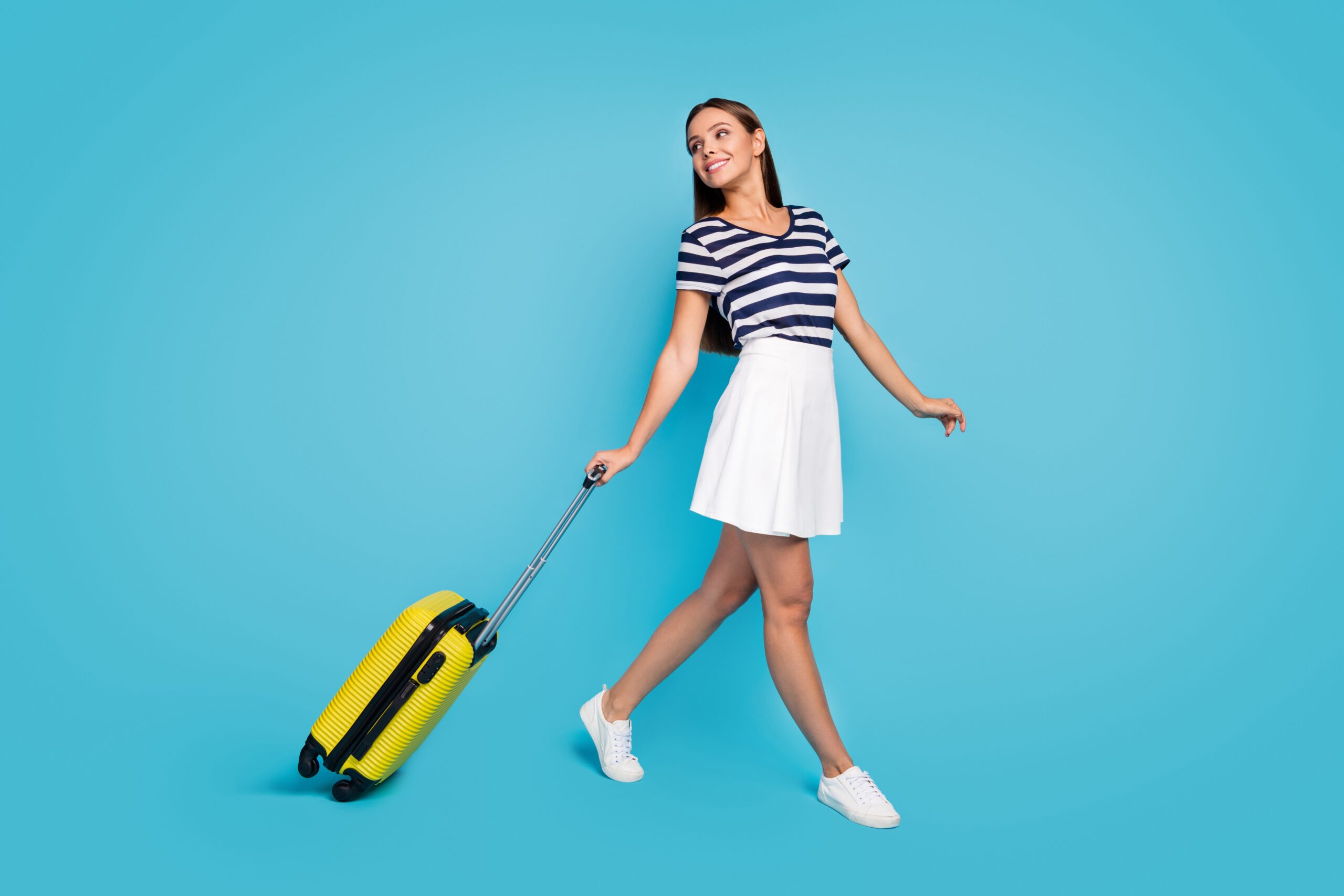
When boarding an airplane, people must follow the dress code set by the airline. This means avoiding clothing that is too revealing or features offensive or discomforting messages. While shorts or skirts may not be explicitly prohibited, flight attendants recommend against wearing them during air travel. But why is this the case?
According to a report from the UK’s Independent, Charity Nelms, an American flight attendant with 11 years of experience, recently took to social media to caution passengers about wearing shorts, skirts, or jumpsuits onboard due to hygiene considerations. She emphasized that airplane seats are not always clean and advised passengers to opt for long pants instead.
In a video shared by Nelms, she expressed, “Your skin should not touch the seat in any way. Regardless of whether you disinfect it after boarding, never do it. Always wear long pants. Trust me, I’ve seen some really awful things.”
Another American flight attendant, Cher Killoguh, shared a similar sentiment in her own video. She recounted instances on flights where passengers changed diapers for children in their seats, resulting in biohazard contamination on the seats. Killoguh questioned whether passengers should allow their skin to come into contact with such areas.
Due to the short turnaround time of airplanes, cleaning staff have limited time for thorough cleaning, leading to potentially dirty areas within the cabin, including the seats. Flight attendants and former cabin crew members have spoken out about the importance of dressing appropriately while flying, particularly regarding the cleanliness and comfort of passengers.
Patricia Green, who served as a flight attendant with British Airways and private aviation companies for over 20 years, highlighted in an article on the aviation news site Simple Flying that quick turnarounds often involve limited cleaning focused on essential areas such as the kitchen, toilet, and trash, rather than passenger seats.
For larger traditional airlines, the slightly longer turnaround time allows for more comprehensive tasks such as securing seatbelts and wiping down tray tables. Airplanes are typically hot on the ground but cold during flight, leading passengers wearing shorts or skirts to seek blankets during the journey.
Flight attendants are aware that passengers returning from hot climates often wear casual attire from beach vacations, which may not be suitable for the cooler temperatures onboard the aircraft. Guidelines recommend passengers wear warm clothing to avoid discomfort during flight.
The limited personal space in economy class seats can also lead to inadvertent contact between passengers, particularly if wearing shorts or skirts. One Reddit user shared their discomfort sitting in the middle seat flanked by passengers in shorts, feeling uneasy about leg contact and opting to keep their legs tightly together to avoid any offense.
Proper attire becomes crucial in case of emergency evacuations, with experts recommending clothing made from natural fibers like cotton, linen, or wool to prevent skin friction or burns. Sturdy footwear such as sneakers or closed-toe shoes are advised for safety and mobility during evacuations, helping avoid slipping or injury on emergency slides.
Flight safety expert Christine Negroni has cautioned against wearing synthetic tight pants like yoga leggings due to their flammability in the event of a crash or onboard fire. Considering the fast-paced nature of emergency procedures, leaving personal belongings behind in favor of essential items in a small bag or pocket is crucial for quick evacuation.
Lastly, passengers are reminded that aircraft seats are frequently used and may not undergo thorough cleaning between flights. Despite disinfectant wipes being handy for certain surfaces, seats may not be completely sanitized. Carrying a light blanket or scarf to place between your body and the seat is suggested for added protection, as onboard blankets may not be washed after every flight and could be reused.