
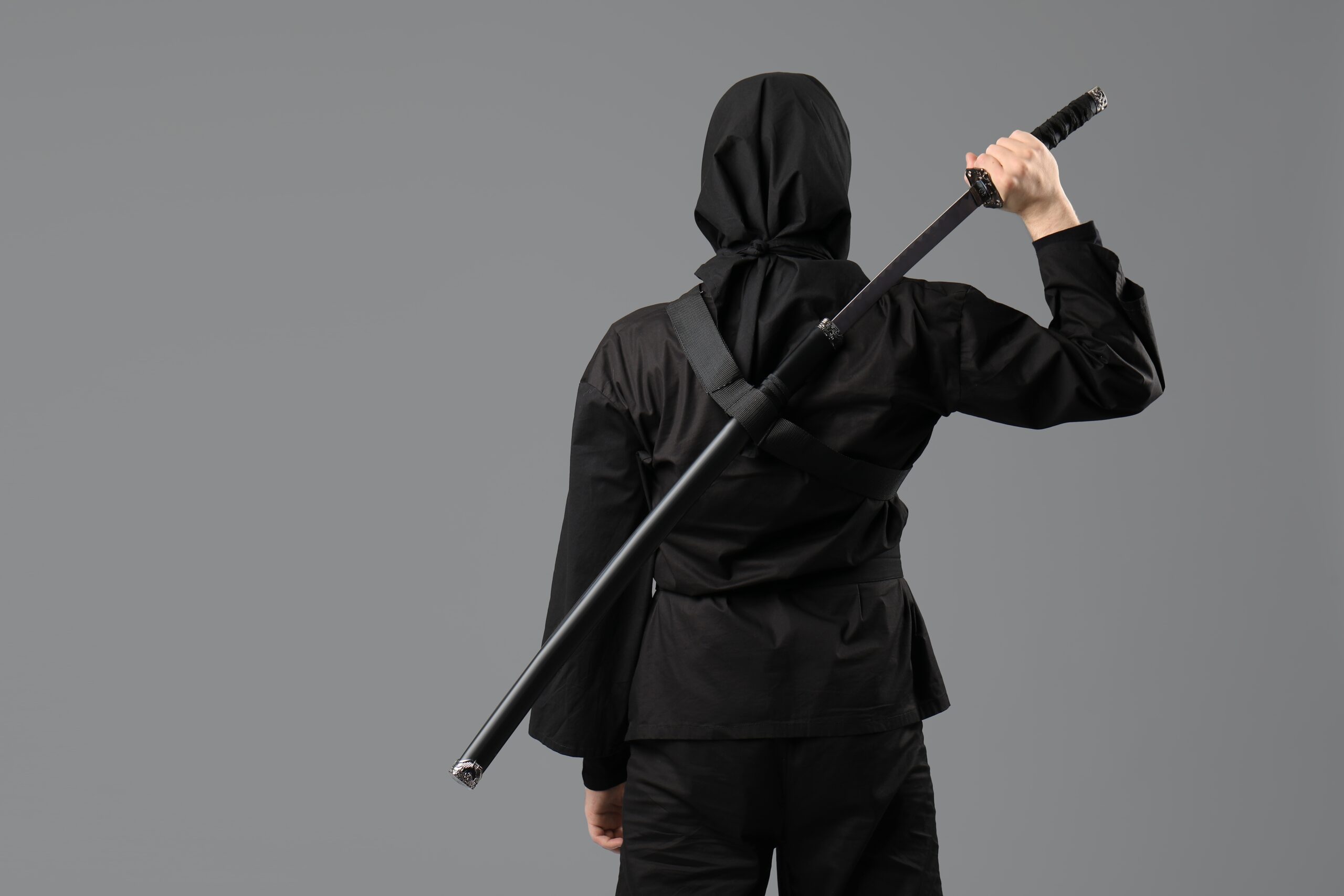
In the movie “007,” the British intelligence officer James Bond, with the code name 007, risks his life to complete various difficult missions. Similarly, in ancient Japan, there were ninjas who engaged in tasks such as intelligence gathering, resembling the work of 007. These specialized professionals operated in secrecy, cloaked in a mysterious veil. When you travel to Japan, you may have the opportunity to explore the history and culture related to this aspect.
Ninjas were a unique profession in Japan from the Warring States period to the Edo period. When it comes to ninjas, people may think of martial arts and superhuman abilities. This concept may have originated from popular culture such as novels, dramas, or manga.
According to the Japan Living Guide website, recent academic studies have shown that the true missions of ninjas mainly revolved around three objectives:
– Obtain valuable information
– Return alive
– Deliver the information to their lord
In the past, Japanese castle lords relied on ninjas to gather information. This wasn’t just to defeat enemies but also to reduce the scale of conflicts, casualties, or gain advantages in avoiding conflicts, akin to the principles in Sun Tzu’s “The Art of War.”
The ultimate goal of a ninja was to minimize the scale of conflicts in order to maintain the safety and peace of their families, even during turbulent times.
The Japan Living Guide mentions that Ninjutsu is the term for the techniques used by ninjas. It is not a compilation of magical spells but a survival skill of overcoming strength with weakness, aimed at self-preservation. Even in situations of limited resources, utilizing crucial information could increase the chances of survival.
Therefore, ninjas needed to command a range of advanced knowledge and skills at the time, including communication, disguise, martial arts, astronomy, pharmacology, explosives, and various cunning methods. This amalgamation of knowledge and practical operations aimed to ensure survival in tumultuous times.
Ninjas employed different tactics for obtaining information with distinctions between “Innin” (concealment) and “Yonin” (infiltration). In “Yonin,” ninjas disguised themselves as merchants, monks, ascetics, street performers, as well as ordinary civilians and travelers to gather information in public places without arousing suspicion.
By posing as a medicine-selling merchant, ninjas could gather information about local customs, food culture, diseases and epidemics, people’s political dissatisfaction, and interpersonal relationships through conversations with customers.
To avoid arousing suspicion, ninjas strengthened their disguises in various ways, such as altering the scent of their kimono, mastering the dialect of each region, and even adjusting their posture and walking speed to fit the role they were impersonating.
In terms of gathering intelligence, ninjas employed techniques such as greeting others with a smile to establish rapport, attentive listening, building trust, and extending conversations to extract information from others.
Ninjas obtained information through various channels and built relationships with ninjas from other factions to exchange information. Maintaining sharp judgment to discern the truth of statements and establishing trust with others was equally crucial.
To conceal their true identities, ninjas often kept their profession hidden even from their families, posing as farmers or merchants for livelihood. Simultaneously, they continued to receive professional training to ensure success in missions. Their motivation stemmed from protecting the safety of their families and communities.
Instances of individuals concealing their true identities like ninjas are likely common among intelligence agents worldwide. Previously, in Surrey, England, authorities discovered that a reclusive 90-year-old woman was a skilled intelligence operative only after her passing.
Ninjas executed challenging missions under harsh conditions requiring them to be prepared for death while ensuring they returned alive, demanding extraordinary mental fortitude. They strengthened their willpower through ritualistic practices like the “Kuji-goshinhou” hand seals and reciting nine words as well as through meditation, which modern research has shown to benefit the body.
Additionally, ninjas rigorously demanded excellence from themselves akin to having a knife inserted in one’s heart. Their creed included maintaining a pure heart and refraining from pursuing missions for selfish desires.
Notably, Japan has two major ninja schools known as Koka Ryu and Iga Ryu, originating from Koka City in Shiga Prefecture and Iga City in Mie Prefecture, respectively.
Both cities’ tourism associations jointly applied to the Japan Anniversary Association, which designated February 22nd as Ninja Day. This date was chosen because in Japanese, “222” sounds similar to “nin-nin-nin.”
Ninjas, with their covert identities and challenging missions, embody exceptional resilience, combining readiness for sacrifice with the will to survive, traits that require remarkable psychological strength.