
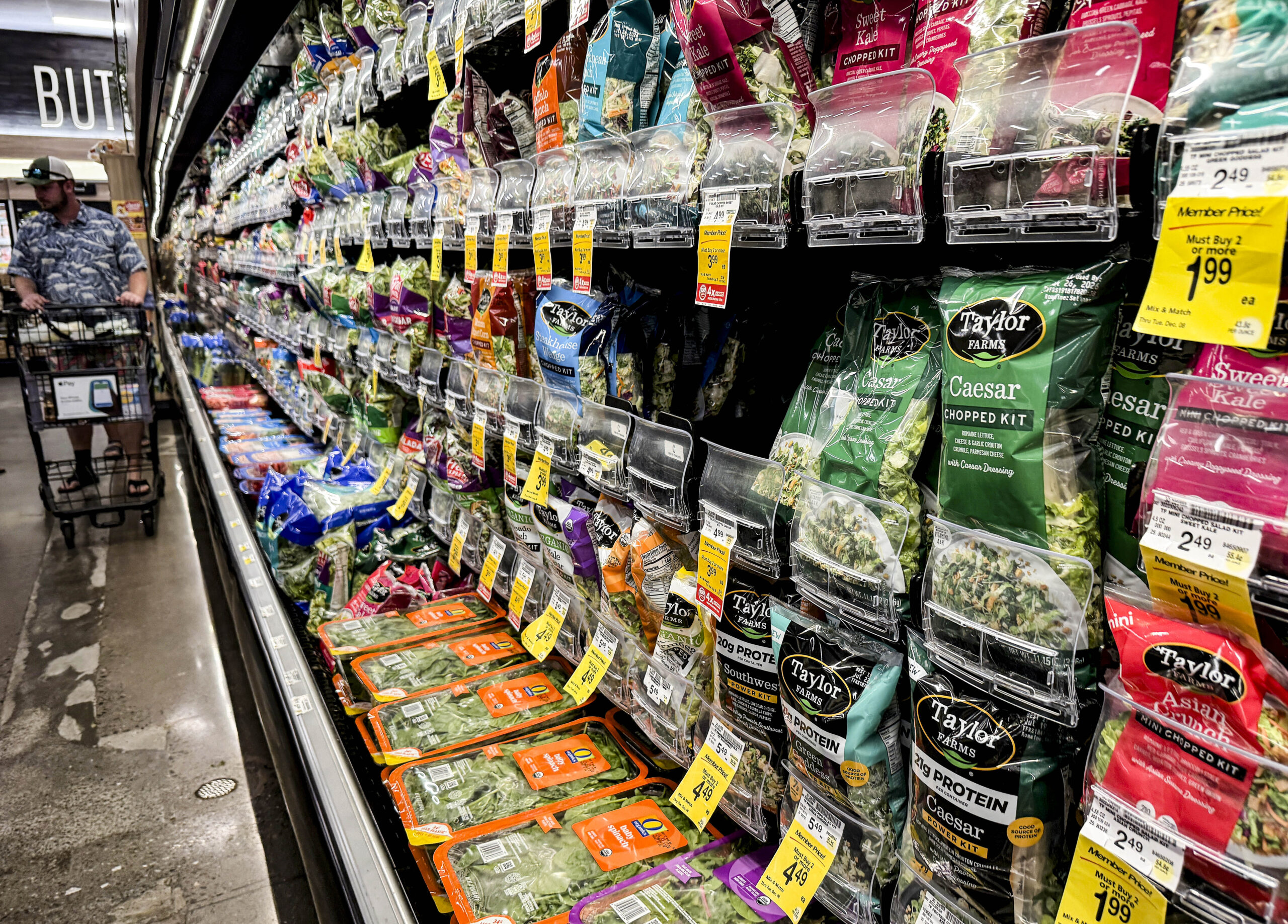
The prices remain high, with a dozen eggs easily exceeding $6, causing many consumers to gasp at the checkout counter. Several financial and consumer experts have recently shared their money-saving tips, ranging from utilizing mobile apps, knowing about product expiration discounts, to frozen foods and price comparison tools, helping consumers save more money when shopping at supermarkets.
According to Allrecipes, based on data from the U.S. Bureau of Labor Statistics, food expenses have risen by 29% since 2020, influenced by factors such as inflation, tariffs, labor costs, and supply chain issues. Clay Cary, a senior trend analyst at CouponFollow, and consumer finance expert Andrea Woroch recommend checking the supermarket’s official app before heading out because chain brands like Walmart, Kroger, and Safeway often offer digital coupons not available in mailed flyers.
They also advise avoiding pickled or sliced processed meats, as the prices may be up to 60% more expensive than whole cuts of meat; the same goes for fruits and vegetables, where purchasing unprocessed whole items can save up to half the cost. In addition, consumers are encouraged to make use of the supermarket’s own brand of frozen fruits and vegetables, which are typically 30% cheaper than well-known brands or fresh produce. They also point out that shopping on Wednesdays and Thursdays makes it easier to come across discounts on clearance items as stores try to clear out older inventory, with even better chances of finding special sales on meat and bakery items if you go in the morning.
As for promotional cycles, Cary suggests that consumers select 10 to 15 regularly purchased items to track their prices regularly, identifying the pattern of when the “lowest price” appears, typically cycling every 6 to 8 weeks. By stocking up in bulk and freezing items during these times, significant savings can be achieved. Cary also reminds consumers to be mindful of the psychological design of product placements: essential everyday items are often placed at the back of stores, and items on endcap displays at aisle bottoms may appear to be on sale but might not offer the best value, requiring comparison based on the “unit price” of similar items.
Kristin McGrath from the price comparison website Krazy Coupon Lady suggests paying attention to “sell-by” labels as another money-saving tip, as these products often start to be discounted a day before their expiration date, with discounts ranging from 20% to 50%; consumers can also inquire with fresh produce, bakery, or meat department staff about when “manager special” labels will be posted.
Dubbed the “Supermarket Guru,” Phil Lempert points out that frozen foods often provide better value than fresh specialty counters—frozen seafood is 10% to 30% cheaper than fresh counters, frozen ground meat is 20% to 25% cheaper, and frozen fruits and vegetables are 20% to 30% cheaper, with comparable quality. Lempert also mentions that the same cheese may vary in price by up to 40% depending on where it is placed, advising consumers to compare prices of similar items in different areas of the store. Utilizing price comparison apps like Flipp, where you can input your zip code to compare offers and prices at nearby supermarkets, is also recommended.
Lempert adds that about 40% of food in the United States goes to waste, reducing waste itself is a key to saving money; making a shopping list, avoiding excess purchases and cooking, as well as planning meals in advance every week, all help to reduce expenses.